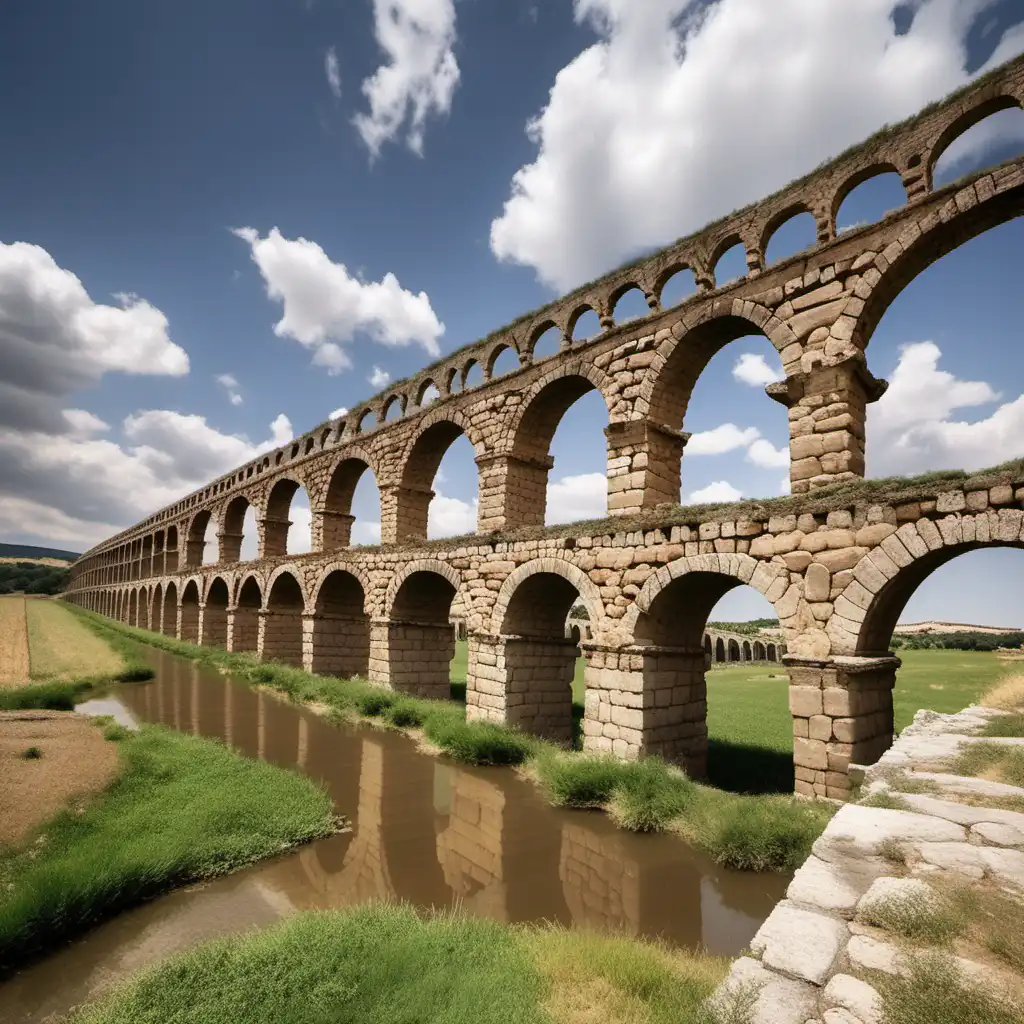
aqueduct
noun aqueduct
ˈækwɪdʌkt
A man-made channel for carrying water from one place to another often using bridges
The ancient Romans built aqueducts all over their empire to supply water to their cities.
aqueduct
ˈækwɪdʌkt
Đang tải…
ˈækwɪdʌkt
A man-made channel for carrying water from one place to another often using bridges
The ancient Romans built aqueducts all over their empire to supply water to their cities.
ˈækwɪdʌkt
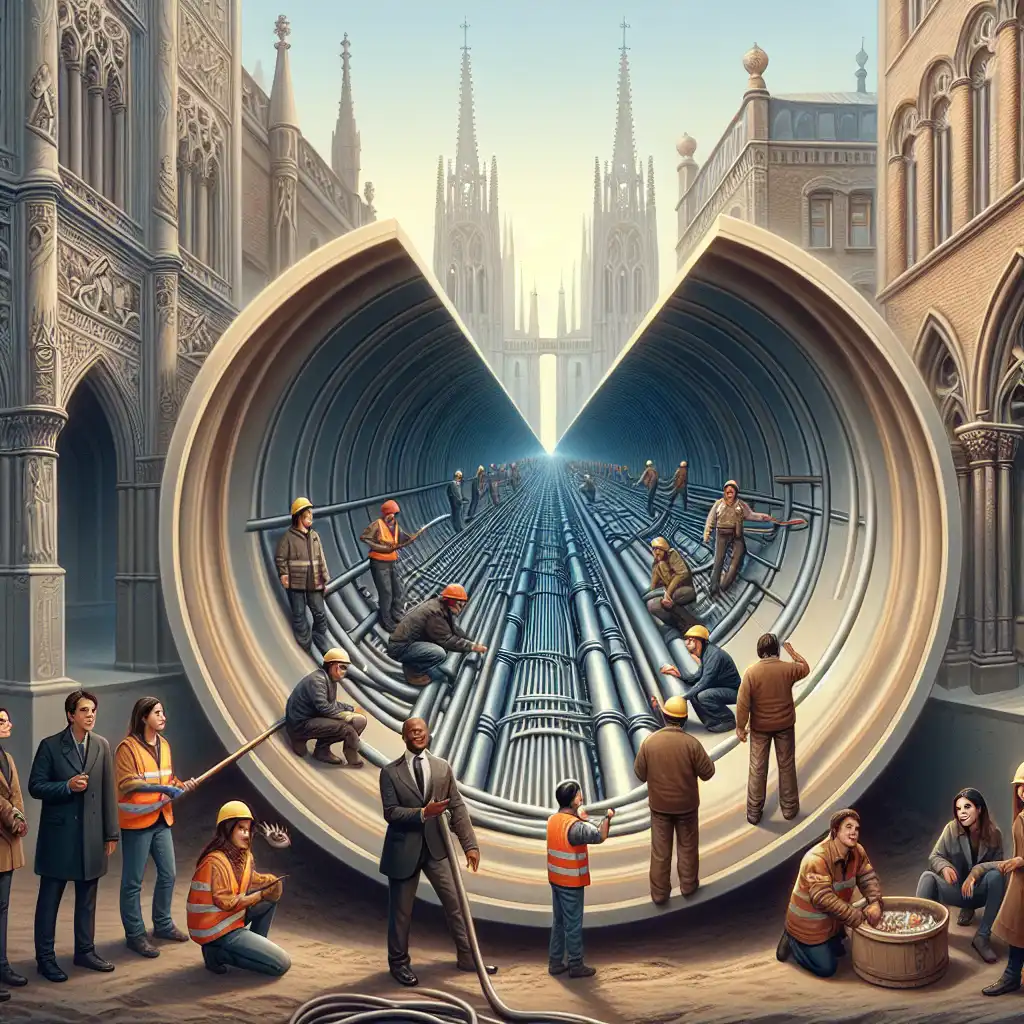
A pipe or tube through which something such as water or electric wires can pass
The company is constructing a new aqueduct to run cables underground.
ˈækwɪdʌkt
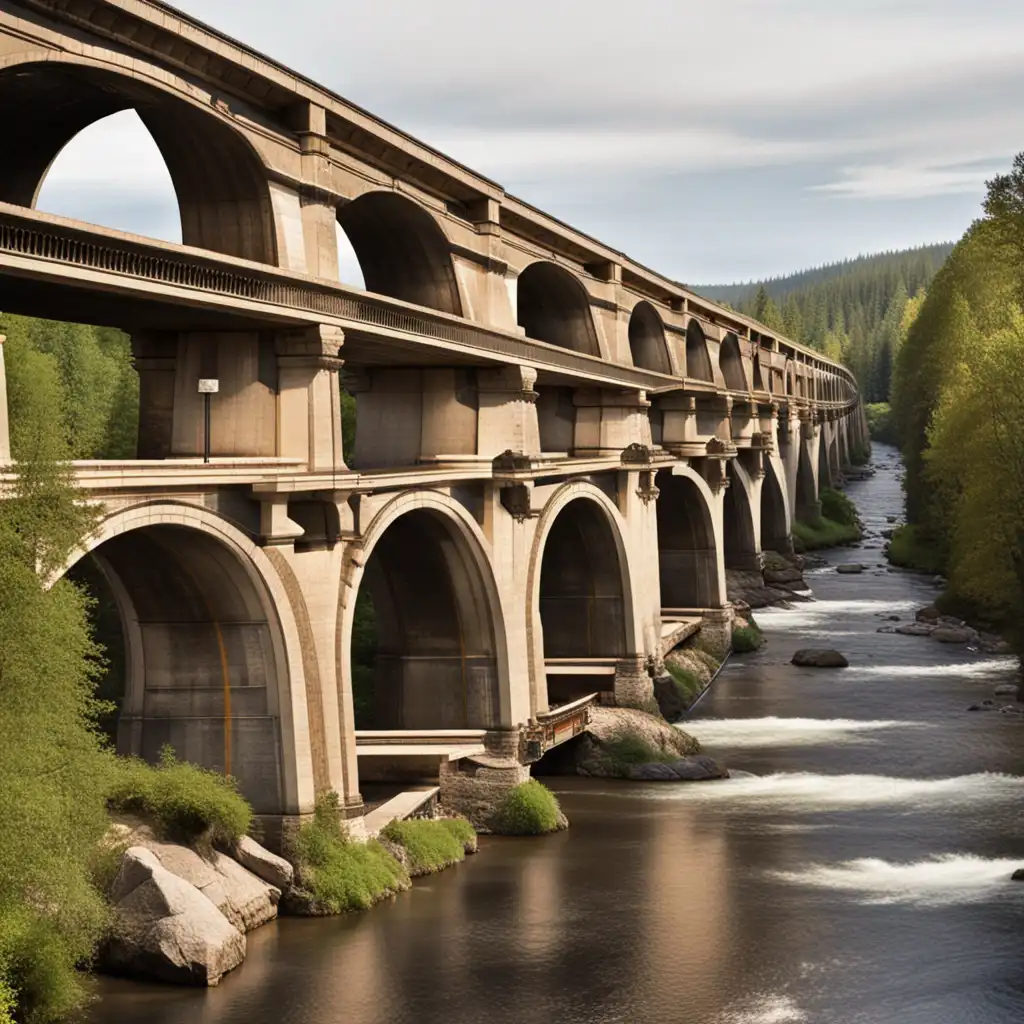
A structure that looks like a bridge and is used to carry pipes or wires over a road, river, etc.
The aqueduct that carries the canal over the river is an impressive architectural feat.

ˈækwɪdʌkt
A narrow tube in your body for carrying a particular fluid
The aqueduct of the midbrain is a vital part of the brain's fluid-circulation system.
Không tải được âm thanh. Vui lòng thử lại sau.
An aqueduct is a special kind of structure that is built to carry water from one place to another. It is kind of like a bridge, but instead of crossing over a river or a valley, it is used to carry water over long distances. People have been building aqueducts for thousands of years to help bring water to places where it is needed, like cities or farms. Nowadays, many aqueducts are used to supply water for drinking, irrigation, or other important purposes. So if you hear someone talking about an aqueduct, they are probably referring to a structure that helps move water from one place to another.
A canal is an artificial waterway that is dug or constructed to connect two bodies of water or to transport goods by water.
An aqueduct is used to transport water, while a canal is used to transport goods or people. Aqueducts are typically elevated structures, while canals are dug into the ground.
Mở từ: Canal →An aqueduct is a structure that carries water over long distances using raised channels or tunnels. Aqueducts were commonly used in ancient times to transport water from a source such as a lake or river to a city or town.
A channel is a pathway or waterway that is typically built on the surface of the earth.
Channels can be used for various purposes such as irrigation or drainage systems, and they can be made of concrete, stone, or other materials.
An aqueduct is a type of channel specifically designed to transport water over long distances, while a channel is a more general term used for any type of man-made pathway or waterway.
Mở từ: Channel →A conduit is a smaller pipe or channel that is used to transport water or other fluids over shorter distances.
An aqueduct is a large structure for transporting water over long distances, while a conduit is a smaller pipe or channel for transporting water over shorter distances.
Mở từ: Conduit →A culvert is a smaller structure typically used to allow water to pass under a road, driveway, or other small obstruction.
They are usually made of metal or concrete and are typically just a few feet wide. Culverts are commonly seen alongside roads and canals.
An aqueduct is a large structure used to transport water over long distances, while a culvert is a smaller structure used to allow water to pass under a road or other small obstruction.
Mở từ: Culvert →A flume is a narrow, often man-made channel used for transporting water in a specific direction, such as for a water park ride or a logging operation.
Flumes can be made of wood, metal, or concrete and can be used to move water down a steep slope or across a short distance.
In summary, aqueducts are used to transport water over long distances, while flumes are used to move water over short distances or down steep slopes.
Mở từ: Flume →A pipeline is a long network of pipes used for transporting liquids or gases.
It is mostly applicable in places where water or other fluids need to be transported over flat terrain or underground. An aqueduct is a large above-ground channel for transporting water, whereas a pipeline is an underground network of pipes for transporting fluids.
Mở từ: Pipeline →An aqueduct and a viaduct are both structures that are used for transportation of something from one place to another, but they are used in different ways.
A viaduct is used for transportation of people, animals or vehicles. It is a structure that spans a valley, river or another obstacle and is built above the ground.
Viaducts are commonly used for railways or roads, where it is not feasible to build the road or the railway line directly on the ground due to obstacles in the way.
So, in summary, aqueducts are used to transport water and viaducts are used to transport people, animals or vehicles.
Mở từ: Viaduct →Ancient Rome 101 %\PIPE%...
Xem trên YouTube ↗I like to take people you wouldn't really think people would write novels about: an aqueduct engineer, a code-breaker, a hedge-fund manager. It's in those sorts of lives that I find more fascination than in a CIA operative or a Marine or something like that.
A 3-Part Plan to Take On...
Xem trên YouTube ↗Typically, highway bridges have about 50 years. But over in England, they have iron bridges approaching 250 years. In France, there are Roman aqueducts that are approaching 2,000 years old. So a bridge can last a very long time if it's built properly in the first place and then maintained properly.
Spend Some Time With The...
Xem trên YouTube ↗A brief history of...
Xem trên YouTube ↗Building smart cities %\PIPE%...
Xem trên YouTube ↗Every Day in Tuscany %\PIPE%...
Xem trên YouTube ↗Sonic Postcards from The...
Xem trên YouTube ↗Elon Musk: The future...
Xem trên YouTube ↗The Romans flooded the...
Xem trên YouTube ↗Palenque and the Ancient...
Xem trên YouTube ↗