Audio could not be loaded. Please try again later.
How to use
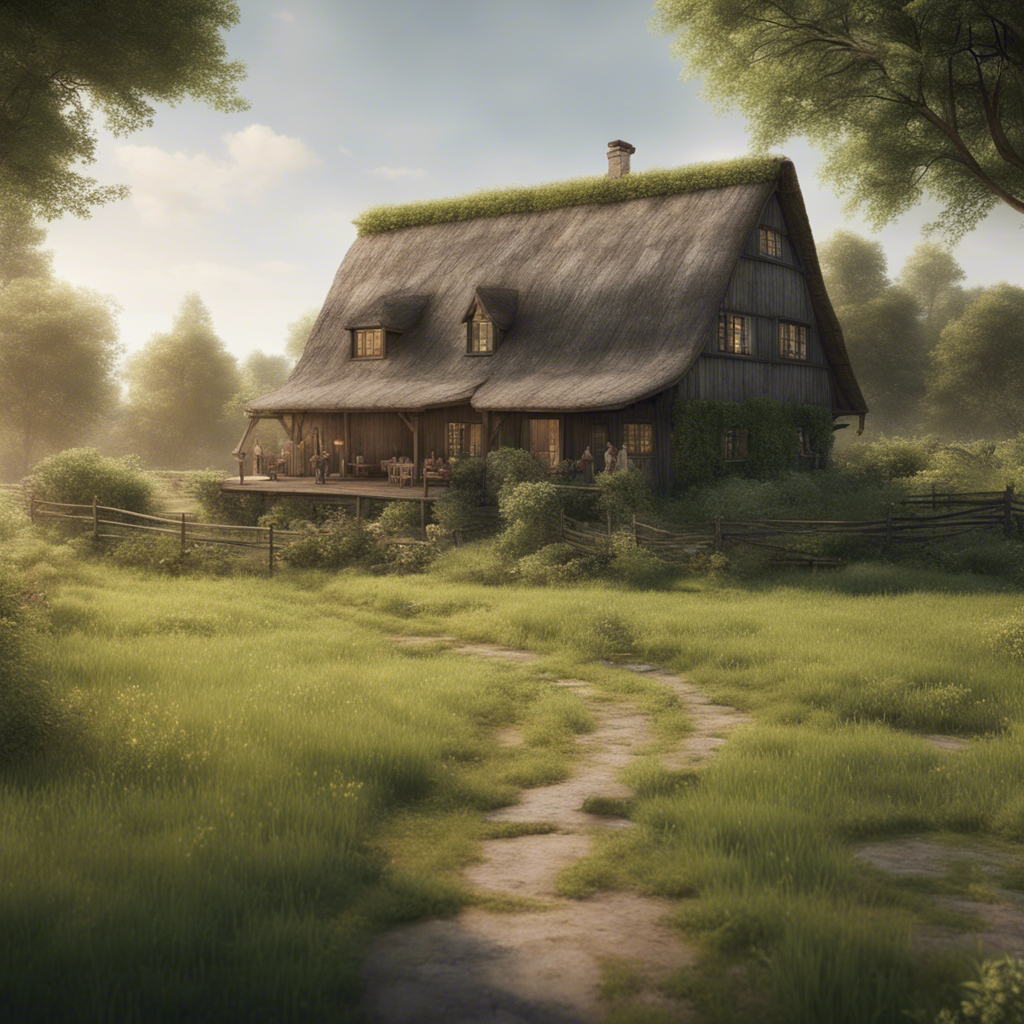
'Rusticity' is used to describe things that are simple, rough, or basic. For example, a cabin in the woods may be described as having a rusticity to it, meaning it has a simple and rustic feel to it. A piece of furniture that is made from rough, unpolished wood may also be described as having a rusticity to it. Basically, 'rusticity' is a word that is used to describe things that are unrefined or basic in nature.
Coarseness refers to the roughness or lack of refinement in something. For example, a coarsely woven fabric is rough to the touch, whereas a finely woven fabric is smooth.
Coarseness can also refer to a person's behavior or language, if it is lacking in manners or refinement.
The main difference between the two words is that coarseness relates to texture, manners or behavior, while rusticity relates to a specific aesthetic or lifestyle.
Coarseness can sometimes have negative connotations, while rusticity is often associated with charm and simplicity.
Crude means something is rough or unrefined, suggesting a lack of sophistication or elegance.
It can describe an object, a design, or a behavior that is uncivilized or lacking in polish or refinement. For example, crude oil is a raw and unprocessed product of nature that requires further refinement to be useful.
Naivety refers to a lack of experience, understanding or knowledge about the world, which can cause someone to believe things that are not true, or trust people too easily.
So, in short, naivety has to do with a lack of knowledge or experience, while rusticity has to do with a certain way of life or environment.
Naivety is often seen as a negative quality, while rusticity can be seen as positive or negative depending on the context.
Plainness means a simple, unadorned, and unembellished style or appearance. It is applicable in various contexts, such as fashion, language, and even behavior.
Plainness refers to simplicity, while rusticity refers to a rural and natural quality.
Primitive generally refers to something that is basic, crude, or undeveloped.
To simplify it further, primitive talks about something that is old or basic, while rusticity talks about something that is rural or unsophisticated but has its own charm.
Simplicity refers to something that is uncomplicated or easy to understand.
Both words are applicable in different contexts. Rusticity is more often used in relation to physical objects and spaces, while simplicity can refer to both physical and abstract concepts.
For example, a rustic cabin in the woods might be described as having a lot of rusticity, while a simple recipe with only a few ingredients might be described as having simplicity.