liturgy
noun liturgy
ˈlɪtərdʒi
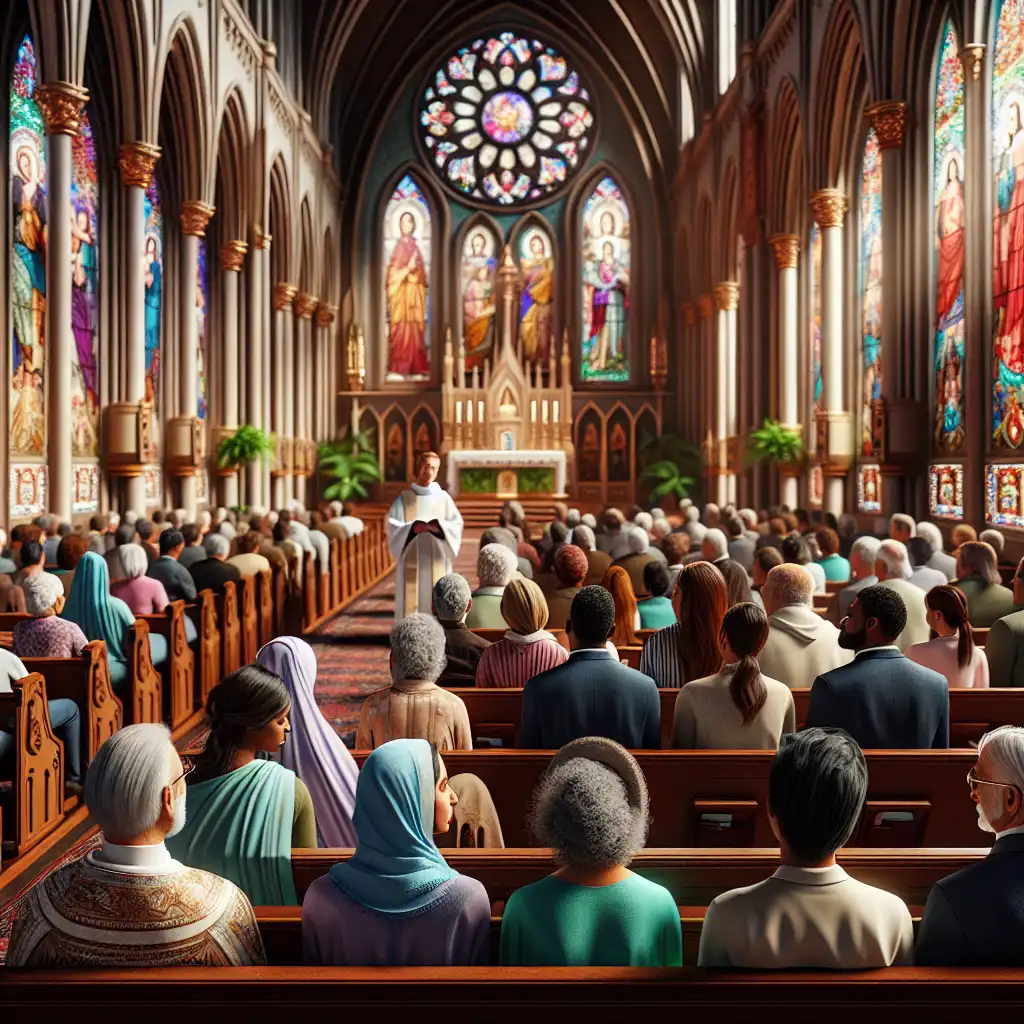
The form of public worship, especially in churches or religious community
The liturgy of the Episcopal Church is similar to that of the Roman Catholic Church.
liturgy
ˈlɪtərdʒi
불러오는 중…
ˈlɪtərdʒi
The form of public worship, especially in churches or religious community
The liturgy of the Episcopal Church is similar to that of the Roman Catholic Church.
ˈlɪtərdʒi
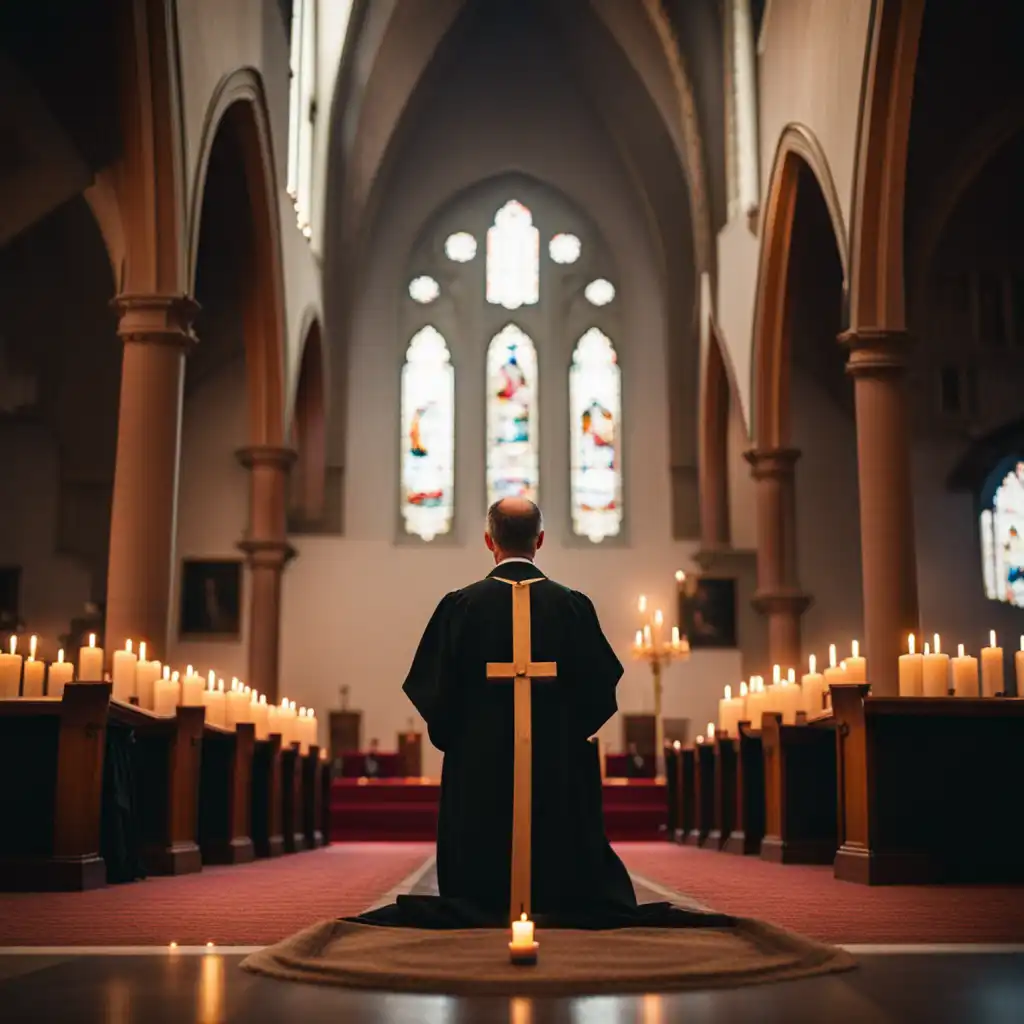
A religious ceremony or service of public worship
The priest led the congregation in a liturgy.
ˈlɪtərdʒi
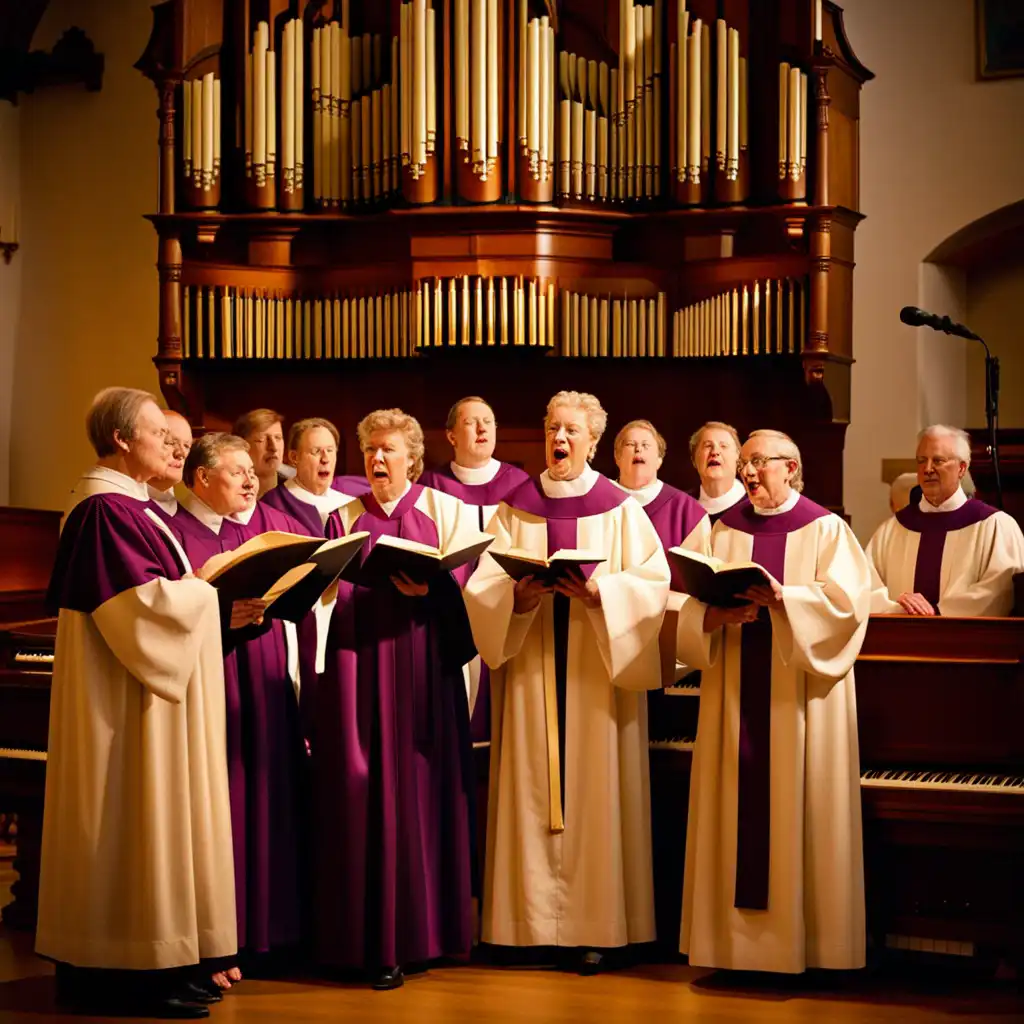
A collection of prayers and psalms used in Christian services
The liturgy is often sung or chanted by a choir.
오디오를 불러오지 못했어요. 잠시 후 다시 시도해 주세요.
Liturgy is a word that is often used to describe a religious ceremony or ritual. It is commonly used within the context of Christianity to refer to the formal order of worship or service that is used in a church setting. In general, liturgy refers to the set of words, actions, and symbols that are used to express and enact a particular religious tradition or belief. In modern English, the word "liturgy" can also refer to any formal or ceremonial event or occasion, regardless of whether it is religious in nature.
Ceremony refers to a formal event or occasion that usually involves a set of specific actions, rituals, or traditions that have been passed down through generations.
단어 열기: Ceremony →Communion refers to the act of receiving the sacrament of the Eucharist in which bread and wine are consecrated to represent the body and blood of Jesus Christ.
Liturgy refers to a formal religious service or ritual, usually referring to the Mass or other worship services. Communion is one part of liturgy, but liturgy involves other elements such as prayers, readings, and singing.
Communion is applicable during Mass, while liturgy is applicable during any formal religious service.
단어 열기: Communion →Liturgy generally refers to the formal ritual of worship in various Christian denominations, while mass specifically refers to the Catholic liturgy of celebrating the Eucharist.
Liturgy can be used more broadly to describe various elements of worship, such as prayers, hymns, and rituals, while mass specifically refers to the consecration and consumption of the bread and wine.
Therefore, while mass is a type of liturgy, not all liturgies are masses.
단어 열기: Mass →Observance refers to a broader set of religious practices and customs that are observed by individuals, families, or entire communities.
Liturgy is a more structured and specific set of religious practices, while observance is a broader term that encompasses a range of religious traditions and customs.
Liturgy is typically performed within the context of a larger religious community, while observance can be practiced by individuals or small groups.
단어 열기: Observance →Rite refers to a specific set of ceremonies, actions, or procedures that are part of a larger liturgical tradition. For example, the sacrament of baptism is a rite that includes specific prayers and actions such as pouring water over a person's head or immersing them in water.
Liturgy is the overarching term for a religious service or worship, while rite refers to specific actions or ceremonies within that liturgical tradition.
단어 열기: Rite →Ritual is a broader term that can refer to any set of actions or procedures that are performed in a specific way.
Rituals can be religious or secular; they can be personal (such as a daily exercise routine) or communal (such as a wedding ceremony).
Liturgy refers specifically to formal religious ceremonies, while ritual can refer to a wider range of actions or procedures, both religious and secular.
단어 열기: Ritual →Liturgy refers to a specific set of religious rituals and practices, while the word service is more general and can refer to any type of religious gathering, including a liturgy.
Liturgy is applicable to specific religious traditions that have prescribed practices, while service is applicable to any religious gathering or ceremony.
In simpler terms, liturgy is a planned and structured religious ceremony while service is a general term for any religious gathering.
단어 열기: Service →Liturgy refers to a prescribed set of rituals or ceremonies in religious worship, while worship is the act of showing reverence and adoration to a deity.
Liturgy is applicable in formal religious settings where there are specific rituals and traditions that are followed in worship, such as in Catholic or Orthodox Christian churches.
Worship can refer to any act of showing reverence to a deity or spiritual practice, whether in a formal religious setting or in personal devotional practices.
단어 열기: Worship →Chanda Prescod-Weinstein...
YouTube에서 보기 ↗Music had always been the handmaid of the Roman liturgy.
I like the ritual, the liturgy of a well-crafted, emotional fashion show. I will never be jaded with this side of fashion. The catwalk is pure anthropology, something like an esoteric encrypted parade. It can totally be replaced but it will be missed.
The Eucharistic mystery stands at the heart and center of the liturgy since it is the fount of life by which we are cleansed and strengthened to live not for ourselves but for God and to be united in love among ourselves.
Leaders are for calling people to their better angels, for helping guide them to a kind of sterner, more mature sense of what we need to do. To me, Reagan's brand of leadership was what I call 'a liturgy of absolution.' He absolved Americans almost in a priestly role to contend with sin. Who wouldn't want that?
I am enormously susceptible to religious environments - the music, the liturgy and the prayers.
Second, we also got a more authentic liturgy of the people of God, in the vernacular language.
I grew up in a family where, through my teenage years, I was expected to go to church on Sunday. It wasn't terribly painful. I thought some of the stories were neat; I liked some of the liturgy and some of the songs.
There are lots of things to like about being Eastern Orthodox - incense, liturgies, all the baklava you can eat - but you know what I like best? None of that stupid 'women's ministry' stuff.
The language of the Catholic Church - the liturgy, the prayer, the gospels - was in many ways my first poetry.
As regards my own 'philosophy,' I continue to be inspired by the music, liturgy and architectural tradition of the Anglican Church in which I was brought up. No one can fail to be uplifted by great cathedrals - such as that at Ely, near my home in Cambridge.