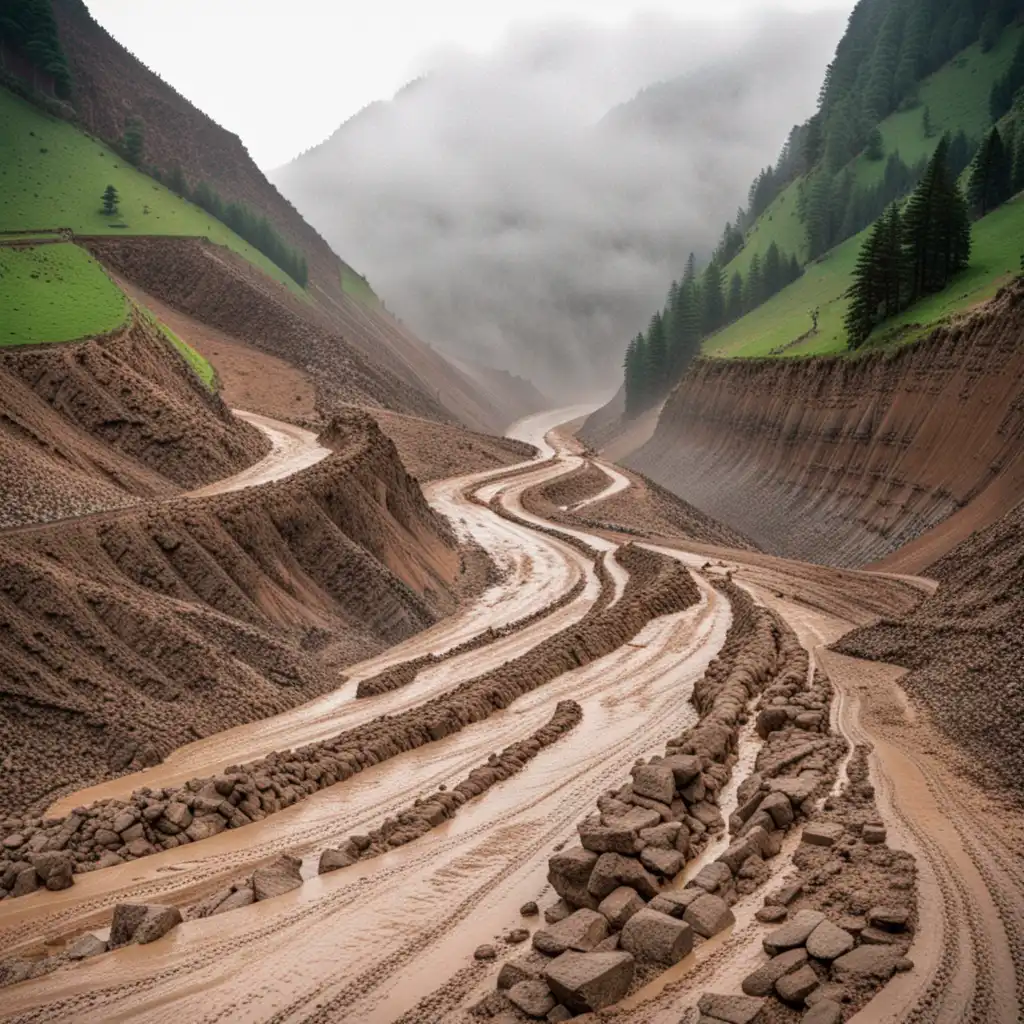
landslip
noun landslip
ˈlændslɪp
A large mass of earth or rocks sliding down a hillside or cliff.
After the heavy rains, a landslip blocked the main road through the mountains.
landslip
ˈlændslɪp
Đang tải…
ˈlændslɪp
A large mass of earth or rocks sliding down a hillside or cliff.
After the heavy rains, a landslip blocked the main road through the mountains.
Không tải được âm thanh. Vui lòng thử lại sau.
A landslip refers to a situation where a large amount of land slides or falls down a slope or cliff. This can happen due to heavy rainfall, earthquakes, erosion, or human activities like mining. The term is most commonly used to describe natural disasters that result in hills or mountainsides collapsing and causing damage to infrastructure or homes. So, if you hear about a landslip in the news, it means that a section of land has shifted or fallen, often with disastrous consequences. It's important to be aware of the possibility of landslips in areas where the terrain is steep or unstable, and to take necessary precautions to stay safe.
An avalanche is a sudden and rapid flow of snow, ice, and rock down a mountain slope. It mainly occurs in areas with heavy snowfall, steep slopes, and unstable snow.
The main difference between the two is the material that moves. Avalanches involve snow, ice, and rock while landslides involve soil, rock, and debris.
However, avalanches are more common in mountainous regions and are mostly caused by natural factors. Landslides can occur in any area where there is a slope and are often caused by a combination of natural and human factors.
Mở từ: Avalanche →A landslide is typically a rapid and sudden movement of a large mass of soil or rock downhill, often triggered by heavy rainfall, earthquakes or human activity.
A landslip may cause less damage than a landslide, but can still be a hazard to people and property in the affected area.
A landslide is a sudden and dramatic movement of soil or rock downhill, while a landslip is a slower and more gradual movement of the same materials.
Both can be dangerous, but landslides are usually more destructive and often caused by sudden events such as heavy rainfall or earthquakes.
Mở từ: Landslide →A slump is a slow and gradual movement of soil, rock, and debris down a slope or cliff. This happens when the ground becomes saturated with water, causing it to lose stability and gradually move downhill.
A landslide is a sudden and catastrophic event, while a slump is a gradual and slower movement. Landslides usually occur in hilly or mountainous areas, while slumps can occur anywhere with slopes and wet conditions.
Mở từ: Slump →Subsidence refers to the sinking or settling of land, usually over a longer period of time. This can occur due to natural causes like soil compaction, underground water or mineral extraction, or construction activities.
Subsidence can cause buildings to shift or even collapse, and can also damage infrastructure like roads and pipelines. Subsidence is more common in areas with soft or weak soil, such as coastal regions or areas with high levels of groundwater.
A landslip is a sudden, catastrophic event that results in a large amount of soil or rock sliding down a slope, while subsidence is a gradual sinking or settling of land over time.
Both can cause damage to buildings and infrastructure, but landslips are more immediate and unpredictable, while subsidence is a slower process that can often be predicted and managed.
Mở từ: Subsidence →