codex
noun codex
ˈkəʊdeks
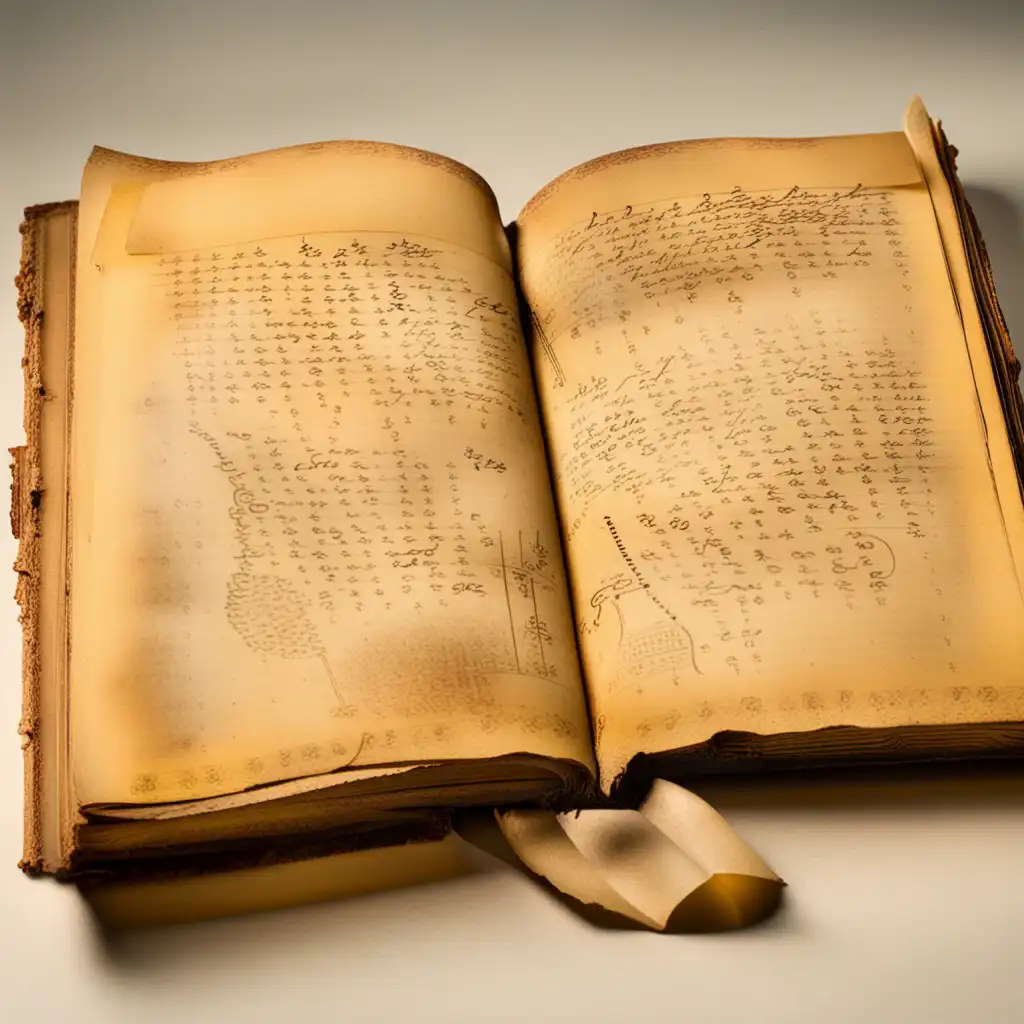
A book constructed of a number of sheets of paper, vellum, papyrus, or similar materials, with hand-written content.
The ancient codex was filled with hand-scripted poems.
codex
ˈkəʊdeks
Chargement…
ˈkəʊdeks
A book constructed of a number of sheets of paper, vellum, papyrus, or similar materials, with hand-written content.
The ancient codex was filled with hand-scripted poems.

ˈkəʊdeks
A document with a set of laws or rules.
The criminal codex contained all the laws related to unlawful activities.

ˈkəʊdeks
In the field of computing, a codex is a method used to encode or decode data.
The video file used an unknown codex, making it impossible to play.
Impossible de charger l’audio. Réessayez plus tard.
The word 'codex' in modern usage refers to a type of book, often ancient, that is made up of bound pages rather than a scroll. It is commonly used when referring to historical manuscripts or texts, particularly those from the time before the invention of the printing press. This word can also be used more broadly to refer to a collection of laws or rules, such as a legal codex or code of conduct.
A booklet is a small book, usually containing a few pages that are stapled or bound together.
It can be used for information, instruction manuals, or advertising materials. Booklets are mainly used for simple and short pieces of information.
A booklet is a small and simple book while a codex is a larger and more complex manuscript book. Booklets are used for simple and short pieces of information while codex is used for longer and in-depth pieces of literature.
Ouvrir le mot: Booklet →A compendium is a collection of concise but detailed information on a particular topic. It could be a summary of important details, facts, or events.
Compendiums are applicable in academic fields such as medicine, law, and engineering.
A codex is a book format, while a compendium is a collection of information. Codexes apply to ancient manuscripts, while compendiums apply to concise information.
Ouvrir le mot: Compendium →A codex and a manuscript are both written documents, but they are different in their physical structure.
A manuscript is a handwritten document on loose pages or sheets of paper.
Manuscripts were used throughout history to record important texts such as religious texts, historical accounts, and scientific knowledge.
A codex is a bound book with folded pages, while a manuscript is a handwritten document on loose pages or sheets of paper.
Codices are more commonly used in modern times, while manuscripts have historical significance as important sources of information.
Ouvrir le mot: Manuscript →It is typically made of parchment or paper and has a cover. Codexes were commonly used in ancient times and continued to be used throughout the Middle Ages, whereas scripts refer to any type of written work, such as a piece of paper or a scroll.
A codex is specifically a bound book, while script refers to any written work regardless of its form.
Ouvrir le mot: Script →A scroll is a long piece of paper or parchment that is wound around a central rod, so that it can be rolled up to take up less space.
Scrolls were widely used before the invention of bookbinding, mostly in ancient times. They are applicable in situations where the length of the material matters more than its accessibility.
For instance, in ancient civilizations, important scripts or messages were written on scrolls to preserve them for future generations.
Ouvrir le mot: Scroll →Codex refers to a specific type of book that is composed of pages bound together in a particular way (like a modern book), while the word text refers more generally to any written or printed words.
A text could be any written work, even if it's not bound in book form. For instance, a text could be a poem written on a piece of paper or an article you read online.
Codex is a term for a bound book, while text is a more general term for written or printed material.
Ouvrir le mot: Text →A tome is a large or heavy book, usually one that contains a lot of information. It's often used to refer to a book that is scholarly or academic in nature.
The main difference between the two is that a codex refers to the physical format of a book, while a tome refers to the content or size of a book.
Ouvrir le mot: Tome →A volume is a book that is part of a larger work and contains a section of the larger work.
A volume is applicable to modern-day books, encyclopedias, or multi-book series, where each book is a separate entity but connected to a larger work.
Ouvrir le mot: Volume →Feats of memory anyone...
Voir sur YouTube ↗I'm definitely more of a 'think game' kind of girl. I'll read every single dialogue and codex entry and lore entry. I really do love projecting myself and creating my character.
Maya Doomsday Prophecy %\PIPE%...
Voir sur YouTube ↗I learned to interpret the ancient pictograph codices and read Nahuatl, the Aztec language.
The evolution of the...
Voir sur YouTube ↗I believe we should celebrate new possibilities of combining the printed codex with electronic technology... The information ecology is getting richer, not thinner.
The Aztecs: From Empire...
Voir sur YouTube ↗I've always been captivated by the Voynich Manuscript - the mysterious, 15th-century encrypted codex that still baffles cryptologists, linguists, and historians.
Exo-Cannibalism %\PIPE%...
Voir sur YouTube ↗During the Spanish conquest of Mesoamerica in the 16th century, the Catholic Church's Friar Diego de Landa supervised the burning of hundreds of Maya codices - fig-bark books rich in mythological and astronomical information. Only four Maya codices are known to have survived.
Exorcising the Devil %\PIPE%...
Voir sur YouTube ↗Around A.D. 930, the sages in Tiberias assembled all 24 holy books and completed the writing of the codex, the first definitive Tanakh, or Hebrew Bible. From Tiberias, the codex was taken to Jerusalem.
Why books are here to...
Voir sur YouTube ↗If the worst comes true, and the paper book joins the papyrus scroll and parchment codex in extinction, we will miss, I predict, a number of things about it.
Germán Santillán: A...
Voir sur YouTube ↗Over the last few millennia we've invented a series of technologies - from the alphabet to the scroll to the codex, the printing press, photography, the computer, the smartphone - that have made it progressively easier and easier for us to externalize our memories, for us to essentially outsource this fundamental human capacity.
Bill Saturno: Adding...
Voir sur YouTube ↗Ben Dunlap: The...
Voir sur YouTube ↗