Audio could not be loaded. Please try again later.
How to use
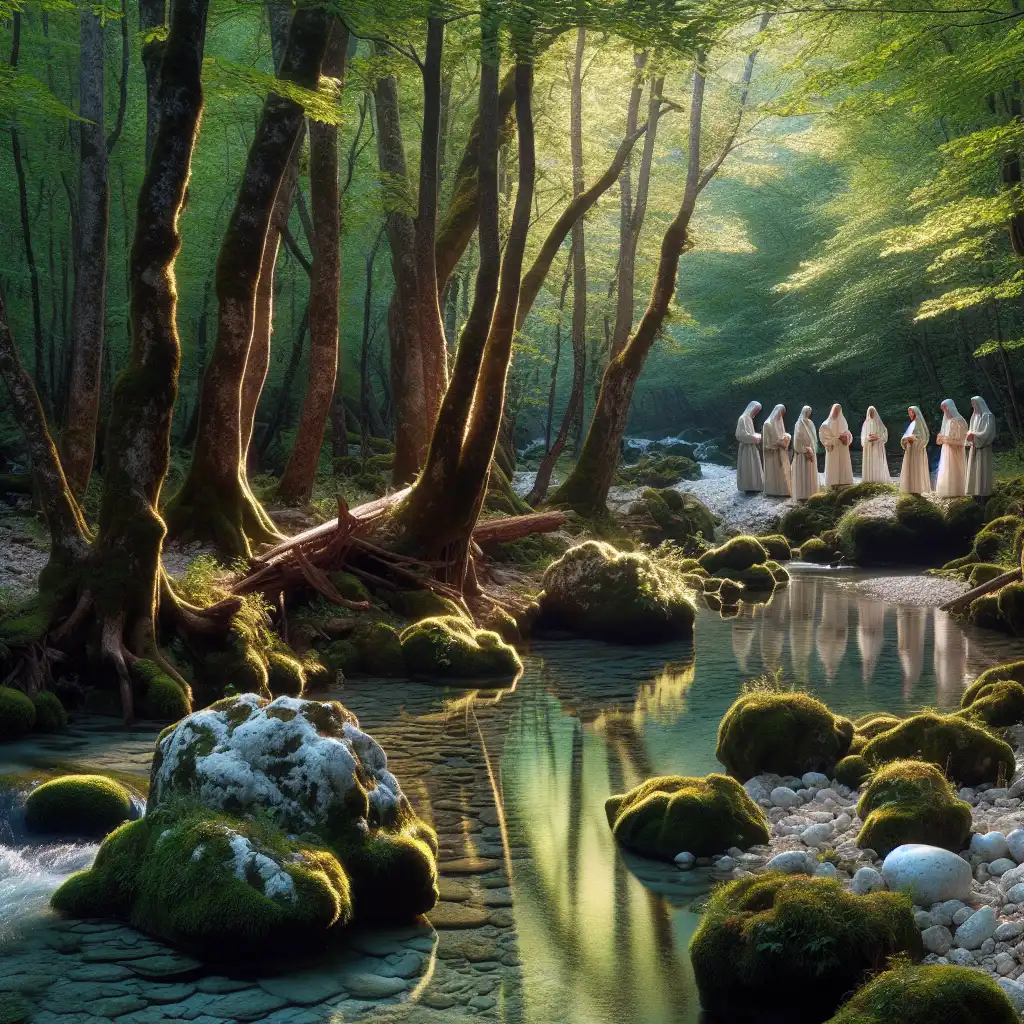
The word 'animistic' is used to describe a belief that natural objects and animals have spirits or souls. For example, some people who follow certain religions might believe that rocks or trees have spirits that they can communicate with. It is important to note that not everyone believes in animism, and it is not a widely used word in everyday conversation.
Enchanted refers to a feeling of magic or mystery associated with something.
It can describe a physical location or an experience, like feeling enchanted by a beautiful forest or a captivating book.
Animistic is applicable when talking about spiritual beliefs and the concept of souls in nature, while enchanted describes a feeling or experience of wonder and magic.
Esoteric refers to ideas or knowledge that is intended for or likely to be understood by only a small number of people with a specialized knowledge or interest.
Animistic relates to beliefs relating to the spiritual nature of everything, while esoteric involves secretive or specialized knowledge.
Animistic is applicable to discussions of different belief systems, especially those of indigenous cultures, while esoteric can apply to discussions of specialized knowledge or secretive groups.
It is often used when talking about indigenous or traditional religions that believe in this concept. Mystic refers to a person who seeks a deeper understanding of the universe through spiritual practices like meditation or prayer.
Mystic also describes a type of religious experience that is characterized by a feeling of unity with the divine. So while animistic describes a belief system, mystic describes a type of spiritual practice or experience.
Mythical refers to stories or legends that involve gods, heroes, or other supernatural beings. These stories often explain natural phenomena and cultural beliefs, but are not necessarily tied to a specific belief system or culture.
Animistic refers to the belief that everything has a spirit or consciousness, while mythical refers to stories about supernatural beings.
Animistic can be applied to belief systems, while mythical is applied to stories or legends.
This belief is prevalent in many indigenous cultures around the world. Supernatural refers to things that cannot be explained by natural laws or science, such as ghosts, demons, or divine beings.
While animism is a specific belief system, supernatural can refer to a wide range of beliefs and experiences that are beyond natural explanation.
Animistic beliefs are applicable in cultures that believe in the interconnectedness of nature and the spiritual world, while supernatural beliefs can be found in many different cultures and religions.