ordnance
noun ordnance
ˈɔːrdnəns
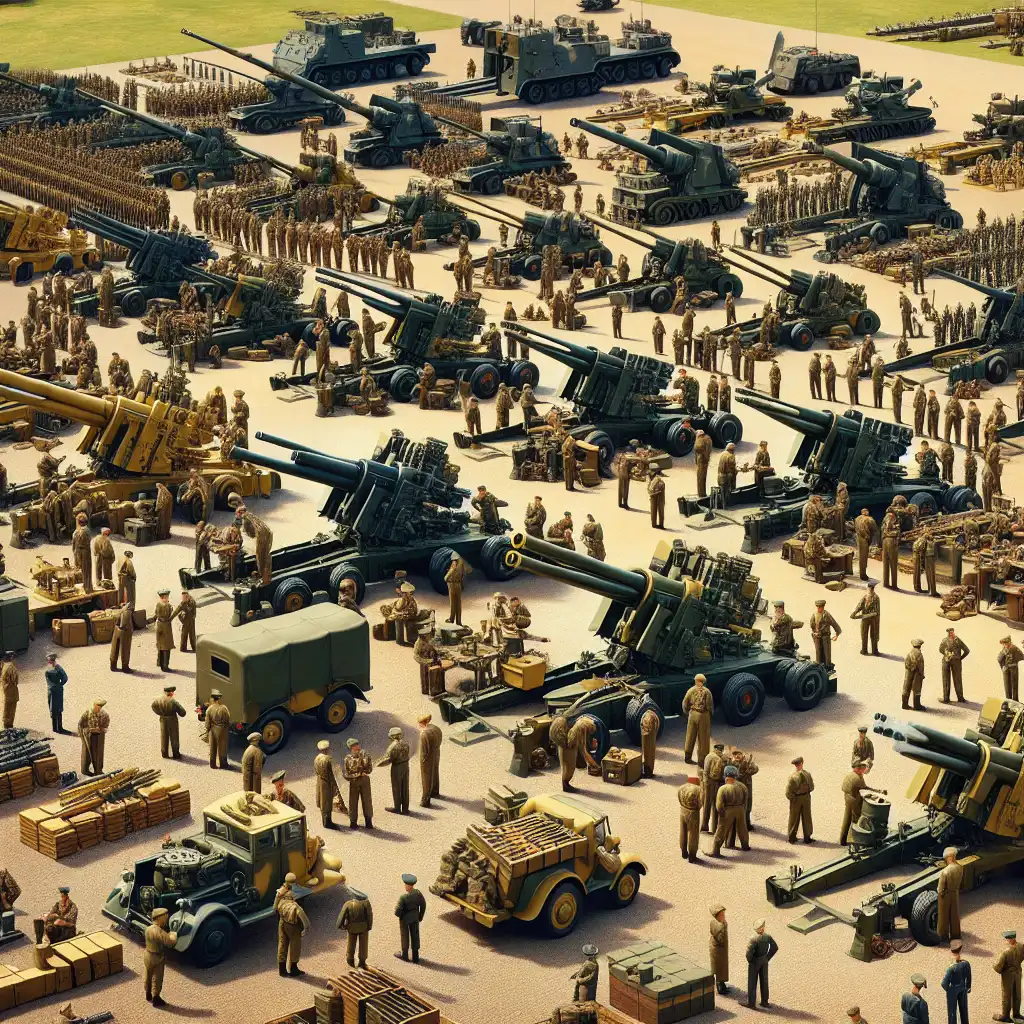
Large weapons like cannons and bombs
The military base is equipped with heavy ordnance.
ordnance
ˈɔːrdnəns
Đang tải…
ˈɔːrdnəns
Large weapons like cannons and bombs
The military base is equipped with heavy ordnance.
ˈɔːrdnəns
The department of a government or military that supplies weapons
He worked in the Ordnance Department of the British Army.

ˈɔːrdnəns
A short term for Ordnance Survey, the national map-making body of the UK
The Ordnance Survey map shows all the hiking trails in the area.
Không tải được âm thanh. Vui lòng thử lại sau.
The word 'ordnance' is used to describe military equipment such as guns, cannons, missiles, and bombs. It refers to any tool or weapon that is used for battle or war. It is important to use this word in a military or historical context, such as when talking about battles, armies, or wartime strategy. It is not a word that would commonly be used in everyday conversation outside of these contexts.
Ammunition refers to the bullets, cartridges, or shells that are used in guns or other firearms. Ordnance refers to larger military weaponry, such as bombs, missiles, and artillery.
Ammunition is usually carried by soldiers in their guns or in pouches attached to their uniforms, and is used in combat situations.
Both ammunition and ordnance play an important role in military operations, with ammunition being used more frequently by soldiers on the ground, and ordnance being used in larger-scale military operations or in situations where heavier weaponry is needed.
Mở từ: Ammunition →Arm refers to a person's limb from the shoulder to the hand, while ordnance refers to military weapons and equipment, such as guns, ammunition, and other supplies.
Arm is applicable in everyday language when referring to a part of the body, such as raising one's arm or putting on a coat.
Mở từ: Arm →Armament refers to all the weapons and military equipment used by a particular country or military force. This includes things like tanks, aircraft, and missiles.
Ordnance can refer to both the actual weapon itself and the ammunition used with it. So, while armament is a more general term, ordnance is more specific to weapons and their ammunition.
Mở từ: Armament →Artillery is a type of weapon that is used in battles and wars, which is typically used to shoot projectiles far away at the enemy.
Ordnance is a broader term that refers to all types of weapons and ammunition used in warfare. This includes not only artillery, but also smaller weapons like guns and rifles, as well as bombs and other explosive devices.
So, while artillery refers specifically to large weapons used in battle, ordnance is a more general term that encompasses all types of weapons and ammunition, big or small.
Mở từ: Artillery →Gun usually refers to a small weapon that can be held and operated by one person, like a handgun or a rifle. It is commonly used for personal defense or hunting.
Therefore, while gun refers to a small weapon, ordnance describes larger military weapons that are typically operated by multiple people.
Mở từ: Gun →Gunnery refers specifically to the operation and firing of guns or firearms, while ordnance refers to any type of military supplies, weapons, or munitions.
Gunnery would be applicable in situations where someone is working with guns, such as a gunnery sergeant in the military who trains soldiers in firing weapons.
Gunnery is all about guns and how to use them, while ordnance deals with a broader range of military supplies and weapons.
Mở từ: Gunnery →Both munition and ordnance refer to military equipment used in combat, but they have different meanings.
Munition refers to ammunition, or the bullets, shells, and other projectiles that are fired from guns or other weapons.
In other words, munitions are the "bullets and bombs" of the military.
Ordnance, on the other hand, refers to a broader category of military equipment, including not only ammunition, but also guns, rifles, tanks, missiles, and other weapons.
So, in short, munitions are specifically the projectiles fired from weapons, while ordnance encompasses a wider array of military equipment used in combat.
Mở từ: Munition →Ordnance and weaponry are both related to military equipment, but they refer to slightly different things. Ordnance refers specifically to large military equipment, such as artillery guns or mortars.
Weaponry refers to a broader range of weapons, including firearms, knives, grenades, and other smaller weapons.
In practical use, you might hear the word ordnance used to describe something like a howitzer or a missile launcher, while weaponry might be used to refer to a soldier's personal weapons or equipment, such as a rifle or body armor.
Ordnance refers to larger, more complex military equipment, while weaponry refers to a broad range of weapons and tools used by soldiers.
Mở từ: Weaponry →point in their life will be laughing away for example Koki here does not do a lot a lot of laughing because laughing is something that indicates nervousness or sub ordnance almost and you'll find that very nervous hyenas or the hyenas are very low ranking when they approach
Xem trên YouTube ↗There are still thousands of people dying every year in Laos, mostly children and farmers, from unexploded anti-personnel ordnance that the U.S. simply saturated much of the land with, especially in the Plain of Jars. There actually is a British engineering team trying to remove some of these things, which are much worse than land mines.
which don't involve fossil fuels so there's nuclear power and on this Ordnance Survey map you can see there's a size well be inside a blue square kilometer that's one gigawatt in a square kilometer which works out to a thousand watts per square meter
Xem trên YouTube ↗Major reforms include optimisation of the Signals establishments, restructuring of repair echelons, redeployment of ordnance echelons, better utilisation of supply and transport echelons, besides closure of military farms, and Army postal establishments in peace locations.
I was born in Kerala, where my maternal grandparents lived, and stayed there till the age of one, after which I came to Maharashtra to live with my parents and moved all around the state with my father, who worked as a superintendent in an ordnance factory.