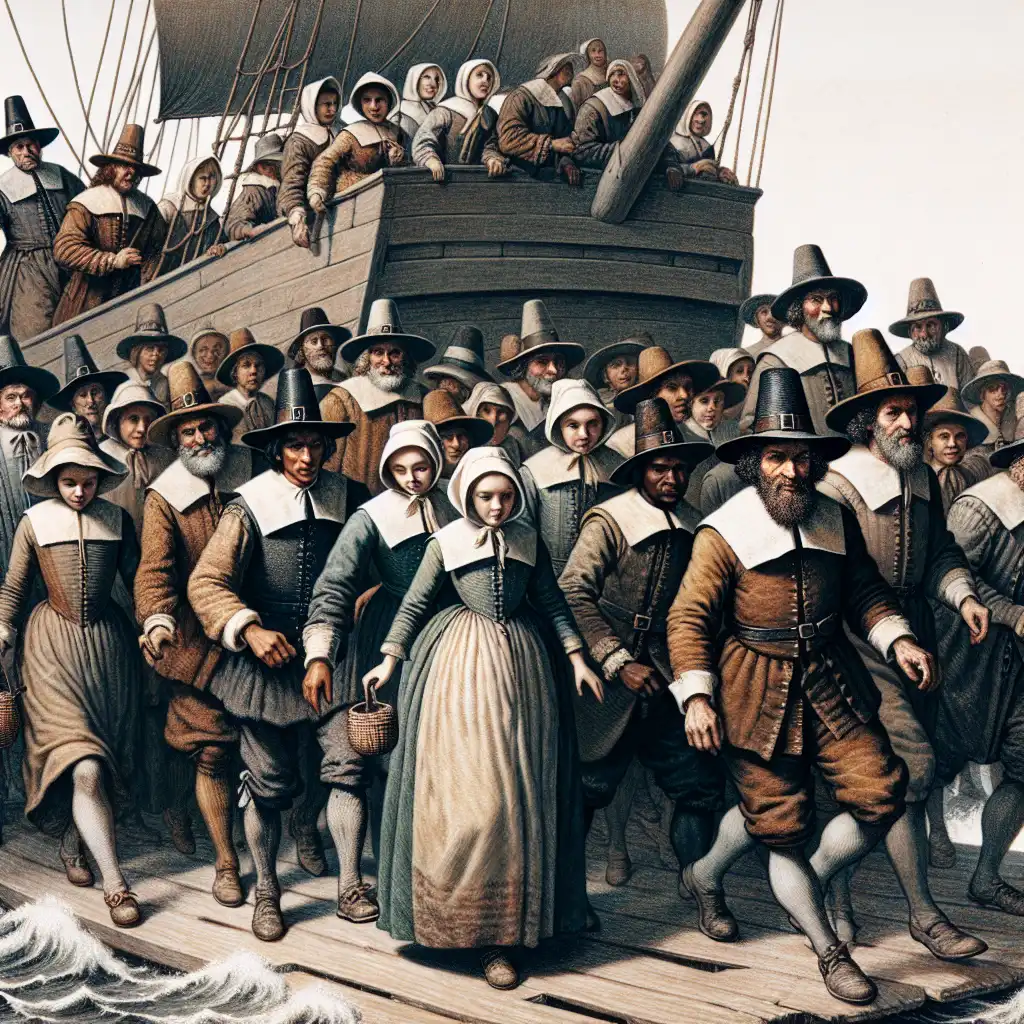
A person who settles in a new region or country from their original home, especially during the time of history when countries were being discovered and colonized.
The first colonists to settle in America came from England.
The word 'colonist' refers to a person who goes to live in a new place, often a distant or foreign land, and becomes a member of a community that is establishing a settlement there. It is mostly used in the context of colonization, which is the process of settling or conquering a new land by a group of people from another country. Examples of colonists include the early European settlers in America or Australia. The word is often used in history textbooks, discussions on the impact of colonization, and debates on immigration policies.
An explorer is someone who travels to new and unknown places with the intention of discovering and learning about them.
Explorers often travel to remote or uncharted areas to map out the land, collect data, and document their findings for scientific or personal purposes.
In summary, colonists are settlers who establish homes and communities in new areas with the intention of staying, while explorers are travelers who journey to new and unknown places with the goal of discovering and learning about them.
Immigrant refers to a person who moves to a new country or region to live there permanently. They usually do not have the intention of taking control of the area and often move for reasons such as better opportunities, safety, or a better life.
In summary, colonists seek to occupy and control a new land, while immigrants seek to build a new life in a foreign land.
Inhabitant refers to a person who lives permanently in a certain place, such as a city, town, or country. They may have been born in that place or moved there later.
For example, a person who lives in New York City is an inhabitant of New York City.
Colonist refers to a person who settles or establishes a new community in a foreign land, while inhabitant refers to a person who lives permanently in a certain place.
A pioneer is a person who travels to a new and undeveloped area to explore, discover, and potentially establish a new settlement.
Pioneers often travel alone or in small groups and are focused on exploring and opening up new territories, rather than staying in one place and building a society.
To summarize, colonists settle and establish new societies, while pioneers explore new territories and potentially establish new settlements.
Plant refers to the act of placing something, typically a seed or young plant, in the ground with the intention of it growing into a mature plant.
This is usually done in order to cultivate crops or create a garden. For example, a farmer would plant seeds in a field to grow crops.
Colonist refers to a person who settles in a new area, while plant refers to the act of placing something in the ground with the intention of it growing.
A resident refers to someone who lives in a particular place or area, often on a more temporary basis. Residents are generally people who already have an established connection to the place where they live, such as through family, work, or personal interests.
In short, colonists are people who intentionally move to a new, unfamiliar land to establish a new society, while residents are people who already live in a place and have existing ties to the community.
Settler generally refers to someone who moves to a new area with the intention of making a permanent home there.
Settlers usually arrive on their own or in small groups, and they may not have a specific plan or purpose beyond starting a new life in a new place.
Both terms can be applicable in situations where people are moving to a new location to start a new community or way of life, but colonist tends to suggest a more organized and deliberate approach, while settler suggests a more independent and personal decision.
Among the natural rights of the colonists are these: First a right to life, secondly to liberty, and thirdly to property; together with the right to defend them in the best manner they can.
I pass over the toil and suffering and danger which attended the redemption and cultivation of their lands by the colonists, and turn to their civil condition and to the conduct and history of the government.
It is easy to gain a definite notion of the furnishing of colonial houses from a contemporary and reliable source - the inventories of the estates of the colonists.
The southern colonists were not preoccupied with their own historical significance and mostly did not bother even to make the records of births, marriages, and deaths that they required of themselves by law. Nor did they write accounts of what they were up to for the benefit of posterity.
Britons are good, though often brutal, colonists where they come into relations with entirely uncivilized tribes whose past is so remote as to be forgotten. But they trample with their heavy boots over the sensitive, delicate susceptibilities of an ancient, highly civilized and cultured nation, such as India.
I always understood my ancestry, like that of so many others in the Gulf Coast, to be a tangle of African slaves, free men of color, French and Spanish immigrants, British colonists, Native Americans - but in what proportion, and what might that proportion tell me about who I thought I was?
I descend from both Philadelphia Quakers and Carolina colonists whose families were separated by the Revolutionary War. That helped give me insight into the agony of Patriots who, until the British government denied their claims, had always, like Ben Franklin himself, thought of themselves as free-born Englishmen.
American government did not originate in any abstract theories about liberty and equality, but in the actual experience gained by generation after generation of English colonists in managing their own political affairs. The Revolution did not make a breach in the continuity of their institutional life.