invertebrate
noun invertebrate
ɪnˈvɜːrtɪbrət
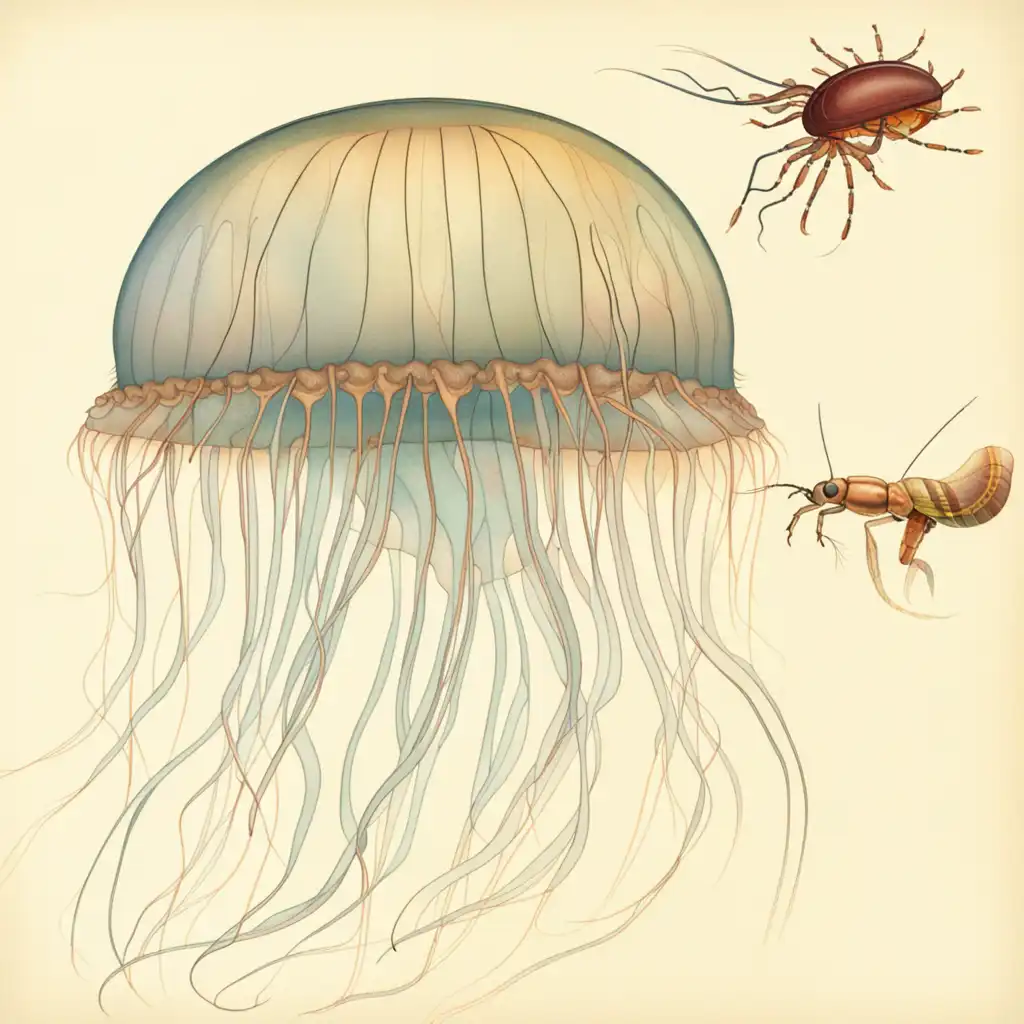
Animal that doesn't have a backbone.
Jellyfish and insects are examples of invertebrates.
invertebrate
ɪnˈvɜːrtɪbrət
Chargement…
ɪnˈvɜːrtɪbrət
Animal that doesn't have a backbone.
Jellyfish and insects are examples of invertebrates.
ɪnˈvɜːrtɪbrət
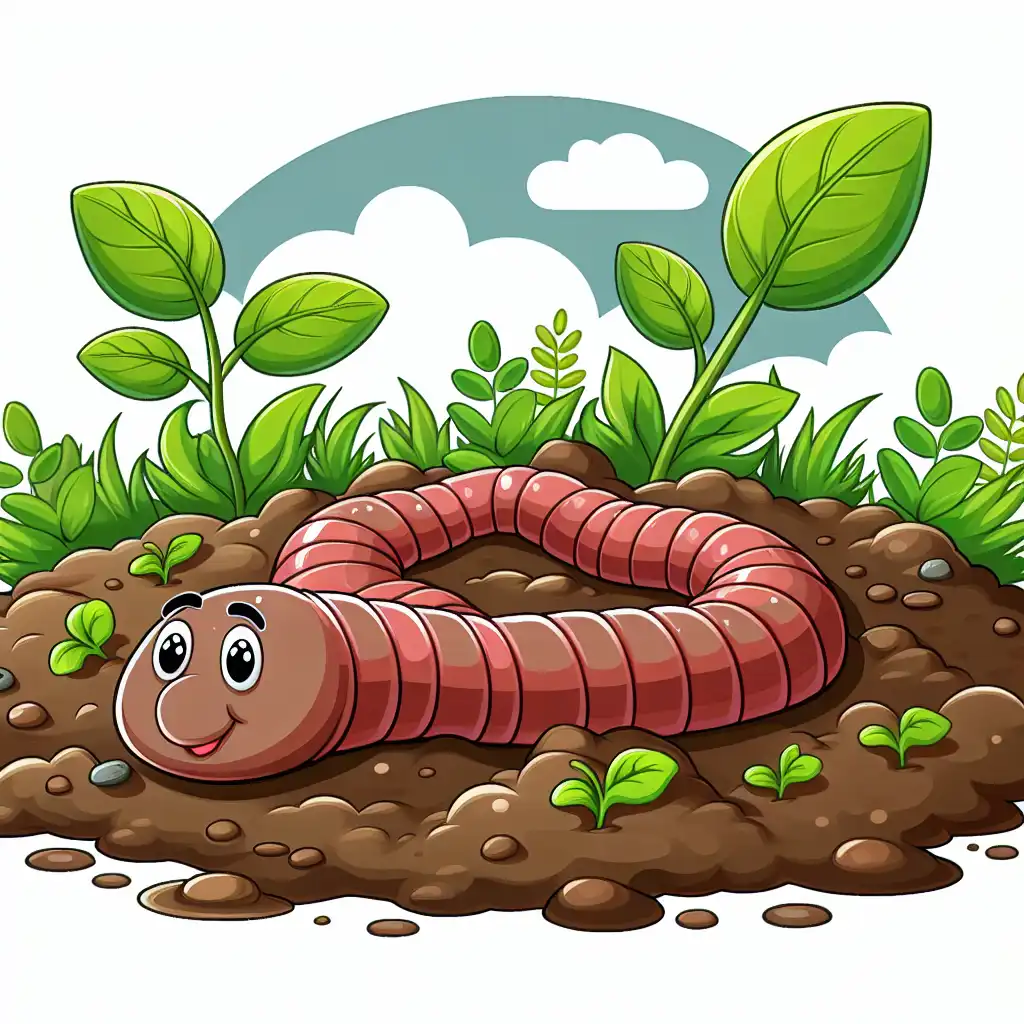
Belonging to the animal group that doesn't have a backbone.
An invertebrate species like the earthworm has a simple structure.
Impossible de charger l’audio. Réessayez plus tard.
The word 'invertebrate' is used to describe any creature that does not have a backbone, such as insects, spiders, snails, and jellyfish. It is often used in biology or science class to classify animals, as knowing whether an animal has a backbone is an important way to understand its characteristics and behavior. If you are learning about different types of animals, or if you are studying biology, you may hear this word used to describe certain groups of creatures.
Invertebrates are animals that do not have a backbone, while arthropods are a specific group of invertebrates that have segmented bodies, jointed appendages, and exoskeletons.
Arthropod is a more specific term that can refer to animals such as insects, spiders, crustaceans, and centipedes.
So basically, all arthropods are invertebrates, but not all invertebrates are arthropods.
Ouvrir le mot: Arthropod →Bug typically refers to any small, crawling insect such as beetles, spiders, ants and flies. Invertebrate refers to any animal that does not have a backbone, including insects, but also other groups such as worms, snails, and jellyfish.
Invertebrates can live on land, in water or even in the air. So while bugs are a type of invertebrate, not all invertebrates are bugs.
Ouvrir le mot: Bug →Cephalopod refers to a type of animal with a distinct head, tentacles or arms, and a bag-like body. It includes animals like octopuses, squids, and cuttlefish.
So, while all cephalopods are invertebrates, not all invertebrates are cephalopods. Cephalopod is a more specific term that refers to a group of invertebrates with distinct characteristics.
Ouvrir le mot: Cephalopod →Crustacean is a specific type of invertebrate that belongs to a group which includes animals like crabs, lobsters, shrimp, and krill.
Essentially, crustaceans are a subset of the larger category of invertebrates.
So while all crustaceans are invertebrates, not all invertebrates are crustaceans. Invertebrate is a broader term that can describe a wide variety of animals that share the common feature of lacking a backbone.
Crustacean is a more specific term that refers to animals that have a hard protective covering (exoskeleton) and jointed limbs, and belong to a particular group of invertebrates.
Ouvrir le mot: Crustacean →Gastropod and invertebrate both refer to types of animals, but they have different meanings.
Gastropod specifically refers to a type of mollusk, which is a creature with a soft body and no internal skeleton. Gastropods are characterized by their single, coiled shell and their method of movement, which involves a muscular foot that they use to glide along surfaces.
Invertebrate, on the other hand, refers to a wide range of animals that don't have a backbone. This includes creatures like insects, spiders, crabs, and jellyfish, as well as mollusks like gastropods.
So while all gastropods are invertebrates (since they don't have backbones), not all invertebrates are gastropods. The term invertebrate is more general and encompasses a wider variety of animals.
Ouvrir le mot: Gastropod →Jellyfish is a specific type of invertebrate that belongs to the phylum Cnidaria. They are aquatic creatures with gelatinous bodies and long, trailing tentacles.
Invertebrate is a broad term for animals without backbones, while jellyfish is a specific type of invertebrate found in water bodies.
Ouvrir le mot: Jellyfish →Sponge specifically refers to a type of invertebrate that is a member of the phylum Porifera. Sponges are aquatic creatures that have a porous body through which water is filtered to extract nutrients.
So, while all sponges are invertebrates, not all invertebrates are sponges.
Ouvrir le mot: Sponge →Invertebrates are animals that don't have a backbone, while worms are a specific type of invertebrate characterized by a long, thin, tube-like body.
Invertebrates can include a wide variety of animals, such as insects, crustaceans, and jellyfish, among others. Worms are a type of invertebrate that includes organisms like earthworms, roundworms, and flatworms.
So, all worms are invertebrates, but not all invertebrates are worms.
Ouvrir le mot: Worm →How do animals...
Voir sur YouTube ↗I was thinking about what would it be, what would the characters be like, and it just suddenly dawned on me that, hey, nobody is doing an underseas show. So I started drawing these weird invertebrate animals, various characters like crawfish and starfish and squids and sponge.
Filming Antarctica's...
Voir sur YouTube ↗Water is commonly regarded as the 'solvent of life,' since our bodies are 70% water. All other vertebrates, invertebrates, microbes, and plants are also primarily water. The organization of water within biological compartments is fundamental to life, and the aquaporins serve as the plumbing systems for cells.
Coral Reefs 101 %\PIPE%...
Voir sur YouTube ↗When you get into the whole field of exploring, probably 90 percent of the kinds of organisms, plants, animals and especially microorganisms and tiny invertebrate animals are unknown. Then you realize that we live on a relatively unexplored plan.
How octopuses battle...
Voir sur YouTube ↗I have thought for a long time that one day, if I finally got to deserve it, I would love to write about the minds of invertebrates.
Why do we harvest...
Voir sur YouTube ↗If you go to the octopus, and if you're not too squeamish, dissect it. You'll find that it has a camera eye which is remarkable similar to our own. And yet we know that the octopus belongs to an invertebrate group called cephalopod mulluses, evolutionarily very distant indeed from the chordates to which we belong.
Best Of Frogs %\PIPE% Top 5 %\PIPE%...
Voir sur YouTube ↗The flesh-eating cockroaches and venomous centipedes in the Gomantong cave in Borneo were pretty unsavoury. They turn the floor of the cave, which is itself the world's largest pile of bird and bat poo, into a seething mass of invertebrate horror!
What's below the tip of...
Voir sur YouTube ↗Finding Little Owls in...
Voir sur YouTube ↗Discovering Wildlife in...
Voir sur YouTube ↗Licking bees and pulping...
Voir sur YouTube ↗