chaplain
noun chaplain
ˈtʃæplɪn
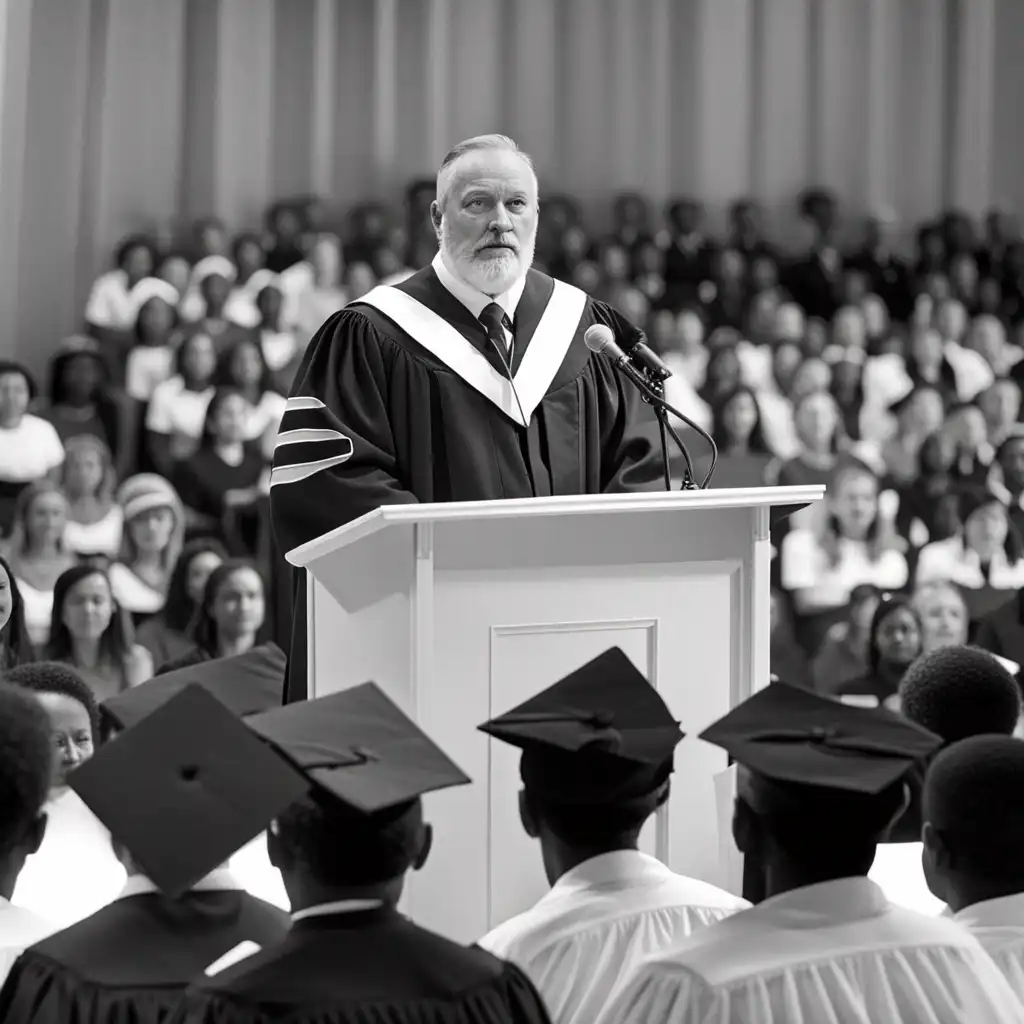
A religious leader assigned to a specific institution or community, like a hospital, school, or prison.
The school chaplain gave a speech at the graduation ceremony.
chaplain
ˈtʃæplɪn
Cargando…
ˈtʃæplɪn
A religious leader assigned to a specific institution or community, like a hospital, school, or prison.
The school chaplain gave a speech at the graduation ceremony.
No se pudo cargar el audio. Inténtalo de nuevo más tarde.
A chaplain is a religious leader who provides guidance and support to people in places like hospitals, prisons, or the military. They are trained to provide spiritual care to people of all faiths and beliefs. So, if you're talking about someone who works in these types of settings and helps people with their religious or spiritual needs, you can use the word 'chaplain'.
A clergyman is a member of the clergy or religious leaders of a specific faith or denomination, such as a priest, minister, rabbi, or imam.
So, while both provide spiritual support, chaplains are not tied to a specific faith or denomination, while clergymen are religious leaders of a specific faith.
Chaplains are more commonly found in institutional settings, while clergymen serve within their respective religious communities.
Abrir palabra: Clergyman →An ecclesiastic is someone who is part of the formal hierarchy of the Christian Church, such as a bishop, priest, or deacon.
An ecclesiastic is responsible for teaching and leading their congregation in matters of faith and religious practice. A chaplain serves a specific group while an ecclesiastic serves a entire congregation or church hierarchy.
Abrir palabra: Ecclesiastic →A minister is a member of the clergy who serves in a church or religious organization and conducts religious services, such as weddings, funerals, and baptisms.
In summary, chaplains provide spiritual support in various settings, while ministers serve as leaders and spiritual guides within a specific religious community.
Abrir palabra: Minister →A pastor is a religious leader who typically works in a church or other religious organization. They lead worship services, provide guidance and counsel to their congregation, and perform sacraments like baptisms and weddings.
So, while they are both religious leaders, chaplains work in secular settings, while pastors work in religious settings.
Abrir palabra: Pastor →A priest is a religious leader within a specific faith, such as Christianity or Judaism. Priests usually serve in a church or community and are responsible for leading worship services, administering sacraments, such as baptisms and marriages, and providing pastoral care to their congregation.
In simple terms, chaplains are specialized religious leaders who serve in specific settings, while priests are religious leaders who serve within a specific faith community.
Abrir palabra: Priest →A reverend is an honorary title given to a member of the church clergy, usually in the Protestant tradition.
Reverends are typically ordained ministers in the Christian church, specifically in the Protestant tradition. They may work in a church or other religious setting and provide religious and spiritual guidance to their congregation.
In summary, chaplains serve specific organizations and are non-denominational, while reverends are Protestant ministers in the Christian church.
Abrir palabra: Reverend →But she said, as he came to die, he sat up on the side of the bed one day, and he asked the nurse if he could see the chaplain. And he said for the first time in his life he'd thought about the inevitable,
Ver en YouTube ↗In the final analysis, I believe that an atheist chaplain would be the last person in the world that we would want a dying soldier who needs that last moment counselling in their life.
They even have their own bike riding monk, a chaplain called Father Guriy. How can I resist? I have to meet him. Oh Father Guriy himself. Ah thank you for having us.
Ver en YouTube ↗What a book a devil's chaplain might write on the clumsy, wasteful, blundering, low, and horribly cruel work of nature!
Destroyers did not have chaplains because they were too small.
I realized during my time as a chaplain that I didn't want to be a minister.
I had a phenomenal six seasons in Washington and really can't say enough good things about my experience there. It's tough to move on from teammates, from everyone involved in the organization, from coaches and teammates, to the chaplain, to even friends in the community, our neighbors.
I was in the Marine Corps in 1971. The idea 'Where does authority come from?' is fascinating to me. And also, the idea of a chaplain is fascinating to me because it's a man of the cloth in uniform, and it's the uniform of a killing machine. Back when I was in the Corps, when I saw that, I was amazed by it.
My dad was the chaplain at Mankato State University, and my mom worked in the bookstore. We lived just off-campus. Then we moved to the suburbs of Minneapolis, to New Hope, which is where I went to high school.
From the beginning, the Continental Congress had official chaplains, prayers, and days of fasting and Thanksgiving. When sessions opened in 1774, fear was voiced that the religious diversity of the country would make it hard to choose a form of worship.
Nearly everything faith-related that I have done at Harvard has been followed by free food, from going to services at Harvard's Episcopal Chaplaincy to attending a day of interfaith discussion and dialogue hosted by the university chaplains in the fall.
By definition, chaplains minister to the spiritual needs of our men and women in armed services, a vital function that an individual without any inclination toward spirituality would not be able to perform.