patent
noun patent
ˈpætnt
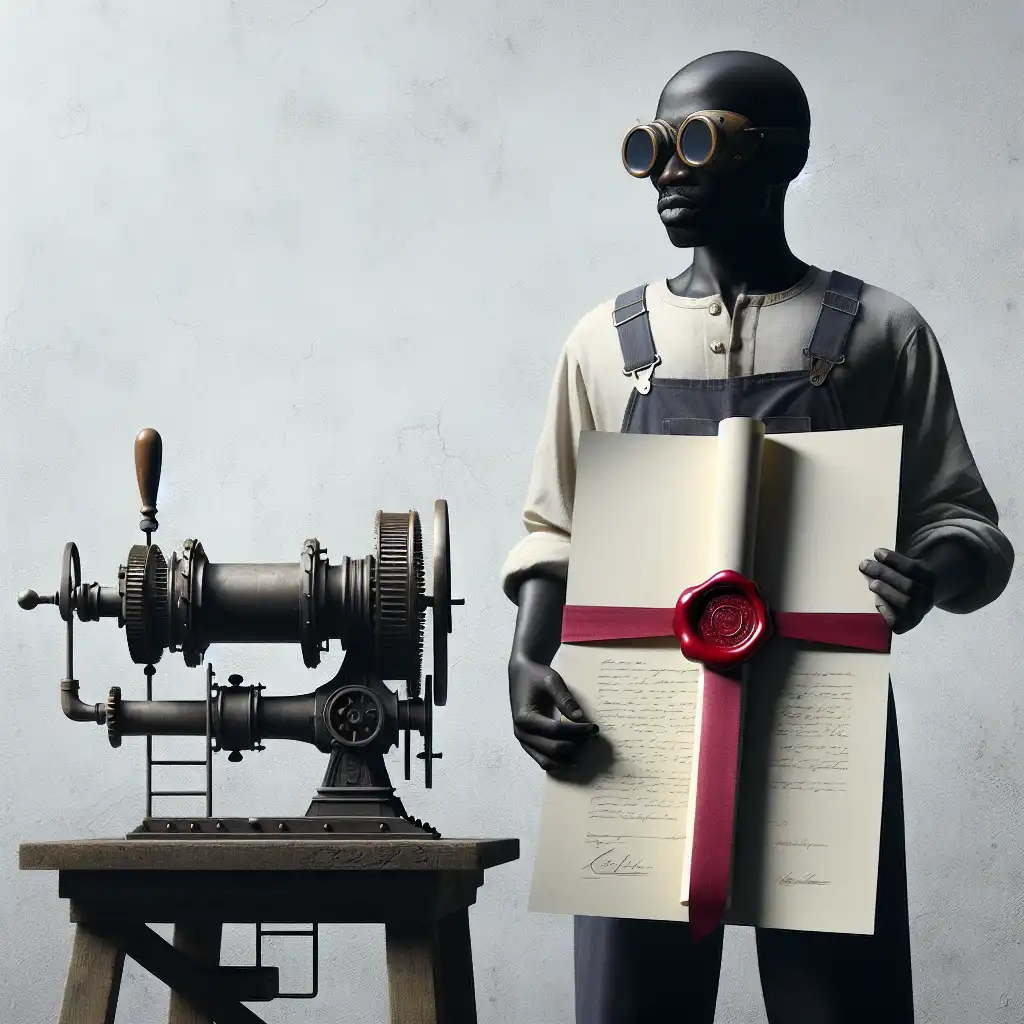
A document granting exclusive right to an invention
He acquired a patent for his new invention.
patent
ˈpætnt
Chargement…
ˈpætnt
A document granting exclusive right to an invention
He acquired a patent for his new invention.
ˈpætnt
Open, obvious
His actions had a patent disregard for the rules.
ˈpætnt
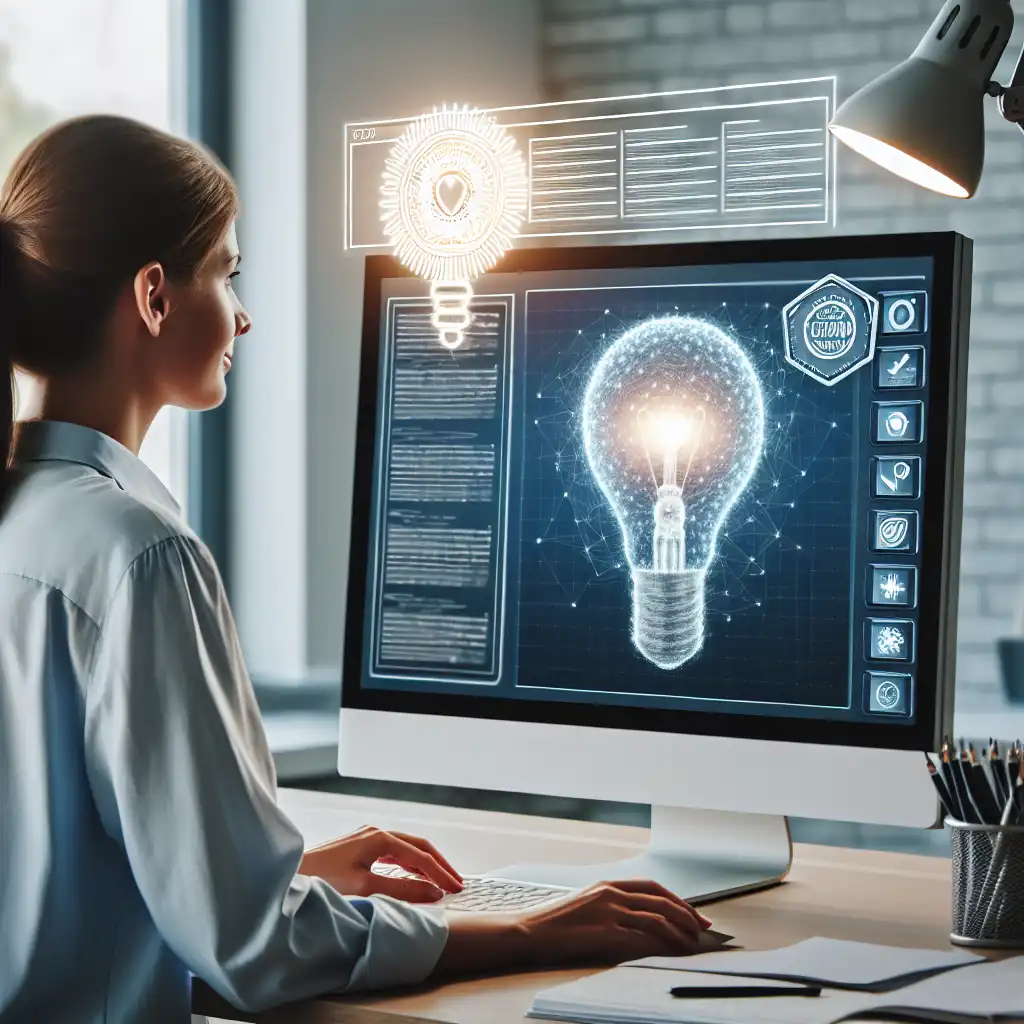
To obtain a patent for an invention
She patented her new software program.
Impossible de charger l’audio. Réessayez plus tard.
A patent is a legal document that is given to an inventor or a company that gives them the exclusive rights to create, use, and sell their invention for a certain period of time. When you have a patent for your invention, no one else can make or sell it without your permission. Patents are commonly used in the fields of technology, medicine, and engineering, but they can also be used for things like new designs or processes. If you have an idea for an invention, you may want to consider getting a patent to protect your rights and prevent others from copying your idea.
Authorization refers to permission or consent given to do something, particularly in a legal or official context. For instance, you might need authorization from your parents to stay up past your usual bedtime or authorization from a government agency to conduct a certain type of business.
Authorization is about permission to do something, while a patent is about protection for something that has already been created.
Ouvrir le mot: Authorization →Copyright and patent are two different types of intellectual property rights.
Copyright is a legal right that gives the owner of an original work (such as a book, painting, or song) the exclusive right to control how it's used and distributed.
It protects the expression of an idea, but not the idea itself. Copyright is usually applicable in creative works, such as books, music, and movies.
Copyright protects the expression of an idea while patent protects the idea itself. Copyright is usually used for creative works while patent is for inventions.
Ouvrir le mot: Copyright →A license is a legal permission given by a holder of certain rights to somebody else to use those rights.
In simpler terms, a license is like borrowing something for a limited time, while a patent is like owning something and having exclusive rights to it.
Licenses can apply to a range of things, such as software, music, or even driving a car. For example, when you download a song from iTunes, you are given a license to use that song for personal use, but you cannot share it with others or use it to make money.
Overall, licenses and patents are both legal ways of protecting different types of rights, but they are applicable to different areas and have distinct purposes.
Ouvrir le mot: License →A monopoly is when one company has complete control over a market or industry, with no competition. This means they are the only ones selling a particular product or service, and they can charge whatever price they want.
Monopolies are generally not allowed or frowned upon in most countries because they limit consumer choice, suppress innovation and can lead to higher prices.
A monopoly is a situation where one company has complete control over a market or industry, while a patent is a legal protection given to an inventor for a new invention or idea.
A monopoly limits competition and consumer choice while patents encourage innovation by allowing inventors to profit from their creations.
Ouvrir le mot: Monopoly →Ownership refers to the legal right to possess something, while a patent is a legal document that gives an inventor the exclusive right to make, use, and sell an invention for a certain period of time.
For example, if you own a bike, you have ownership over it, meaning you have the right to possess and use it.
Ownership is applicable to any item or property that you possess or own, while a patent is applicable to an invention or innovation that you create and want to protect.
Ouvrir le mot: Ownership →A privilege is a special right or advantage granted to a person or group of people.
A patent is a legal right granted for an invention, while a privilege is a special right granted to a person or group.
Ouvrir le mot: Privilege →Protection refers to measures taken to prevent something from being stolen or copied. In the context of intellectual property, protection can refer to things like patents, trademarks, copyrights, and trade secrets.
The main difference between the two is that a patent is a specific type of protection that applies to inventions, while protection can refer to a range of different measures taken to safeguard intellectual property.
Essentially, a patent is a way of protecting an invention, while protection is the broader concept of safeguarding intellectual property in general.
Ouvrir le mot: Protection →A trademark is a symbol or design that represents a company or product and distinguishes it from others in the market. This is applicable to logos, slogans, and other visual representations of a company or product.
A patent protects an invention while a trademark protects a brand.
A patent gives the inventor a monopoly over their invention while a trademark helps establish a unique identity for a brand in the marketplace.
Ouvrir le mot: Trademark →But skipping classes to spend more time in the lab and neglecting to show proper deference to his professors had derailed his intended career path. Passed over even for a lab assistant position, he had to settle for a job at the Swiss patent office, obtained with the help of a friend's father.
Voir sur YouTube ↗We think we have solved the mystery of creation. Maybe we should patent the universe and charge everyone royalties for their existence.
was bent over backwards to help us with anything we needed. So now we had a hangar space to work in, and prototypes to demo with. So in one year we've negotiated manufacturing agreements, been awarded one patent filed our second patent, talked to multiple people demoed this to FEMA
Voir sur YouTube ↗If people don't get paid for their inventions, that's not a good thing. In the case of many patents, there are people who aren't in a position to take them to the next level. If you don't enforce your rights, no one is going to enforce them for you.
Come back when you wish to be taken seriously! You know he was brilliant. But he struggled within the world of formal academia. They didn't really know what to make of him. He was working in a patent office when he was making his breakthroughs, because he couldn't even get a teaching position.
Voir sur YouTube ↗Like patents - which also seek to protect the little guy - unions were started for all the right reasons. But like patents, they can be twisted into something that hurts innovation, competition, and ultimately consumers and the country as a whole.
isn't he beautiful that's broken tusks they're just putting his ear over his eye protection from the Sun the sun's just started to come out that put a stick in the in the trunk just to keep the trunk patent so he can breathe properly it's very reassuring to
Voir sur YouTube ↗Technology people have as much interest in protecting patents as the entertainment industry.
he chose telescopes he never patented his design never tried to make money off of it but he dedicated himself to teaching everyone and anyone the methods and the joy of building their own spent the rest of his life standing on street corners traveling around the world and
Voir sur YouTube ↗Software patents, in particular, are very ripe for abuse. The whole system encourages big corporations getting thousands and thousands of patents. Individuals almost never get them.
Why is that? Well the patent office had been issuing these patents for more than 20 years. There were literally thousands of patents on human genes. The patent bar was deeply entrenched in the status quo,
Voir sur YouTube ↗I always recommend, if you can, to patent or protect whatever your idea is. If you can't, you have to make your best judgment. Sometimes people don't get anywhere because they sit on something, so afraid to reveal it. And yet, in the reverse, sometimes if you expose something too widely, you can risk losing it.
the first time managed to make one of those devices fly they also had taken out numerous patents on essential parts of the airplane they were not the only ones that was common practice in the industry and those who helped patterns
Voir sur YouTube ↗Patents have a place in medical science - for new inventions that advance the state of knowledge.
which is an imprint of the very early universe. We think we have solved the mystery of creation. Maybe we should patent the universe and charge everyone royalties for their existence.
Voir sur YouTube ↗Dictators have an old trick to assess the strength of their opposition: they say something patently untrue, and then look to see who mindlessly repeats it. Those who do, they recognise as their true supporters.
and this technology cannot be uninvented; it will always be easier to break things than to fix them. It seems to me therefore patently obvious that we can no more respect and tolerate
Voir sur YouTube ↗Patents are being used to wage war in the digital world, and as a result, patents have become a toll gate on the road of innovation.
And we're able to look out for the needs of newcomers. So for do-it-yourselfers, we provide free very well-tested instructions so that anyone anywhere around the world, can build one of these systems for free. And there's a patent pending on these systems as well that's held by the community.
Voir sur YouTube ↗When we began Qualcomm, it had become quite clear that it was very important to patent new ideas.