warfare
noun warfare
ˈwɔːrfer
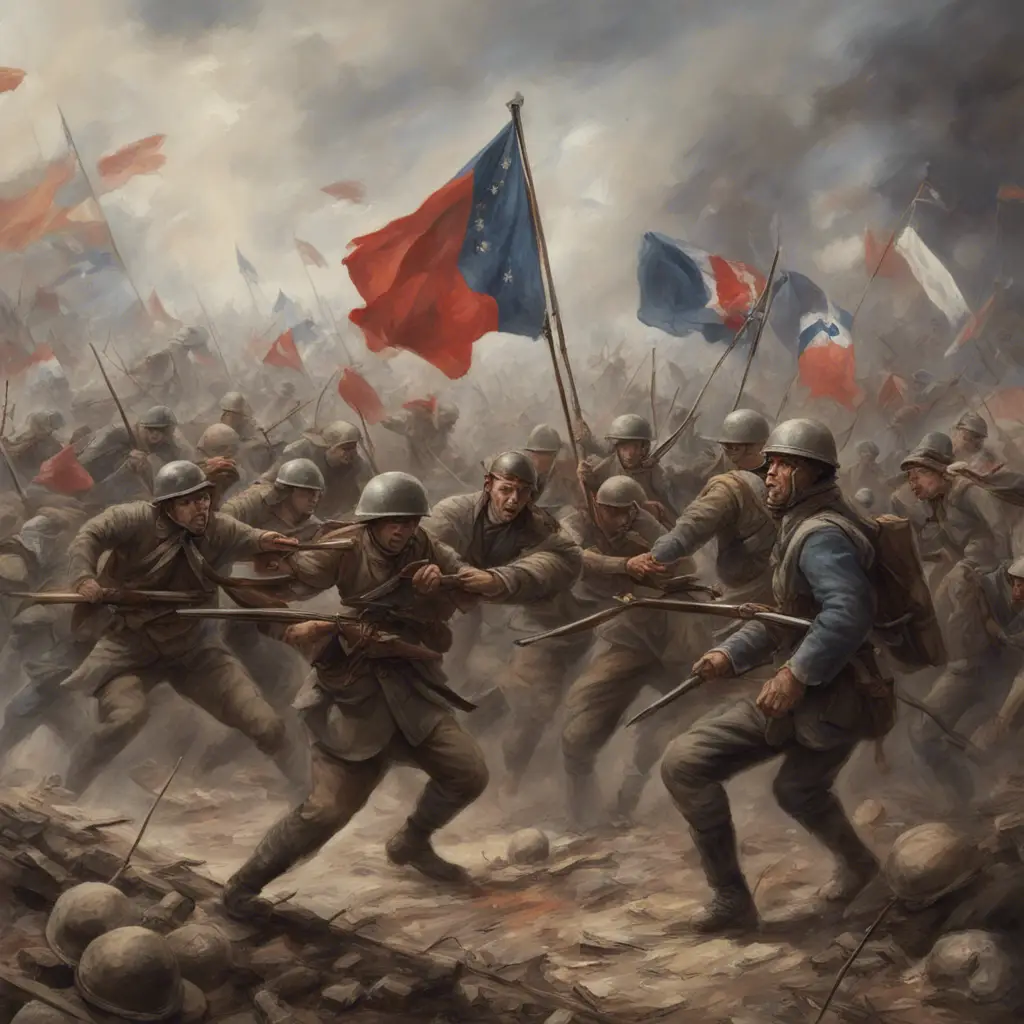
The activity of fighting or conflict, often between countries or groups in a country.
The border region has been a place of intense warfare for years.
warfare
ˈwɔːrfer
불러오는 중…
ˈwɔːrfer
The activity of fighting or conflict, often between countries or groups in a country.
The border region has been a place of intense warfare for years.

ˈwɔːrfer
A state of competition, conflict, or hostility between different people or groups.
In most organizations, there's always some kind of political warfare going on.
ˈwɔːrfer
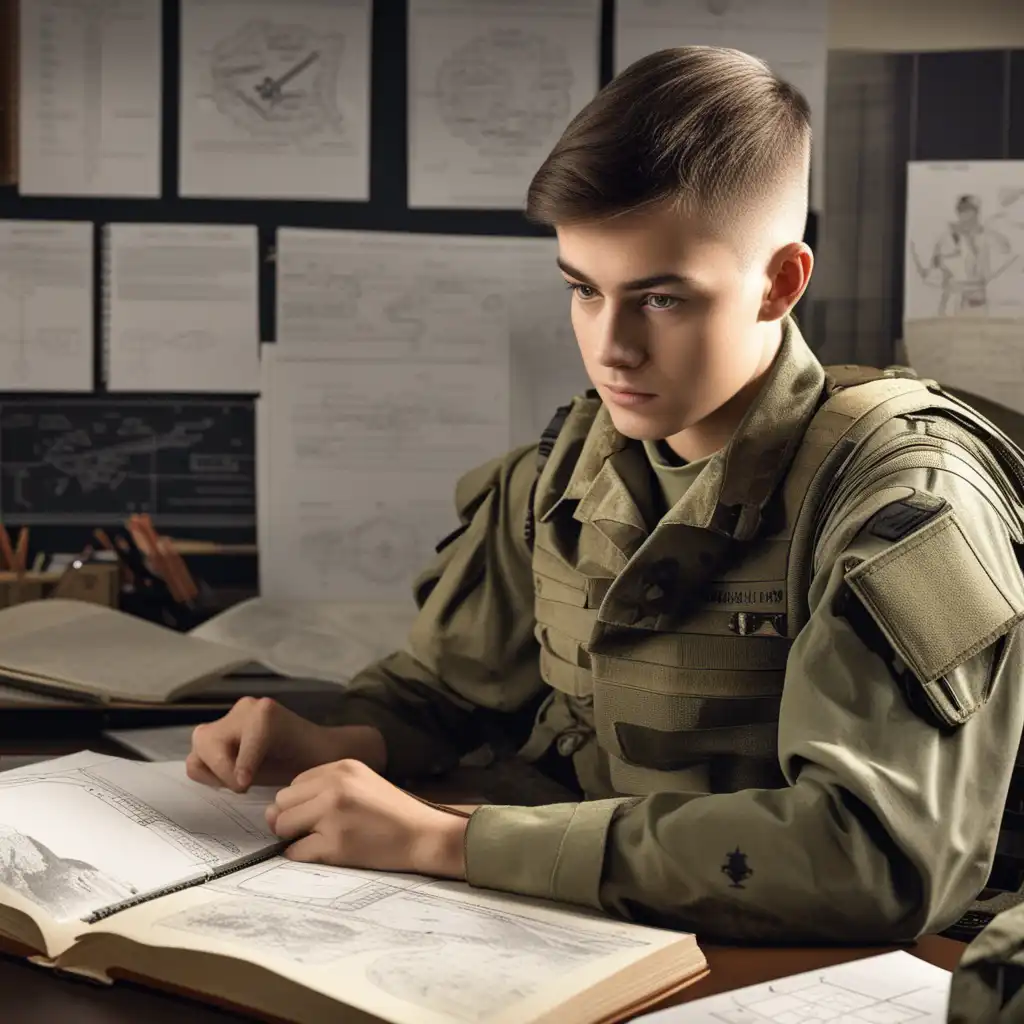
The technique, practice, or science of managing military forces.
He is studying modern warfare tactics for his military science degree.
ˈwɔːrfer
Conflict or struggle of a non-military nature, or on a non-physical platform.
The two companies have been engaged in commercial warfare for years.
오디오를 불러오지 못했어요. 잠시 후 다시 시도해 주세요.
The word warfare refers to the act of fighting or engaging in war. It is often used to describe the type of conflict or battle that is being fought between two or more groups or countries. This word is commonly used in news reports, history books, and discussions about military tactics and strategies. For example, one might say "the two armies engaged in fierce warfare" to describe a violent battle between two groups of soldiers. It is important to note that this word is only used in the context of war and should not be used to describe any other type of conflict or disagreement.
A battle is a single fight between two opposing forces.
Warfare refers to the entire scope of a conflict. It includes all the battles, strategies, tactics, ideologies, and resources involved in fighting the war.
A battle is a specific instance of fighting, while warfare is a broader term encompassing all the fighting and preparations leading up to and during a war.
In terms of applicability, battle describes specific engagements between opposing forces. Warfare describes the overall conflict and everything involved in it.
단어 열기: Battle →Clash refers to a small fight or disagreement between two groups or individuals. It may not necessarily involve violence, but it often involves a difference of opinions or beliefs.
Clash can describe a disagreement that is not very serious.
Clash refers to a small disagreement or fight, while warfare refers to large-scale conflict involving weapons and often results in severe damage.
단어 열기: Clash →Combat refers to direct fighting between two or more individuals or groups, often involving guns, swords, or other weapons.
It includes not just combat but also tactics such as intelligence gathering, propaganda, and logistics.
While combat usually refers to a singular engagement or battle, warfare can involve a prolonged campaign or series of battles over weeks, months, or even years.
It can also involve non-combatants and civilian populations, as well as various forms of technology and weaponry.
Both combat and warfare are applicable in different contexts.
Combat can refer to individual clashes or skirmishes, while warfare is more often used to describe organized, coordinated military campaigns.
단어 열기: Combat →Conflict refers to a disagreement or a problem between two or more parties that may involve argument or fight.
Conflict can happen in personal relationships, workplaces, organizations, and countries.
Warfare is a type of conflict that involves large-scale military actions, weapons, and strategies between two or more countries or groups.
It is a more serious and violent form of conflict that can cause a significant loss of life, resources, and long-lasting effects on societies.
Conflict refers to a disagreement or dispute, while warfare refers to organized and violent conflict between countries or groups involving weapons and military tactics.
Conflict can be resolved through negotiation, while warfare is typically resolved through a military victory.
단어 열기: Conflict →Confrontation refers to a situation where two or more people or groups come together to face a problem, disagreement or challenge.
Confrontation is a non-violent, verbal or non-verbal interaction between people or groups to resolve an issue, while warfare involves armed conflict with weapons and soldiers.
Confrontation is applicable for everyday situations like resolving a disagreement while warfare is applicable for extreme cases such as a country engaging in armed conflict.
단어 열기: Confrontation →Engagement refers to a situation where parties involved are trying to come to a compromise or agreement, often involving discussion or negotiation.
In simpler terms, engagement is about trying to work together and find a common ground, while warfare is about fighting and using force to achieve a particular objective.
Engagement is applicable in situations where cooperation is needed, while warfare is used in situations of conflict or hostility.
단어 열기: Engagement →Fight typically implies physical confrontation between two individuals or groups.
Fight is applicable in situations where there is a short-term physical conflict between two individuals, while warfare is applicable in situations where there is a prolonged conflict between organized groups, often involving multiple soldiers or countries.
단어 열기: Fight →Hostility refers to a state of unfriendliness, where two or more individuals or groups of people have negative attitudes towards each other.
It can be displayed in various forms, including anger, aggression, and conflict. Hostility does not necessarily involve physical violence, but it can lead to it if not resolved.
Hostility involves negative attitudes and conflict, while warfare involves physical fighting and military strategies.
Hostility is more applicable in personal relationships, while warfare is applicable in situations involving nations or groups of people.
단어 열기: Hostility →As Europe suffered unprecedented industrial warfare, new political movements took power. Some promised to erase all social distinctions, while others sought to unite people around a mythical heritage. The results were real-world dystopias
YouTube에서 보기 ↗Life is warfare.
we allow for the continued persecution and abuse of women worldwide. By saying that we're going to fight for women's rights and fight extremism with bombs and warfare,
YouTube에서 보기 ↗Life is a struggle, but not a warfare.
to be smart but not too smart for your own good yes we have split the atom yes we build clever machines that navigate the universe in search of new homes but at the same time those atoms we split created nuclear warfare in our quest to
YouTube에서 보기 ↗Triple Agent' is a different kind of read because it is, at its core, a pure narrative, the story of an intelligence operation that unfolds over the course of a year and then goes badly wrong. There's a lot of 'news' in the book, including an account of drone warfare that is as detailed, in my humble opinion, as any in the open-source arena.
warfare and we use that data to answer big questions about what's happening today and what may happen tomorrow but here's the thing we have barely scratched the surface in terms of what we know about the past I think that there are millions of undiscovered archaeological sites around the world
YouTube에서 보기 ↗We have to get away from the class warfare and recognize that we are growing jobs by helping small business.
while an immaculate warfare
YouTube에서 보기 ↗The life of a good man is a continual warfare with his passions.
Those are just a couple of many examples. Overfishing is happening all over the world. How did this happen? When some people think of fishing, they imagine relaxing in a boat and patiently reeling in the day's catch. But modern industrial fishing the kind that stocks our grocery shelves, looks more like warfare.
YouTube에서 보기 ↗I never saw anything more like real warfare in my life - only the attack was all on one side. The police, in spite of their numbers, apparently thought they could not cope with the crowd.
These encounters were often less than peaceful. But even through raids and warfare, as well as trade and protection of traveling merchants in exchange for tariffs, the nomads began to spread goods ideas and technologies between cultures with no direct contact.
YouTube에서 보기 ↗I think artificial intelligence will likely change the character of warfare, and I believe whoever masters it first will dominate on the battlefield for many, many, many years.
During World War I one of the horrors of trench warfare was a poisonous yellow cloud called mustard gas. For those unlucky enough to be exposed, it made the air impossible to breathe burned their eyes,
YouTube에서 보기 ↗Our enemy of international terrorism respects no laws of warfare or morality, and its individual members take innocent lives, just to create chaos for news cameras.
And many countries basically took out war from their political toolkit. They no longer tried to pursue their interests with warfare. Not all countries have done so but many countries have. And this is maybe the most important reason
YouTube에서 보기 ↗Modern warfare is by no means merely a matter of military operations. Economic affairs stand together with them in the first rank of the factors of importance.
It affects all ethnicities, it affects all ages, all genders, it's not contagious, it's not life-threatening, but it is mental warfare. It's tough.
YouTube에서 보기 ↗Whatever one thinks of the justifiability of drone attacks, it's one of the least 'brave' or courageous modes of warfare ever invented. It's one thing to call it just, but to pretend it's 'brave' is Orwellian in the extreme.