
rollicking
adjective rollicking
ˈrɑːlɪkɪŋ
Full of fun and excitement
We had a rollicking time at the party.
rollicking
ˈrɑːlɪkɪŋ
Loading…
ˈrɑːlɪkɪŋ
Full of fun and excitement
We had a rollicking time at the party.
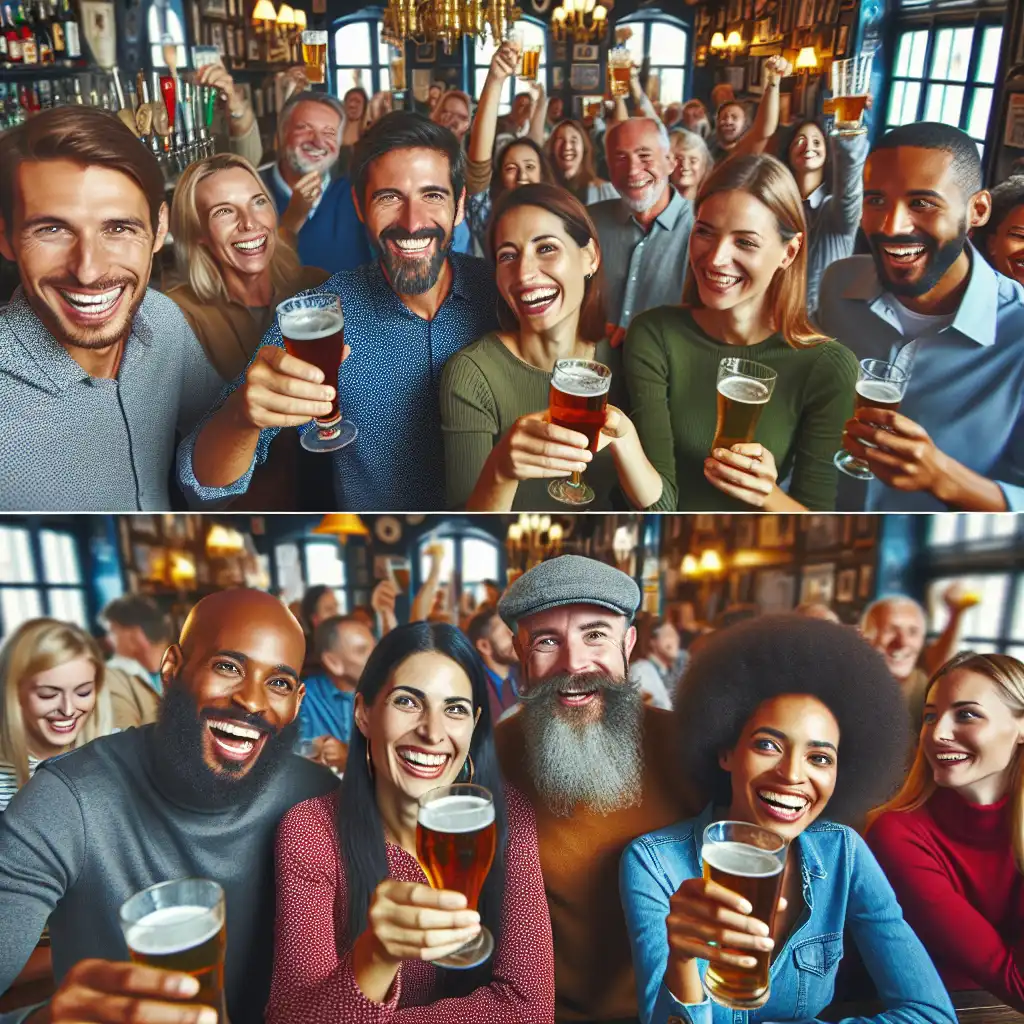
ˈrɑːlɪkɪŋ
Loud and cheerful
The pub was full of rollicking laughter.

ˈrɑːlɪkɪŋ
Exciting, active fun
They were on a rollicking adventure.
Audio could not be loaded. Please try again later.
'Rollicking' is often used to describe something that is lively, fun, and full of energy. It can refer to an event or activity that is enjoyable and entertaining. For example, you might say that a party was a "rollicking good time" if everyone was having fun, dancing, and laughing. It can also be used to describe a person who is full of fun and energy, or a story that is amusing and lively. Overall, 'rollicking' is a positive word used to describe something that is full of joy and excitement.
Boisterous means noisy and energetic, especially in a way that is rowdy or uncontrollable.
Boisterous implies a more chaotic and unruly atmosphere, while rollicking suggests a more cheerful and playful one.
Open word: Boisterous →Exuberant and rollicking are both words used to describe a high level of energy or excitement.
However, exuberant usually refers to someone or something that is overflowing with enthusiasm or joy, while rollicking suggests a more boisterous and carefree type of energy.
Exuberant might be used to describe a lively party or a child who is bouncing with excitement, while rollicking might be used to describe a rowdy group of friends who are having a wild time.
Open word: Exuberant →Gleeful implies happiness or joy, often characterized by laughing or smiling. It is ideal to use in situations where one is very happy or content with a particular event, situation or outcome.
Example: "She was gleeful when she learned she had won the competition."
Gleeful relates to happiness, while rollicking relates to having fun and energy.
Open word: Gleeful →Both jolly and rollicking are adjectives used to describe a lively, joyful mood or atmosphere.
Jolly is more commonly used to describe a cheerful and happy mood or person, often associated with Christmas or Santa Claus.
For example: "He was a jolly old man who loved to play with children."
Jolly is ideal for describing a happy and cheerful person or mood, whereas rollicking is ideal for describing a wild and boisterous party or gathering.
Open word: Jolly →Jovial means cheerful and friendly, while rollicking means lively and carefree.
Jovial is often used to describe someone's personality or demeanor, while rollicking describes the atmosphere or situation.
For example, a person might be described as jovial if they are always smiling and making those around them feel happy, while a party might be described as rollicking if it is energetic and full of fun.
Both words can be used in a positive sense, but jovial is more about personality, while rollicking is about the environment.
Open word: Jovial →Lively means full of energy and enthusiasm.
The word rollicking means boisterously carefree, lively, and noisy.
Lively is more general and can apply to anything from a person to an event. Rollicking is more specific and usually describes a wild and noisy party or celebration.
Open word: Lively →Both merry and rollicking describe a cheerful and lively atmosphere, but merry is a more traditional and general term that can be used in any situation where people are happy and having fun.
Rollicking has a more specific connotation of boisterous and rowdy fun, often associated with parties or celebrations. You could say a family gathering was merry, but a wild frat party was rollicking.
Open word: Merry →Rollicking means lively, noisy, and cheerful, while spirit means the non-physical part of a person that is the source of their thoughts, feelings, and personality.
Rollicking is applicable when describing a party or a group of people having fun, while spirit is used when discussing someone's personality or inner qualities.
Rollicking is about energy and excitement, while spirit is about a person's character and personality.
Open word: Spirit →Why should you read "A...
Watch on YouTube ↗There is a rollicking kindness that looks like malice.
Otter Chaos %\PIPE% National...
Watch on YouTube ↗The autumn wind is a pirate. Blustering in from sea with a rollicking song he sweeps along swaggering boisterously. His face is weather beaten, he wears a hooded sash with a silver hat about his head... The autumn wind is a Raider, pillaging just for fun.
I'm partial to epic poetry, which might be surprising given that I don't write poetry at all. The combination of rollicking storytelling with musical language seems to me the highest achievement.
But I still think it's part of the skill of being a coach or manager - to know who responds to what. And some players do respond to a rollicking. If it needs to be done, you have to do it. As a player, that wasn't necessarily me.
I'd love to do another 'Indiana Jones.' A character that has a history and a potential, kind of a rollicking good movie ride for the audience, Steven Spielberg as a director - what's not to like?
The reason I was drawn to the Band Perry was because they have a knack for doing rollicking country music that can sound a little rock and a little pop.
I have two moods. One is Roy, rollicking Roy, the wild ride of a mood. And Pam, sediment Pam, who stands on the shore and sobs... Sometimes the tide is in, sometimes it's out.
The blues style - moody or rollicking or boastful or bashful - developed in the Delta around 1900 and was, for a time, exclusively African-American. That isn't the case anymore.
The genre of narrative business books that I love so much - the ones that have a you-are-there quality - was invented, or so it is said, in 1982 by David McClintick, who wrote 'Indecent Exposure,' a rollicking good read about a Hollywood scandal and the ultimate boardroom power struggle at Columbia Pictures.