
monad
noun monad
ˈmɑːnæd
In computing, a design pattern used to handle computation instructions.
The program uses monads to manage side effects.
monad
ˈmɑːnæd
加载中…
ˈmɑːnæd
In computing, a design pattern used to handle computation instructions.
The program uses monads to manage side effects.
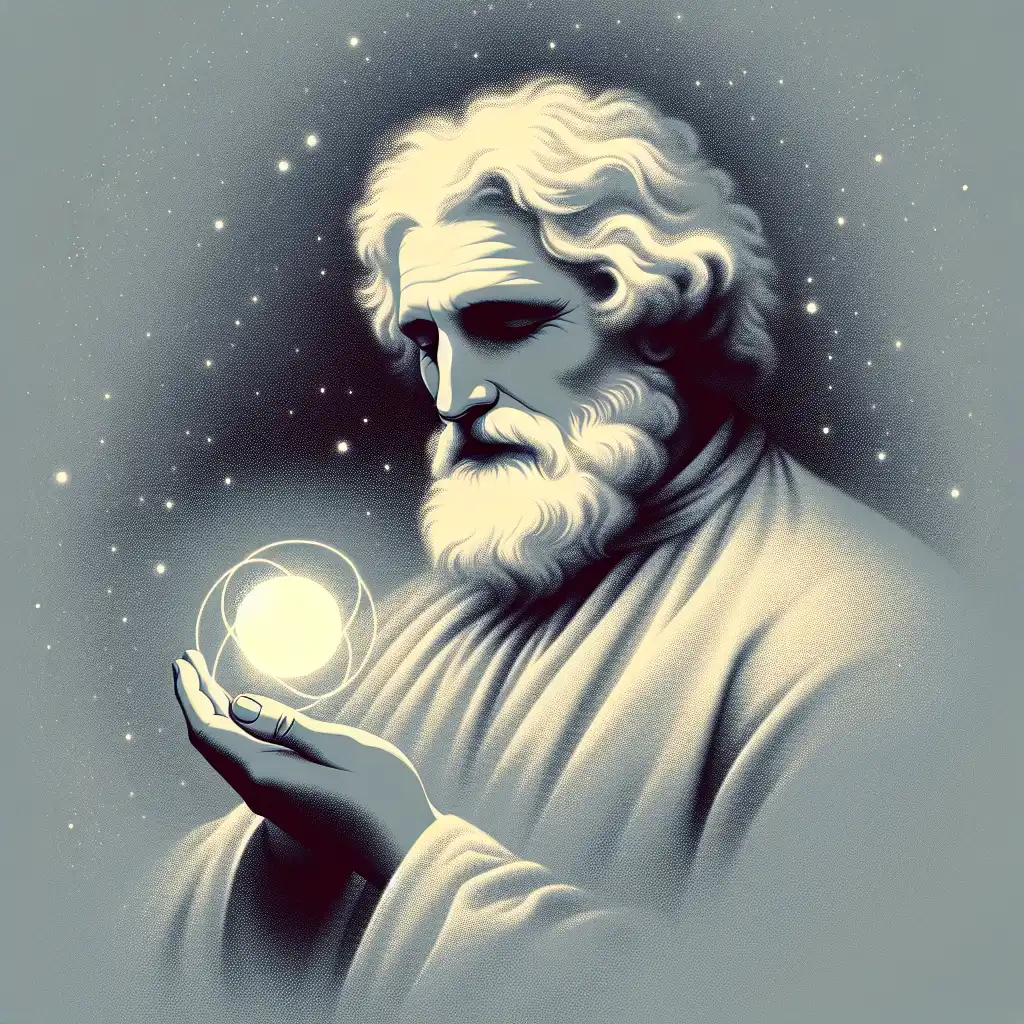
ˈmɑːnæd
In philosophy, a basic, indivisible unit of reality, proposed by the philosopher Leibniz.
In Leibniz's philosophy, the universe is made up of monads.
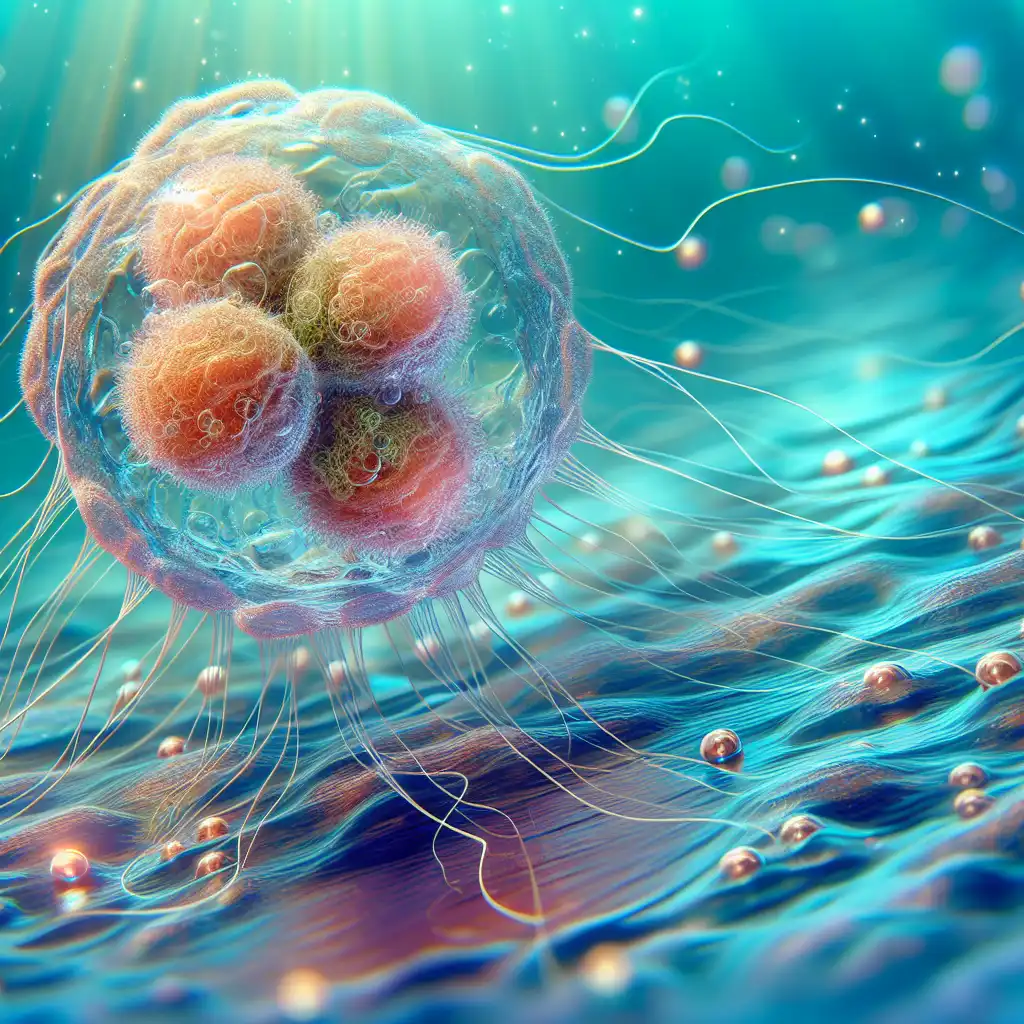
ˈmɑːnæd
In biology, a single cell organism or a single cell within an organism.
These single-celled organisms, or monads, can reproduce asexually.

ˈmɑːnæd
In mathematics, an algebraic structure that serves as the core idea in some areas of algebra.
The study of monads in category theory can be quite complex.
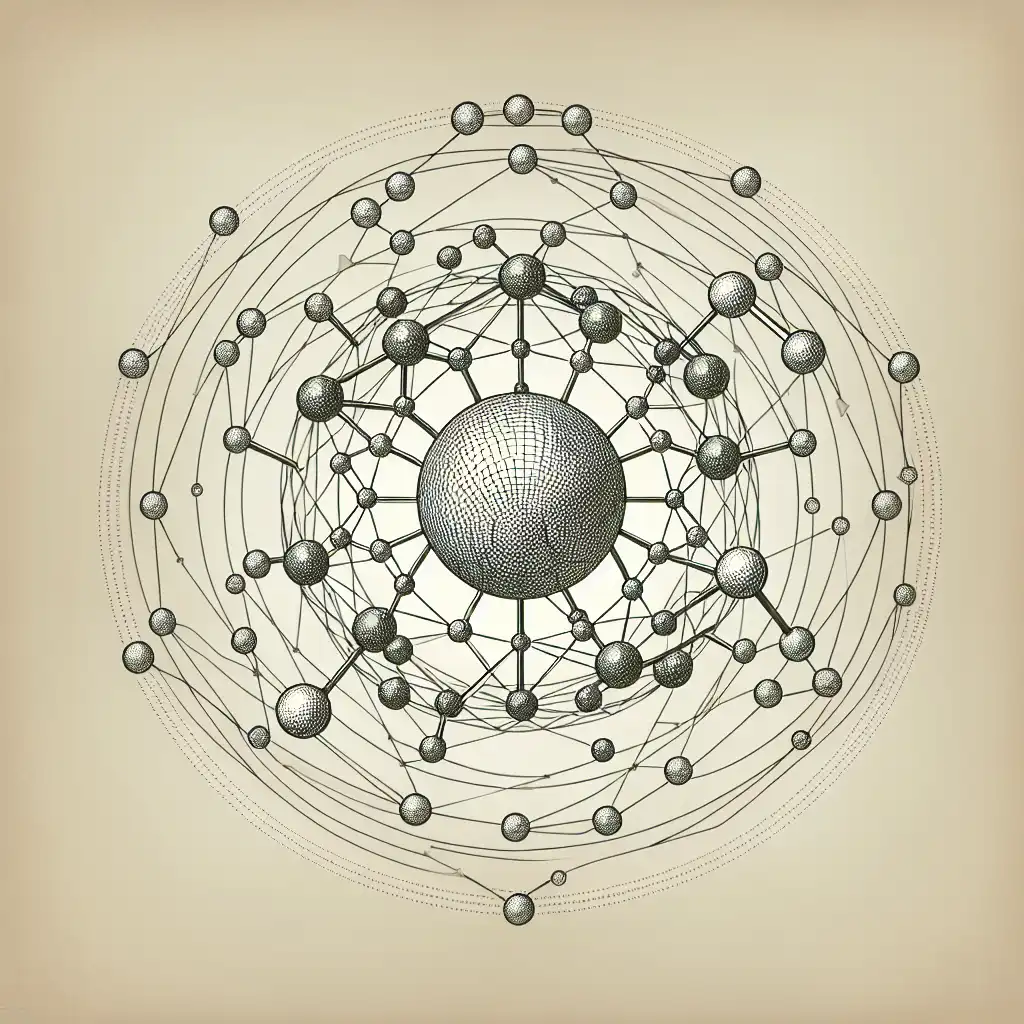
ˈmɑːnæd
In chemistry, a single atom or molecule, especially one that can join together with other atoms or molecules.
A polymer is a large molecule made up of many smaller monads.
音频无法加载,请稍后再试。
Monad is a word that has several different meanings depending on the context it's used in. In philosophy, a monad refers to a single, indivisible unit of existence, often used to describe the basic building blocks of the universe. In computer science, a monad is a design pattern that helps manage side effects in functional programming languages. For an English learner, it's important to understand the context in which the word is being used before attempting to use it in a sentence. If you're talking about philosophy or metaphysics, you might say something like "According to Leibniz, the monad is an indivisible, self-contained unit of reality." In the context of computer science, you could say something like "The monad design pattern is useful for managing side effects like input/output in functional programming languages." Overall, the word monad is quite specialized and not commonly used in everyday conversation. However, if you're studying philosophy or computer science, it's a term you'll likely come across at some point.
Both atom and monad refer to single, indivisible units, but they are used in different contexts.
Atom is a term used in chemistry to describe the smallest unit of matter that retains the properties of an element. Atoms are made up of protons, neutrons, and electrons, and they combine to form molecules.
Atom is used in chemistry to describe a unit of matter, while monad is used in philosophy to describe a fundamental unit of reality.
打开单词: Atom →Element refers to a fundamental substance that cannot be broken down into simpler substances. For example, hydrogen and oxygen are elements that make up water.
Element is applicable in chemistry to refer to fundamental substances, while monad is applicable in philosophy and mathematics to refer to indivisible units or components.
打开单词: Element →Entity broadly refers to any identifiable object or concept - it's like a catch-all term for any sort of thing that exists.
So, for example, a person, a company, a city, or even an idea are all types of entities.
It's a term that comes from philosophy, and it refers to a self-contained unit or entity that exists independently of other things.
In practical terms, you're more likely to encounter the word entity in everyday life, since it's a more common word that's used to talk about pretty much anything.
打开单词: Entity →Individual means a single person or thing that is separate and distinct from others.
Individual refers to a distinct entity, while monad refers to a fundamental unit of something larger. Both words are applicable in different contexts, depending on what is being described or discussed.
打开单词: Individual →A molecule is a group of atoms that are bonded together to form a unit. For example, water (H2O) is a molecule composed of two hydrogen atoms and one oxygen atom.
Molecule is a term used in chemistry to describe a group of atoms, while monad is a term used in philosophy to describe a single unit of existence.
打开单词: Molecule →Both monad and particle refer to tiny entities, but they have different meanings and applications.
A particle (in physics) is a tiny piece of matter that exhibits various properties such as mass, energy, and charge.
Particles can be classified as atoms, molecules, electrons, photons, and so on.
They are used to explain various phenomena in physics, such as the behavior of light, the structure of atoms, and the interactions between subatomic particles.
Particle physics is a branch of science that studies these particles and their interactions in great detail.
Monad is a philosophical concept that describes the ultimate nature of reality, while particle is a scientific concept that describes the behavior and properties of tiny pieces of matter.
打开单词: Particle →Singularity refers to a point in space or time where things become quite unusual or unexpected.
It is used in physics to describe a point in a black hole where the laws of physics break down. In popular culture, singularity is often used to refer to the point where artificial intelligence surpasses human intelligence and creates an unpredictable future.
So, while both words refer to a single entity, they are applicable in different contexts. Monad is used in science to refer to the smallest unit of a particular system, while singularity is used to refer to a point in space or time where things become quite unusual or unexpected.
打开单词: Singularity →In functional programming, a monad is a design pattern that is used to structure code that involves sequences of computations, while a unit is a basic element in a mathematical structure.
A unit is a simple element in a more general mathematical structure. For example, in the case of a group, a unit is an element that satisfies specific criteria, such as being an identity element.
Units can be used to define mathematical structures and help us understand the properties of those structures.
A monad is a design pattern in functional programming used to handle sequencing of computations and side effects, while a unit is a basic element in a mathematical structure that helps define that structure's properties.
打开单词: Unit →Is math discovered or...
在 YouTube 上观看 ↗But in simple substances the influence of one monad over another is ideal only.
The soul is so far from being a monad that we have not only to interpret other souls to ourself but to interpret ourself to ourself.
For since it is impossible for a created monad to have a physical influence on the inner nature of another, this is the only way in which one can be dependent on another.
I also take it as granted that every created thing, and consequently the created monad also, is subject to change, and indeed that this change is continual in each one.
Indeed every monad must be different from every other. For there are never in nature two beings, which are precisely alike, and in which it is not possible to find some difference which is internal, or based on some intrinsic quality.
It can have its effect only through the intervention of God, inasmuch as in the ideas of God a monad rightly demands that God, in regulating the rest from the beginning of things, should have regard to itself.