ecclesiastic
noun ecclesiastic
ɪˌkliːziˈæstɪk
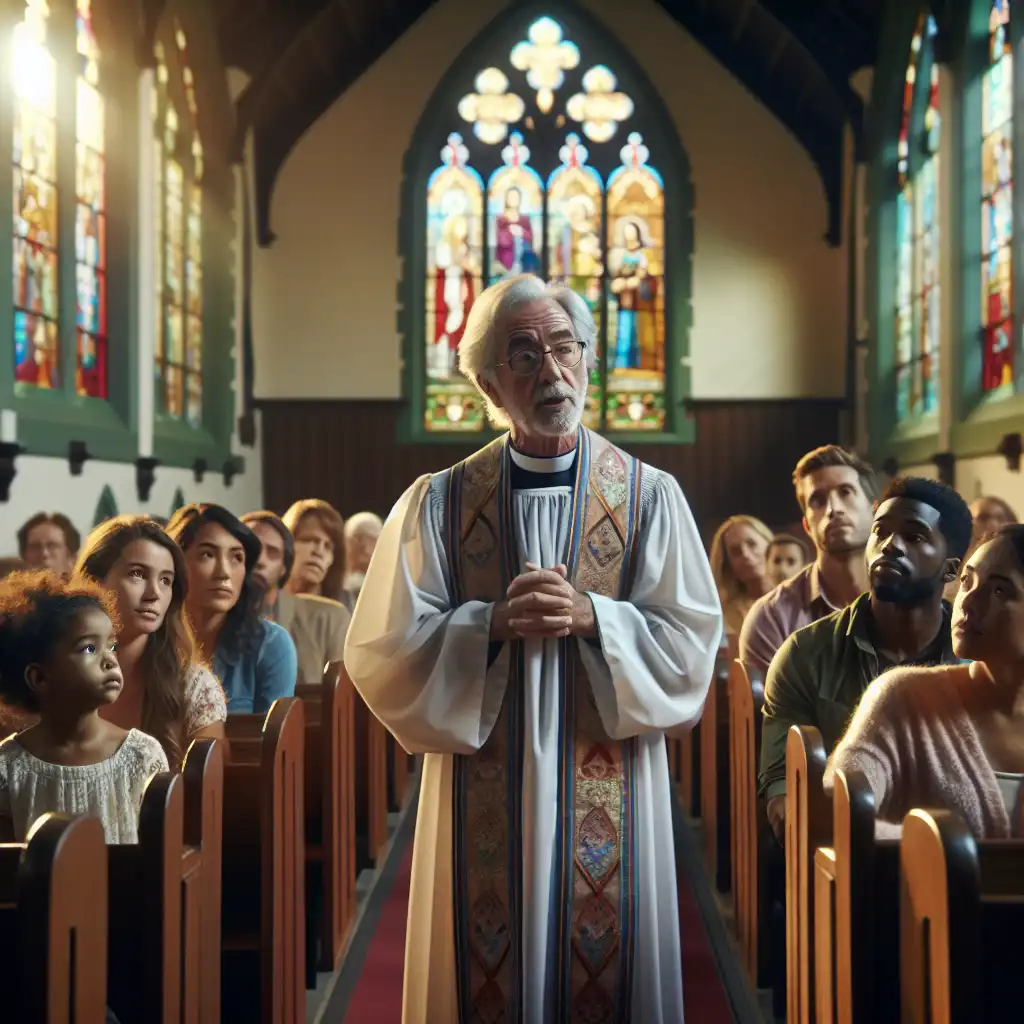
A church official, especially a priest or other cleric
He was an ecclesiastic who was known for his calming sermons.
ecclesiastic
ɪˌkliːziˈæstɪk
불러오는 중…
ɪˌkliːziˈæstɪk
A church official, especially a priest or other cleric
He was an ecclesiastic who was known for his calming sermons.
ɪˌkliːziˈæstɪk
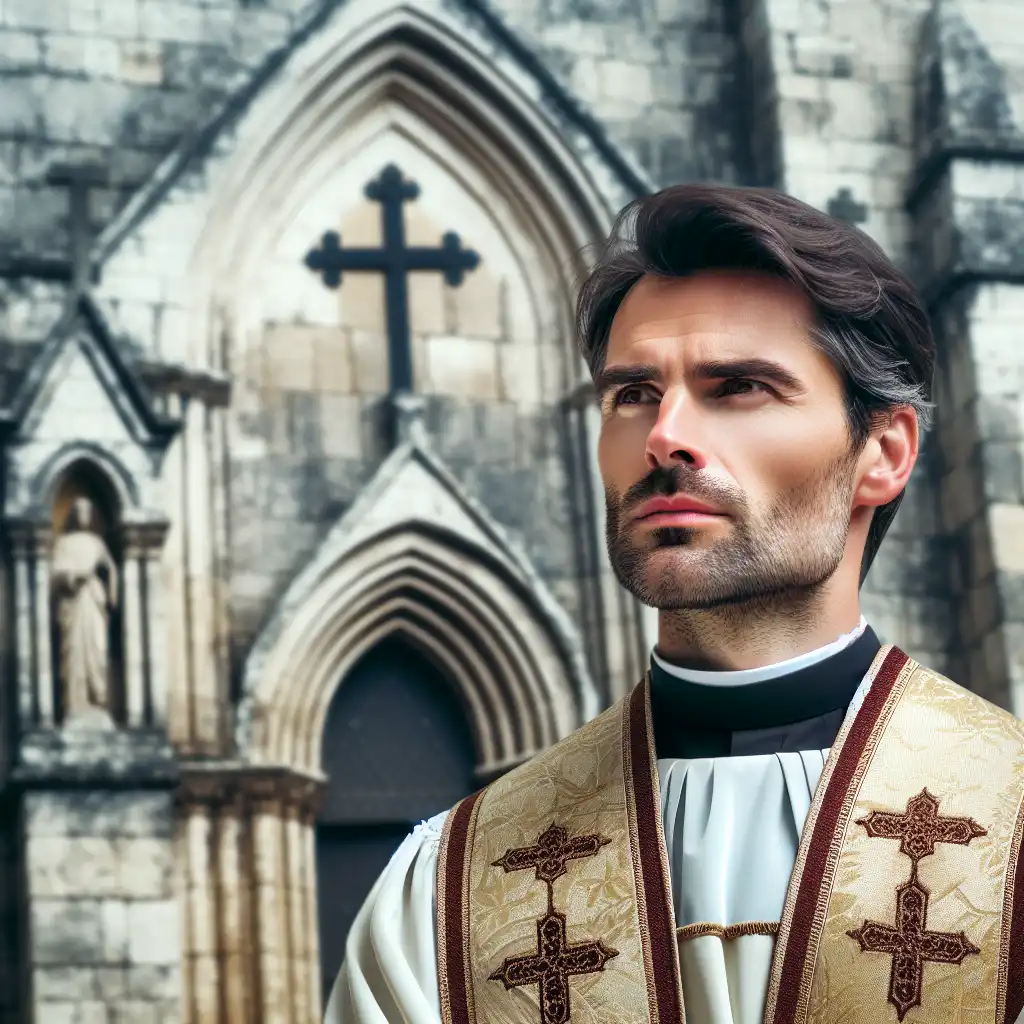
Related to the Christian Church or its clergy
He didn't agree with several ecclesiastic decisions made by the church.
오디오를 불러오지 못했어요. 잠시 후 다시 시도해 주세요.
The word 'ecclesiastic' is a fancy way of saying 'religious' or 'pertaining to the church or clergy'. It is often used to describe people or things that have to do with Christianity, such as an ecclesiastic ceremony or an ecclesiastic leader. You might hear this word used in formal or academic settings, but in everyday conversation, it's not very common.
A bishop is a high-ranking member of the Christian clergy who oversees a diocese (a geographical area under his authority) and has the power to ordain priests and deacons.
An ecclesiastic is a general term for any member of the clergy, including bishops, priests, and deacons.
A bishop is a specific type of ecclesiastic who holds a higher rank and specific responsibilities within the church.
단어 열기: Bishop →Cardinal refers to a high-ranking member of the Catholic Church who is appointed by the Pope to become part of a group of advisors known as the College of Cardinals.
This can include priests, bishops, and other religious leaders who are not necessarily part of the College of Cardinals.
Cardinal is a specific term that is only applicable to the Catholic Church and refers to a specific role within that organization.
단어 열기: Cardinal →A clergyman is a general term used to describe a male member of the clergy (the religious officials of a particular faith).
Clergyman is often used in everyday conversation to refer to any male religious leader.
Clergyman is a general term used to refer to any male religious leader, while ecclesiastic is a more specific term used to describe a high-ranking member of the clergy in a particular church or denomination.
단어 열기: Clergyman →Minister can refer to a religious leader, but it also describes a person who provides spiritual guidance or support more generally.
For example, a bishop would be considered an ecclesiastic, while a pastor or rabbi could be referred to as a minister.
However, the term minister could also be used to describe a layperson who leads a prayer group or provides pastoral care in a hospital or other setting.
단어 열기: Minister →Pastor specifically refers to someone who leads a Christian congregation and is responsible for the spiritual well-being of their parishioners.
So, while ecclesiastic can refer to any religious authority figure, pastor specifically refers to someone who leads a Christian church.
단어 열기: Pastor →Both ecclesiastic and prelate refer to people who hold positions of authority within the Christian church.
Prelate is a more specific term that generally refers to a high-ranking member of the clergy, such as a bishop, archbishop, or cardinal.
In other words, while prelate specifically denotes a person of high rank and authority within the church, ecclesiastic is a more flexible term that can encompass a wider range of roles and responsibilities.
단어 열기: Prelate →Ecclesiastic refers to a member of the clergy or the church in general, while priest specifically refers to someone ordained to perform religious rituals such as Mass and confession.
Ecclesiastic would be a broader term while priest would refer to a specific role within the church.
단어 열기: Priest →Ecclesiastic refers to a member of the clergy, whereas the word reverend is a title that refers to a specific rank within the clergy.
For example, a priest or minister may be referred to as an ecclesiastic, while a bishop or pastor may be referred to as Reverend.
단어 열기: Reverend →James Forbes: Compassion...
YouTube에서 보기 ↗The secular world is more spiritual than it thinks, just as the ecclesiastical world is more materialist than it cares to acknowledge.
Archbishop - A Christian ecclesiastic of a rank superior to that attained by Christ.
Some people have compared the Klan images to ecclesiastical figures.
Most ecclesiastical relics are fixed in time at the moment of their manufacture. That is why they are offered for veneration in casings that resemble pocket watches. They have lost their claim to mystery because they are so clearly the products of time.
It was under a solemn consciousness of the dangers from ecclesiastical ambition, the bigotry of spiritual pride, and the intolerance of sects... that is was deemed advisable to exclude from the national government all power to act upon the subject.
The ecclesiastical system of Rome, and particularly its leaders, for a thousand years and more thought that the earth is fixed and that everything else revolves about it.
In our ecclesiastical region there are priests who don't baptize the children of single mothers because they weren't conceived in the sanctity of marriage. These are today's hypocrites. Those who clericalize the church. Those who separate the people of God from salvation.
Those who read the Scriptures and judge for themselves, not resting satisfied with the perverted application of the text, do not find the distinction that theology and ecclesiastical authorities have made in the condition of the sexes.
We bless the organized church structures and their meetings. But if there are 10,000 others that meet outside of these ecclesiastical structures, that's wonderful, too. The kingdom of God moves forward in lots and lots of ways.
Although it was in primitive times and differently called the Lord's day or Sunday, yet it was never denominated the Sabbath; a name constantly appropriate to Saturday, or the Seventh day both by sacred and ecclesiastical writers.