
humbug
noun humbug
ˈhʌmbʌɡ
Deception or false talk
He claimed to be a millionaire, but it was all humbug.
humbug
ˈhʌmbʌɡ
Đang tải…
ˈhʌmbʌɡ
Deception or false talk
He claimed to be a millionaire, but it was all humbug.
ˈhʌmbʌɡ
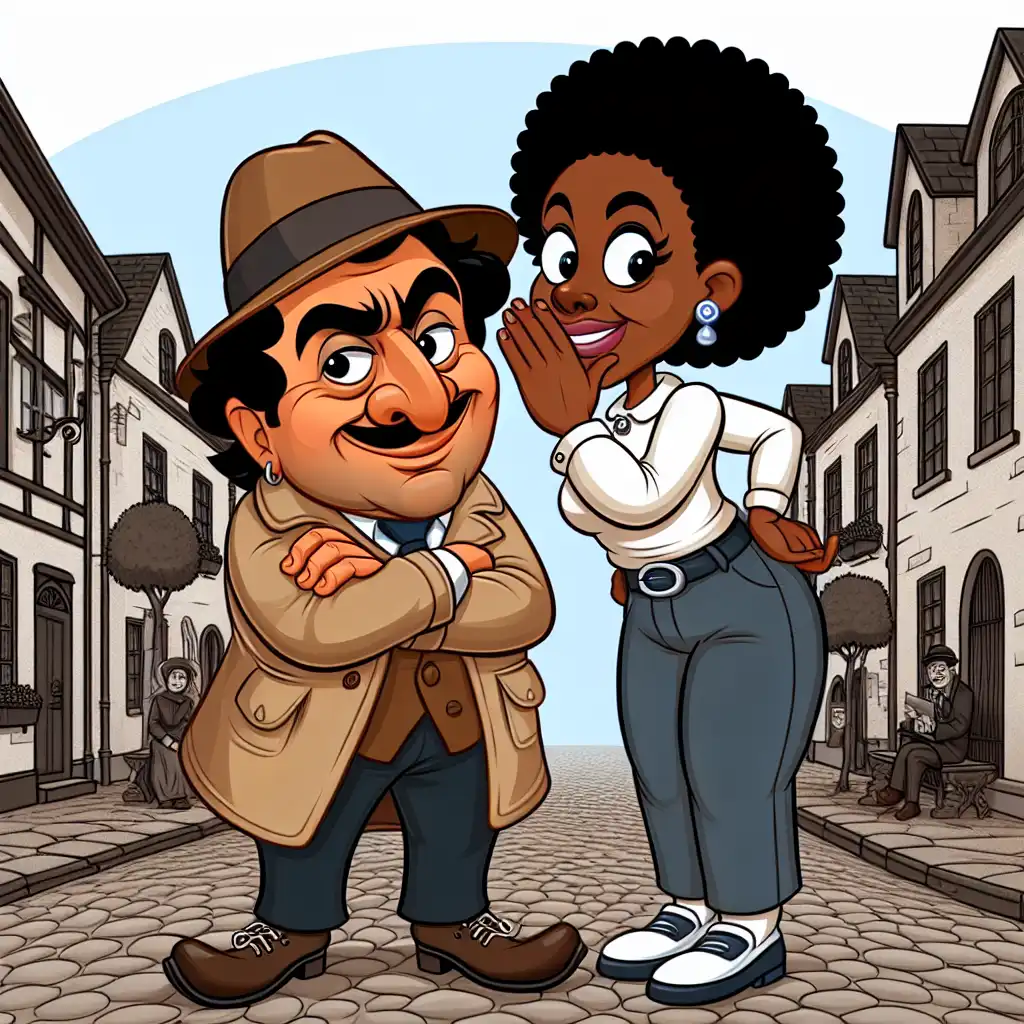
A person who deceives or talks falsely
Don't listen to him, he's a humbug.

ˈhʌmbʌɡ
To deceive or trick someone
The shopkeeper tried to humbug us into buying fake goods.

ˈhʌmbʌɡ
A hard candy with peppermint flavor
I bought a packet of humbugs from the corner shop.
ˈhʌmbʌɡ
Used to show that you think something is nonsense or not important
Humbug! I don't believe a word of it.
Không tải được âm thanh. Vui lòng thử lại sau.
Humbug is a word that means nonsense, deception or fraud. It's often used as a way to express doubt or disbelief in something that is being said or promoted as true or beneficial. For example, if someone tries to sell you a product claiming it will make you rich overnight, you may say "that's just humbug!" It's commonly used during the holiday season as well, referencing the famous line from Charles Dickens' A Christmas Carol where Ebenezer Scrooge calls Christmas a "humbug" as he doesn't believe in its benefits.
Bluff means to deceive or mislead someone by presenting a false image or pretense. For example, if you bluff in poker, you might pretend you have a better hand than you actually do to make your opponents fold.
Bluff is more commonly used in situations where someone is trying to trick or deceive others, while humbug describes when someone is being dishonest or insincere.
Mở từ: Bluff →Deceit refers to the act of intentionally misleading or tricking someone, usually for personal gain or to hide something. It implies an element of dishonesty.
Deceit is more serious and intentional, while humbug is more lighthearted and often used to describe less consequential situations.
Mở từ: Deceit →Both faker and humbug refer to someone who is being deceitful or dishonest, but they have slightly different meanings.
A faker is someone who pretends to be something they're not, often in order to deceive or impress others. For example, someone who claims to have a fancy car or a high-paying job but is lying about it could be called a faker.
So, both words are used to describe dishonesty, but faker is more specific and refers to someone who is pretending to be something they're not, while humbug is a more general term for insincerity and deception.
Mở từ: Faker →Fraud refers to an intentional deception for personal gain or to harm others. It involves dishonesty, lying, stealing, or cheating for personal benefit.
For example, a person who falsely claims to be a doctor and charges money for medical services is committing fraud.
Fraud is a serious crime that involves intentional deception for personal gain, while humbug is a misleading or deceptive statement that may not necessarily be illegal.
Mở từ: Fraud →A hoax is deliberate deception or fraud, often involving creating a false story or event to deceive people. For example, a hoax might include a fake news story or a social media post that spreads false information.
A hoax is a deliberate attempt to deceive people with false information, while humbug can refer to a broader range of dishonesty, including practical jokes and pranks.
Mở từ: Hoax →Humbug and nonsense are both words used to describe something that is not true or believable.
Nonsense is more of a general term for something that has no logic or reason.
It is often used to describe something that is absurd, foolish, or of no value. For example, someone might say "The idea that the earth is flat is pure nonsense" or "Stop talking nonsense and focus on what actually matters".
Humbug tends to focus on deception or fraudulence, while nonsense refers to something that is illogical or without value.
Mở từ: Nonsense →Humbug and pretence both imply behaviour that is false or insincere, but the difference lies in their connotations. Humbug refers to behaviour that is meant to deceive others into believing something that is not true, often for personal gain.
It can also refer to meaningless or nonsense talk. Pretence refers to behaviour that is meant to create a false impression or disguise one's true feelings or intentions.
Humbug is often used in contexts of trickery or fraud, while pretence is used more broadly to describe any behaviour that is not genuine.
Mở từ: Pretence →Humbug refers to something that is fake or deceptive, whereas trickery refers to using deceit or cunning to achieve a goal.
If someone uses trickery to cheat you out of money or to manipulate a situation to their advantage, that would be considered trickery.
Humbug is applicable to situations where something is not what it claims to be, while trickery is applicable to situations where someone is being intentionally deceitful or manipulative.
Mở từ: Trickery →studying the fascinating species or live in these waters for over thinking provision kilo is a perfect example of what a healthy ocean looks like as well as it all feeds on mantas we get humbug
Xem trên YouTube ↗Even those of us who do not understand the nuances of economics have come to accept that reform cannot be bloodless. We are often impatient with the predictable, do-gooder campaigns against development. We argue passionately against the humbug protests of those who never want the poor to get rich.
I like to root your pride I like the Paradise pride now a lot of you are going to probably disagree with me about who my favorite male coalition of lions is I know a lot of you are probably going Musketeers Musketeers Musketeers and I go bah humbug Musketeers I'm a bullish sucker man so I think those six
Xem trên YouTube ↗The voice of the people is the voice of humbug.
Children are a wonderful gift. They have an extraordinary capacity to see into the heart of things and to expose sham and humbug for what they are.
People don't like the true and simple; they like fairy tales and humbug.
Either marriage is a destiny, I believe, or there is no sense in it at all, it's a piece of humbug.
An educated man is thoroughly inoculated against humbug, thinks for himself and tries to give his thoughts, in speech or on paper, some style.
Second to agriculture, humbug is the biggest industry of our age.
There is only one true thing: instantly paint what you see. When you've got it, you've got it. When you haven't, you begin again. All the rest is humbug.
Sensitive, humbug. Everybody thinks I'm sensitive. Wait until they hear my new album.
You don't have to call it God or Jesus. That's religious humbug to a lot of people, but you've gotta believe that nature and spiritual things surround us. That is what put us here! I thank the universe for that every day of my life.