ऑडियो लोड नहीं हो सका। कृपया बाद में फिर कोशिश करें।
उपयोग कैसे करें
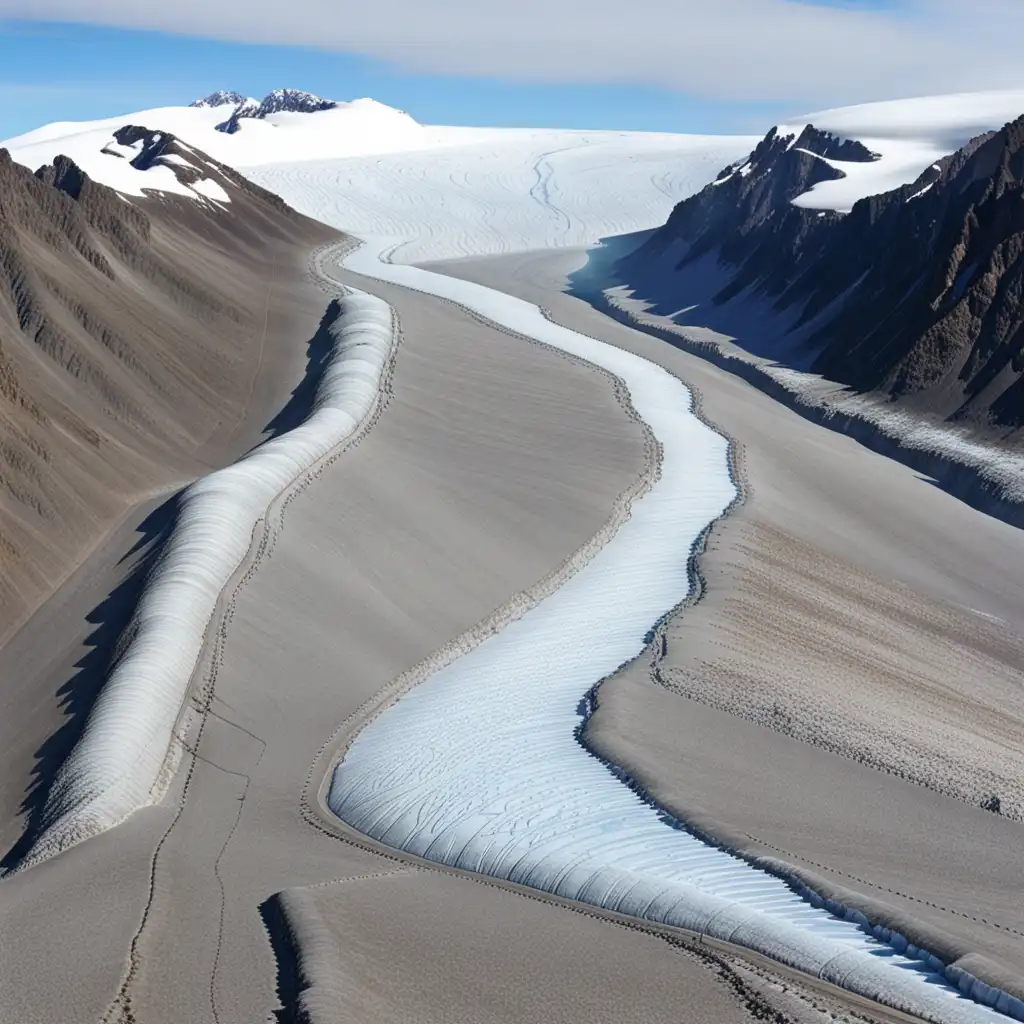
Esker is a geological term used to describe a long, winding ridge of gravel and sand that is formed by a moving glacier. It can also refer to a similar ridge that is formed by a river or stream. This word is typically used in scientific or academic contexts, particularly in discussions of glacial geology or landforms. Eskers are found in various parts of the world, including Scandinavia, Canada, and the northern United States. For English learners, it may be helpful to become familiar with the word esker if they are studying geography or earth science, or if they are reading about certain regions or landscapes.
A drumlin is a long, smooth and elongated hill made of glacial till, which is sand, gravel, and boulders. Drumlins are typically found in areas with glaciated landscapes, such as in Northern Europe and North America.
The main difference between drumlins and eskers is their shape and composition. Drumlins are smooth and elongated hills made of glacial till, while eskers are winding ridges of sand, gravel, and rocks.
Drumlins are typically found in groups while eskers are long and can be several miles long.
A hill is a rounded elevation of land that is smaller than a mountain. Hills are found all over the world and can be made of various materials, such as rock, soil, or sand.
An esker is a specific type of landform created by glaciers, while a hill is a general term used to describe a wide range of elevated land.
A knoll is a small hill or mound of earth. It is a raised area of land that is much smaller than an esker. Knolls are formed naturally but can also be created by human activities, such as mining or construction.
Knolls can be found just about anywhere, from the countryside to the suburbs.
Esker and knoll are two different landforms with different sizes and origins. Eskers are typically larger, found in glaciated regions, and formed by natural phenomena.
Knolls are smaller, found in more varied regions, and can be formed naturally or by human activities.
A moraine is a deposit of sediment and rock material that was carried by a glacier and then deposited as the glacier retreated.
Moraines can be found in areas that were covered by glaciers, as well as in areas where glaciers have long since retreated.
An esker is a long narrow ridge of sedimentary material created by meltwater flows under a glacier, while a moraine is a deposit of sediment and rock material carried and deposited by a glacier.
Eskers are found in areas that were covered by glaciers in the past, while moraines can be found in both glaciated and non-glaciated areas.
A mound is a general term that can refer to any raised area of ground, whether it was naturally formed or constructed by humans.
Mounds can be found in a variety of settings, including parks, fields, and archaeological sites. An esker is a specific type of raised landform formed by glaciers, while a mound is a more general term that can refer to any raised area of ground.
An esker is a long, winding ridge of gravel and sand that forms underneath a glacier. It typically resembles a snake-like shape and can be several miles long.
A ridge is a long, narrow elevation of land that rises above the surrounding terrain.
Ridges can be found in many different types of terrain, from mountain ranges to rolling hills to coastal cliffs.
The main difference between the two is that an esker is specifically a type of ridge that forms as a result of glacial activity, while a ridge can be formed by a variety of other processes.
Additionally, eskers tend to have a more distinct, winding shape, while ridges can take on many different forms.