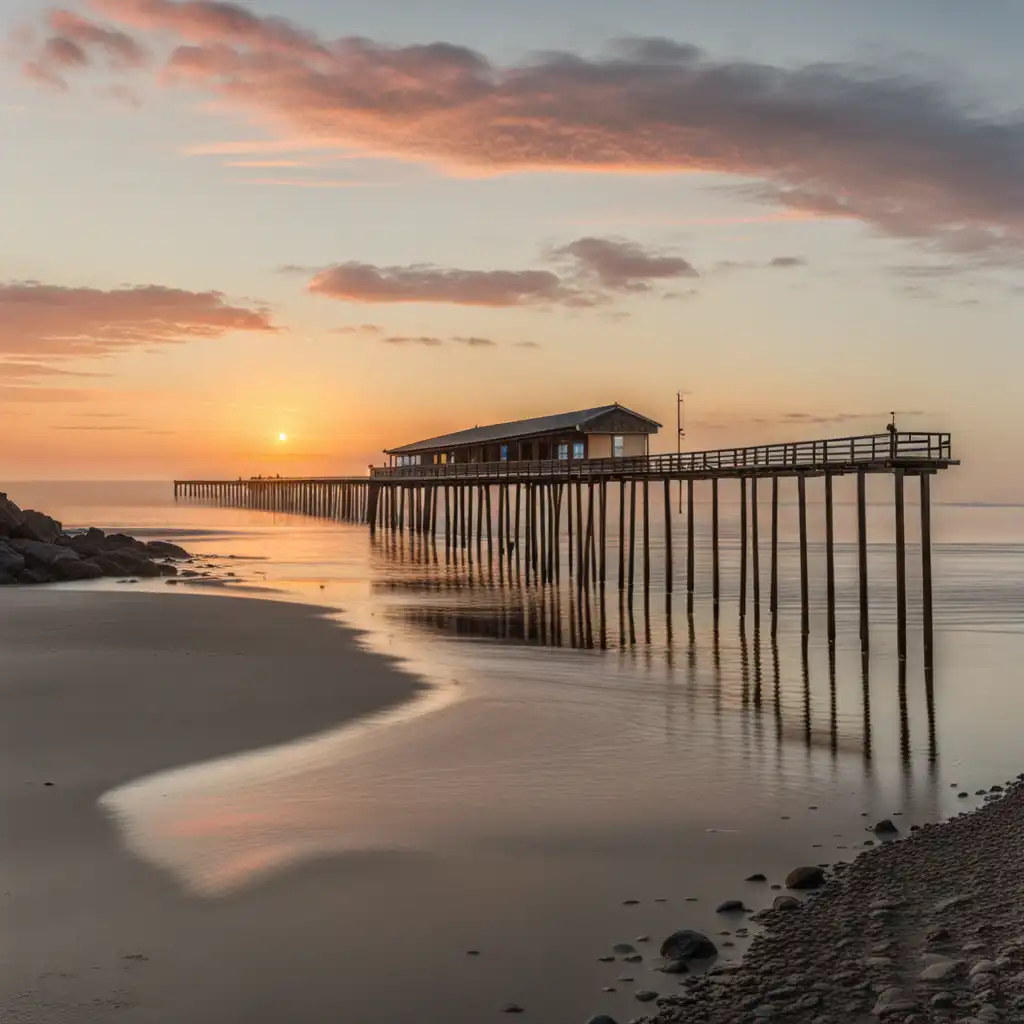
jetty
noun jetty
ˈdʒeti
A structure that sticks out into water, usually used for boats to dock or people to fish from.
We walked to the end of the jetty to get a better view of the sunrise over the ocean.
jetty
ˈdʒeti
Loading…
ˈdʒeti
A structure that sticks out into water, usually used for boats to dock or people to fish from.
We walked to the end of the jetty to get a better view of the sunrise over the ocean.
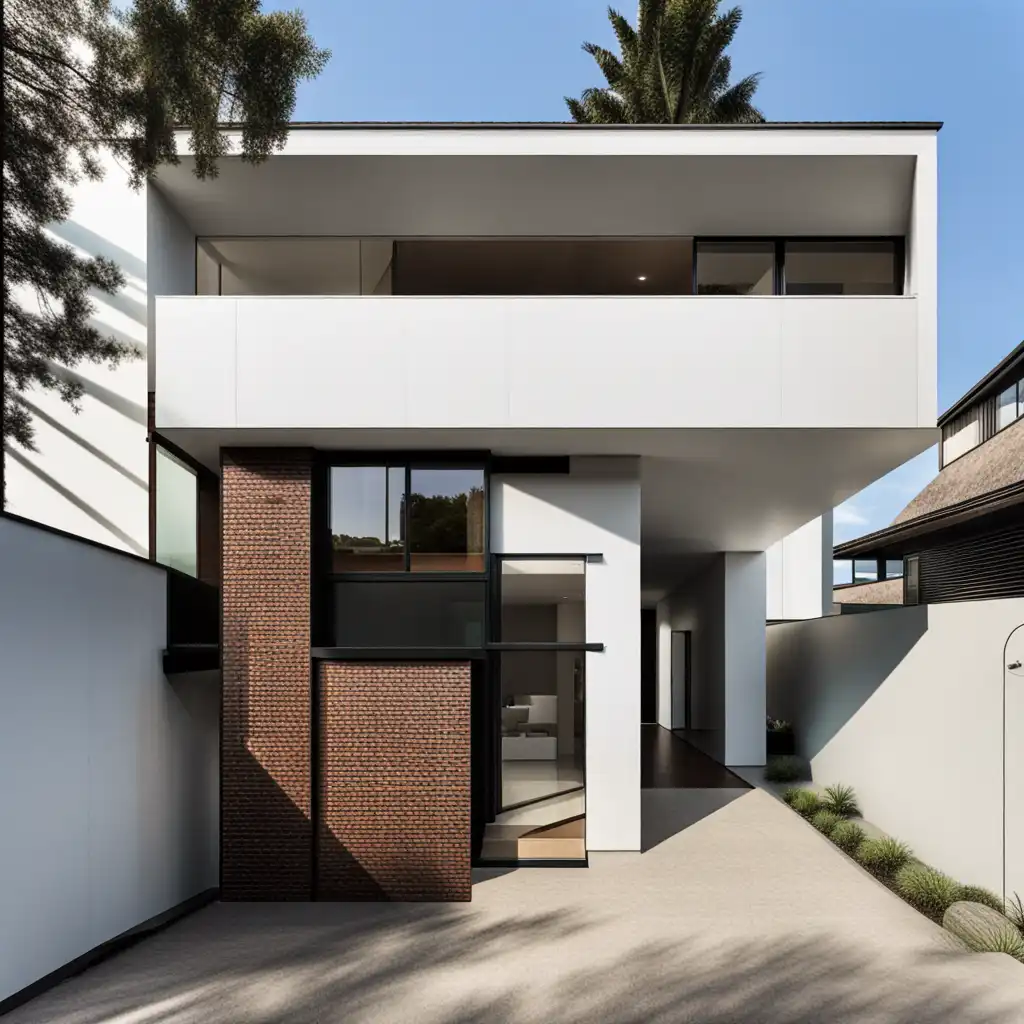
ˈdʒeti
In architecture, a part of a building that sticks out from the rest of the structure.
The jetty on the second floor extends over the entrance to the house.
Audio could not be loaded. Please try again later.
A jetty is a long structure that sticks out into the water from the land. People usually build jetties to make it easier to get on boats or to protect the coast from big waves. When you're near the water and you see a long wooden or concrete platform that reaches out into the sea or lake, that's most likely a jetty. People use jetties to fish, watch the boats, or just take a walk surrounded by water.
A breakwater is a structure made of large rocks or concrete that is built parallel to the shore to protect against powerful waves and currents.
It is usually built offshore and acts as a barrier to the incoming waves, breaking them before they reach the shore. Breakwaters are commonly used in places where waves and currents are strong, such as harbors, marinas, and beaches that are prone to erosion.
In summary, breakwaters are typically built offshore and act as a barrier to waves and currents to protect the shoreline, while jetties are usually built on the shore and serve to stabilize the entrance to a harbor and protect against coastal erosion.
Open word: Breakwater →A causeway is a raised road or pathway that is built over land or water.
It may be made of concrete, asphalt or wood, and may be straight or curved. People use causeways to cross over the water body to get from one place to another.
A causeway is a raised road that connects two pieces of land over water, while a jetty is a structure that is built out into the water from the shore to protect a harbor or beach from waves and sediment buildup.
Open word: Causeway →A dock is a structure built along the shore or in shallow water that allows ships and boats to load and unload passengers or cargo.
It is usually a long and solid platform with areas for mooring boats and storage. Docks are commonly found in harbors and ports.
A jetty is a long, narrow structure built out into the water from the shore. It is designed to protect a harbor, riverbank or coastline from the force of the waves and to create a calm area of water for boats to dock.
In summary, both docks and jetties are man-made structures that provide a place for boats to dock, but docks are designed for boats to load and unload cargo, while jetties are designed to protect harbors and create a calm place for boats to dock.
Open word: Dock →An embankment refers to a slope or a raised area of land that is built to hold back water, such as a river or a lake.
It is typically made of soil or rocks and serves as a barrier to prevent flooding. Embankments are usually constructed on the banks of a body of water and can be found in rural or urban areas.
The main difference between an embankment and a jetty is that an embankment serves as a barrier to prevent flooding, while a jetty serves as a landing place for boats and helps to control the flow of water and sediment in the area.
Embankments are usually found in areas with high rainfall and are used to prevent water from overflowing, while jetties are commonly used in coastal areas to protect boats and shipping facilities from rough waves and strong currents.
Open word: Embankment →Both jetty and mole refer to structures built from land into water, but they have different applications and designs.
A mole is a massive structure that extends out to the sea, often built from rocks and boulders, and mainly used to protect a harbor or beach from the effects of the sea.
Moles tend to be longer and have a broader base than jetties. They are typically found in areas with significant currents or seas.
A mole is a massive structure built to protect a beach or harbor from the impact of the sea.
Open word: Mole →A pier is a platform built on piles or pillars that extends out into the water.
It is usually used for loading and unloading ships or as a dock for pleasure boats. Piers sometimes have shops, restaurants, or attractions on them, and they are often used for recreational purposes.
In summary, jetties protect harbours and are used for recreational activities. Piers are used for loading and unloading and for recreational activities, they can also have shops, restaurants, or attractions on them.
Open word: Pier →A quay is a structure built along the water's edge to provide a mooring place for ships.
However, unlike a jetty, a quay is typically larger and can be used for loading and unloading cargo.
The main difference is that a jetty is a platform that extends from the shore into the water, while a quay is a structure built along the water's edge.
Open word: Quay →A wharf is a larger platform built along the shore of a body of water that is used for loading and unloading cargo from ships.
It is usually made of concrete or steel and is perpendicular to the shore. Wharf is typically used in larger waterways like ports or open water areas.
A jetty is like a small pier for boats, while a wharf is a large platform for ships.
Open word: Wharf →park they need to so to be involved in the decision-making process so my humble responsibility is to try to make sure that the communities out there they see they really need to support my jetty to create an emotion ownership into the communities the
Watch on YouTube ↗Like a shipwreck or a jetty, almost anything that forms a structure in the ocean, whether it is natural or artificial over time, collects life.
It was a thick forest. We all split up into many groups as we argued over what to do next. We were all scared and confused. Then after spending the night on the beach, we found a jetty and coconuts.
Watch on YouTube ↗I go on a hunting safari at least once a year to Botswana, which is fantastic because we have a huge area of wilderness entirely to ourselves. My island covers roughly 55 acres, which again I have to myself, with nearly half a kilometre of private beach with my own jetties and boats.
turned away for a moment and he got caught into a Riptide and started to be pulled out towards a jetty I went I can stand here right now and see as I go tearing into the water after him the moment slowing down and freezing into this arrangement I can see the rocks are
Watch on YouTube ↗As a young boy growing up in New York City, we would spend our summers on the South Fork of Long Island. My dad would take me down to the beach at low tide. We would walk a mile down to the jetties, and he would lower me by my ankles into the crevices between the massive boulders to grab at huge ropes of mussels.
when ants are coming in is well they defend themselves they fight against the ants but when it comes the artifacts is a big animal which makes it very difficult for this kind of small insects to protect themselves against now let's go to a jetty she does have a small
Watch on YouTube ↗men and boys some just five years old literally risk their necks only to fragile vines save them from crashing into the jetty it's the ancient
Watch on YouTube ↗here at shaman rock somewhere deadly corrosion a lot evolutionary jetty in universities national revolution Nadia so you radically bred cough duo flood aqui esta she right opposite an
Watch on YouTube ↗is sick I understand I'm just swinging right around getting long do I punch it through there your gun towards the tip of the jetty ball in the channel good stuff I'm still looted you can turn back up in the channel now all right
Watch on YouTube ↗But I turned away for a moment and he got caught into a riptide and started to be pulled out towards the jetty. I can stand here right now and see, as I go tearing into the water after him, the moments slowing down and freezing into this arrangement.
Watch on YouTube ↗disappeared out of the place the loss of the cattle and the the thickening of the bush brought back the tet see fly got very thick in this area with jetty fly which meant that the cattle and the people didn't come back once the rinderpest had gone and there were very low game
Watch on YouTube ↗the bridge right there that's how quick it happened going through the inlet right now is definitely not an ideal situation we don't have any jetties so it's
Watch on YouTube ↗