membrane
noun membrane
ˈmembreɪn
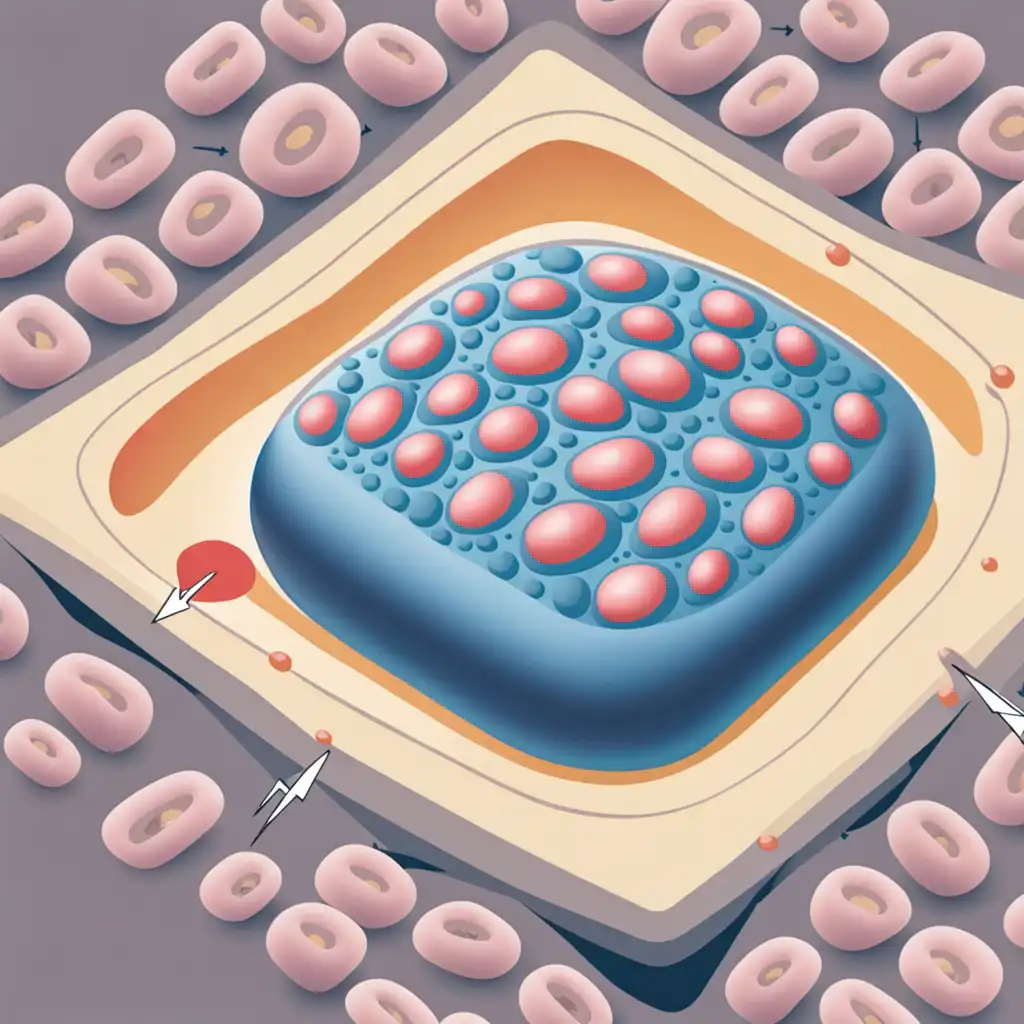
A thin sheet or layer usually covering something or dividing something
The cell membrane covers the cell and protects its inside parts.
membrane
ˈmembreɪn
Cargando…
ˈmembreɪn
A thin sheet or layer usually covering something or dividing something
The cell membrane covers the cell and protects its inside parts.
ˈmembreɪn
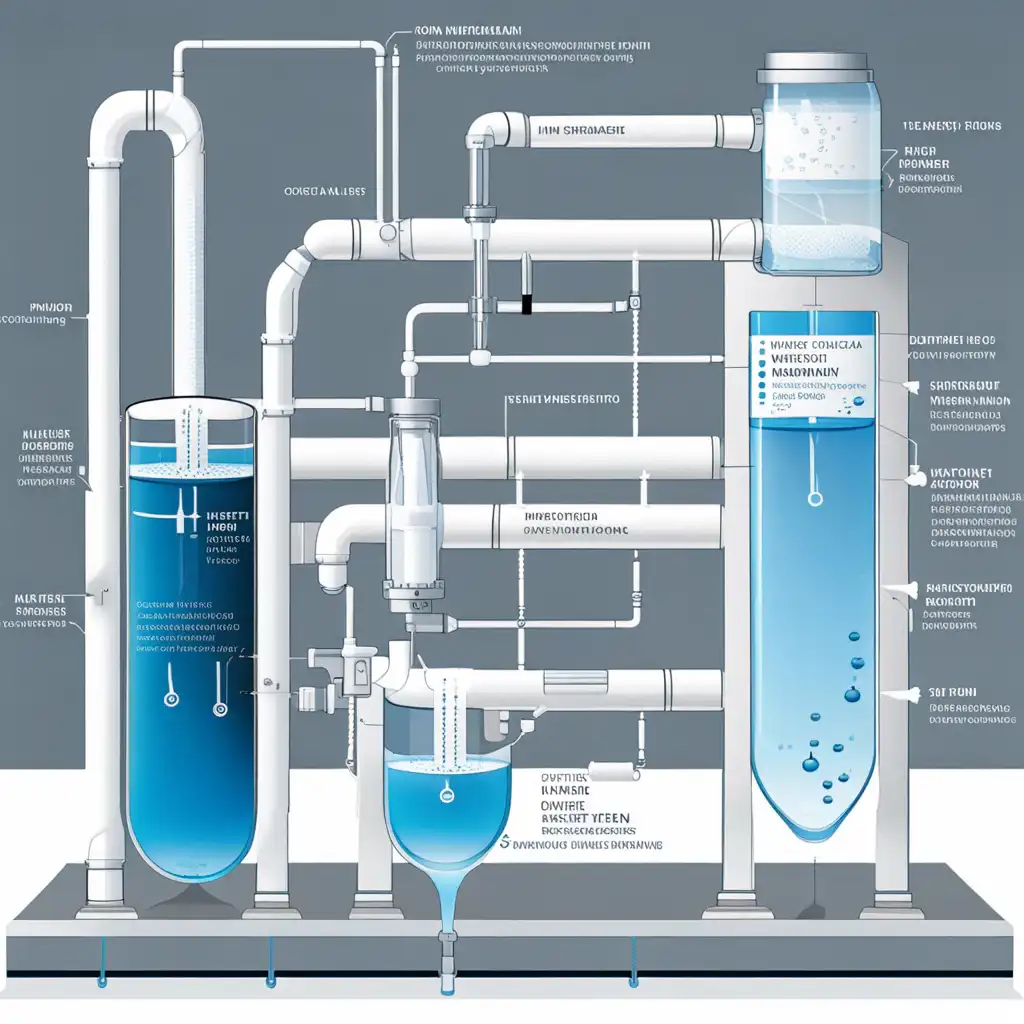
In the field of technology, a membrane is a thin material that allows some things to pass through but stops others
In water treatment, a special membrane is used to filter out impurities.
ˈmembreɪn
In music, the vibrating part of a drum or other musical instrument
The drum's membrane is made of a special type of material to create the best sound.
No se pudo cargar el audio. Inténtalo de nuevo más tarde.
A membrane is a thin layer or surface that covers or separates things. For example, our skin is a membrane that covers our bodies. In science, membranes are important because they help control what goes in and out of cells or organs. They are also used in everyday things like water filters and food packaging. So, if you hear someone talking about a membrane, they might be referring to a thin layer that separates or covers something.
A barrier is something that prevents movement or access, such as a wall or a fence.
It is used to stop or block anything from passing through. Examples of barriers include a security gate, a firewall, or a barricade.
A barrier is used to stop or block movement or access, while a membrane is used as a thin layer to separate two things or spaces.
Abrir palabra: Barrier →Cover refers to any material or object that can be placed on top of something to conceal, protect, or enclose it.
Covers can be made of various materials like plastic, cloth, or metal and can be used for different purposes. For example, you can put a cover on a book, a pot, or a car to protect them from damage, dust, or weather.
In summary, while cover refers to a protective layer that can go on top of something, membrane refers to a thin boundary that separates two substances or spaces.
Abrir palabra: Cover →An envelope is a paper or cardboard container used for holding letters or documents.
An envelope is a man-made object used for containing and transporting messages, while a membrane is a natural boundary found in living organisms.
Abrir palabra: Envelope →Film and membrane both refer to thin layers or sheets, but they are used in different contexts.
Film typically refers to a thin layer of material used for capturing visual images or for covering and protecting objects.
For example, a roll of film is used in a camera to capture photographs, while a plastic film may be used to wrap food or cover furniture.
Film is used for capturing or covering, while membrane is used for separating or filtering.
Abrir palabra: Film →A layer is usually a flat or curved sheet-like portion of something.
It can exist in both living and non-living things. For example, you can have a layer of paint on a wall, a layer of lasagna noodles in a dish, or a layer of skin on your body.
A membrane is a thin, soft layer of tissue that surrounds and protects something.
A layer is a flat sheet-like portion of something, while a membrane is a thin layer of tissue that surrounds and protects something, usually found in living things.
Abrir palabra: Layer →A partition is a physical barrier or wall that completely separates two or more spaces or areas from each other. For example, a wall that divides a room into two parts can be called a partition.
A membrane is a thin sheet or layer that separates or filters substances while a partition is a physical barrier or wall that completely divides spaces or areas.
Abrir palabra: Partition →A shield is a sturdy and solid object that is used as a barrier or protection from harm. It is applicable in military defense, sports, or personal safety, where there is a need to protect oneself from physical objects or attacks.
A membrane is a thin and flexible barrier used for selective separation or protection, while a shield is a solid and sturdy barrier used for physical defense or protection.
Abrir palabra: Shield →Skin is the outermost layer of tissue covering the body of a living organism, such as humans, animals, or plants.
In short, membranes are thin, separative layers used in more scientific or technical settings, while skin is the protective layer on the outside of living organisms.
Abrir palabra: Skin →Cell membranes are structures of contradictions. These oily films are hundreds of times thinner than a strand of spider silk, yet strong enough to protect the delicate contents of
Ver en YouTube ↗Life needs a membrane to contain itself so it can replicate and mutate.
it floats with the help of a gas-filled bladder topped by a vertical membrane with that serving as a sail it maintains
Ver en YouTube ↗I swim in a sea of words. They flow around me and through me and, by a process that is not fully clear to me, some delicate hidden membrane draws forth the stuff that is the necessary condition of my life.
that you can see the fungal tissue through the eye membrane. So this is a video of an ant this is a different species of ant. That's also been infected by this cordyceps fungus-- Ophiocordyceps fungus. It's in its last hour of life. It's just twitching there
Ver en YouTube ↗Carbon has this genius of making a chemically stable, two-dimensional, one-atom-thick membrane in a three-dimensional world. And that, I believe, is going to be very important in the future of chemistry and technology in general.
Public space. This is a good public space. It's a place worth caring about. It's well defined. It is emphatically an outdoor public room. It has something that is terribly important -- it has what's called an active and permeable membrane around the edge.
Ver en YouTube ↗I want work that, possessing as thin a membrane as possible between life and art, foregrounds the question of how the writer solves being alive.
multi-layered complex wing membranes would be one of the most interesting experiences an anatomist could have three different kinds of flying dragons inhabit our alien world with heads
Ver en YouTube ↗When we think of what is necessary for the phenomenon that we call life, we think of compartmentalization, keeping the molecules which are important for life in a membrane, isolated from the rest of the environment, but yet, in an environment in which they actually could originate together.
allowing the cells to transport it throughout the body. But they also have another kind of complex protein on the outside of the cell membrane. These proteins known as antigens communicate with white blood cells, immune cells that protect against infection. Antigens serve as identifying markers,
Ver en YouTube ↗I'm so deeply interested in what it feels like to be other people that I get to operate under the illusion when I'm writing fiction that I'm not really revealing that much about myself. But, of course, I am, and I know that I am. And yet there's this sort of membrane that I get to work behind as I write my fiction, and I love it.
from the smallest one-celled bacteria to the giant blue whale to you. Each cell in your body is surrounded by a cell membrane, a thick flexible layer made of fats and proteins, that surrounds and protects the inner components. It's semipermeable, meaning that it lets some thing pass in and out
Ver en YouTube ↗I think the membrane - I say that the membrane between life and death is perilously thin. And I do think the story of Jesus, this great mythical story, can have transforming value in our lives.
and lies in how the brain responds when something strikes it. The brain is made of soft fatty tissue with a consistency something like jello. Inside its protective membranes and the skull's hard casing, this delicate organ is usually well-shielded.
Ver en YouTube ↗The only way reliably to gauge the heat of any particular chilli is to cut it in half, so exposing the core and membranes, and to dab the cut surface on your tongue.
that are surrounded by capillaries. Together the alveolar wall and capillaries make a two-cell thick membrane that brings blood and oxygen close enough for diffusion. These oxygen-enriched cells are then carried from the lungs through the cardiovascular network,
Ver en YouTube ↗Skin has become inadequate in interfacing with reality. Technology has become the body's new membrane of existence.
through cooling methods like the evaporation of sweat. But with uncompensable heat stress, your body is unable to lose enough heat due to overexertion or high temperatures in humidity, which raises your core temperature beyond normal levels. This causes the proteins and cell membranes to denature,
Ver en YouTube ↗I believe that mycelium is the neurological network of nature. Interlacing mosaics of mycelium infuse habitats with information-sharing membranes. These membranes are aware, react to change, and collectively have the long-term health of the host environment in mind.