adolescent
noun adolescent
ˌædəˈlesnt
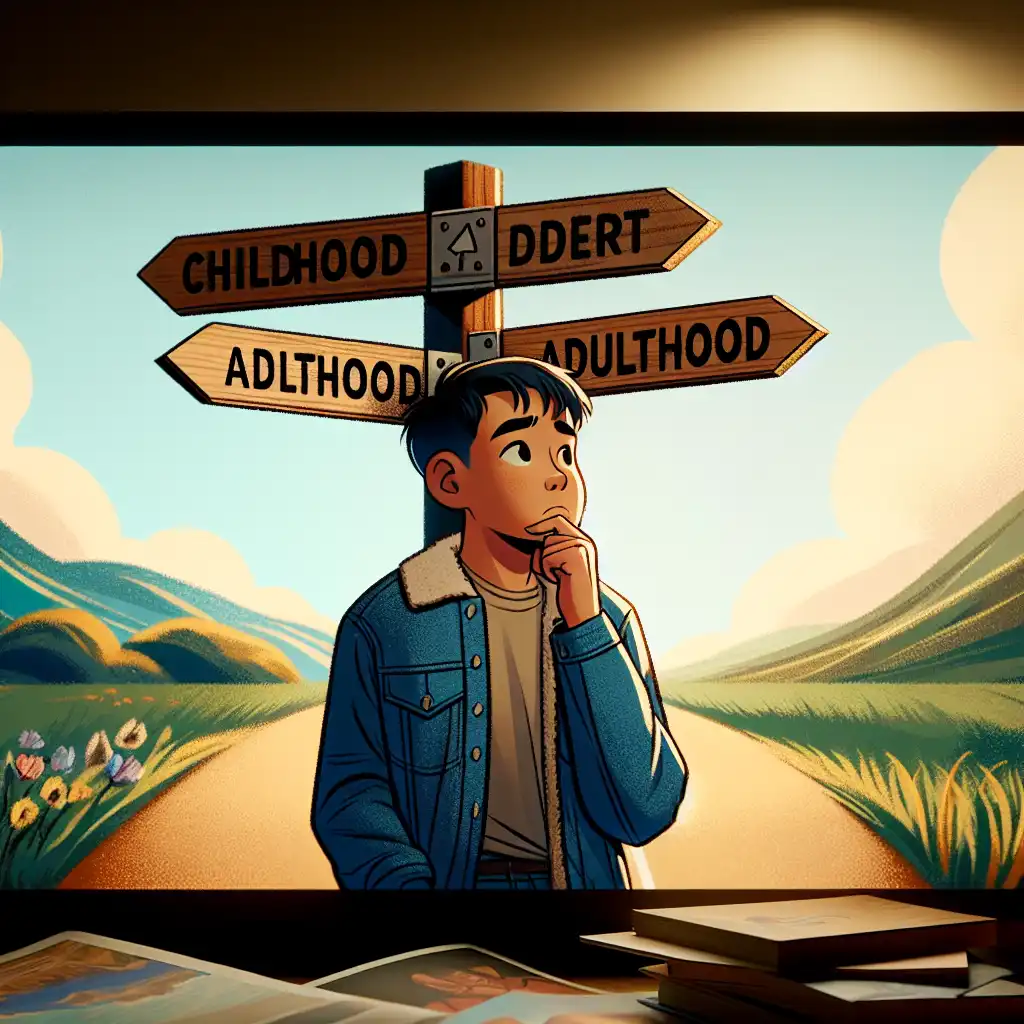
A person who is in the age between being a child and becoming an adult
Many adolescents find it hard to establish their own identity.
adolescent
ˌædəˈlesnt
불러오는 중…
ˌædəˈlesnt
A person who is in the age between being a child and becoming an adult
Many adolescents find it hard to establish their own identity.

ˌædəˈlesnt
Relating to the time when a person is an adolescent
Adolescent issues often include school and relationship problems.
오디오를 불러오지 못했어요. 잠시 후 다시 시도해 주세요.
The word 'adolescent' is used to describe a person who is in their teenage years, between the ages of 13 and 19. It refers to the time when someone is maturing from a child into an adult, both biologically and mentally. It can be used to describe behavior, emotions, and physical changes that occur during this time. For example, "As an adolescent, he struggled with fitting in with his peers" or "Her adolescent years were marked by mood swings and rebellion."
Developmental refers to the overall process of growth and maturation that someone goes through from birth to adulthood.
So, while adolescent focuses on a specific phase of development, developmental encompasses the entire process of change and growth over time.
단어 열기: Developmental →Grow refers to the physical process of becoming bigger and taller or developing in other ways, such as intellectually or emotionally.
In simpler terms, adolescent refers to a stage of life, while grow refers to a physical or mental process of developing.
단어 열기: Grow →Adolescent typically refers to someone who is between the ages of 13 and 18, while juvenile usually refers to someone who is under the age of 18, but specifically applies to someone who has committed a crime.
An adolescent is any young person in that age range, while a juvenile is an adolescent or child who has broken the law.
단어 열기: Juvenile →Minor refers to a person who is under the legal age of majority, which varies depending on country or state but is generally 18-years-old.
Being a minor means that in the eyes of the law, the person is not yet considered an adult and may have different rights and responsibilities compared to adults.
An adolescent is a person who is within a certain age range, while a minor is a legal status based on age. Adolescence is a stage of life, while being a minor is a legal designation.
단어 열기: Minor →Both words adolescent and pubescent refer to stages of development during the teenage years.
Pubescent specifically refers to the physical changes in the body that occur during adolescence, mainly the onset of puberty.
Adolescent applies to the whole stage of teen development, while pubescent specifically refers to the physical changes that occur during puberty.
단어 열기: Pubescent →It refers to the physical and emotional changes a person goes through during this time. Teenage is a more specific term that refers to someone who is between the ages of 13 and 19.
It is a term widely used in popular culture to describe the personality, lifestyle, and attitudes of this age group. Adolescent is a broader term referring to the developmental stage, while teenage is a narrower term referring to a specific age range.
단어 열기: Teenage →Youngster is a more general term that can describe any young person or child.
If you were talking about someone who is going through puberty, you would say they are an adolescent. But if you were just talking about a young person in general, you could say they are a youngster (although this isn't a word that's used very often nowadays).
단어 열기: Youngster →Youth is a broader term that can refer to anyone in the stage of life between childhood and adulthood, but can also refer to young adults in their 20s or even 30s.
So, when talking about teenagers going through changes and growing up, you might say adolescents, whereas if you're talking about young people in general, you might say youth.
단어 열기: Youth →becomes an adolescent otter wild otters live in holes along riverbanks called halts and a halt will have a few different entrances to protect against flooding with at least one entrance being above water level in the wild coleman would stay in the
YouTube에서 보기 ↗The adolescent must never be treated as a child, for that is a stage of life that he has surpassed. It is better to treat an adolescent as if he had greater value than he actually shows than as if he had less and let him feel that his merits and self-respect are disregarded.
of one part left alone and two parts tragedy, started therapy in eighth grade, had a personality made up of tests and pills, lived like the uphills were mountains and the downhills were cliffs, four-fifths suicidal a tidal wave of antidepressants, and an adolescent being called "Popper,"
YouTube에서 보기 ↗With the monstrous weapons man already has, humanity is in danger of being trapped in this world by its moral adolescents.
This may mean that filled pauses cue toddlers to expect novel words, and help them connect new words to new objects. For adolescents and adults learning a second language,
YouTube에서 보기 ↗Even when I became the typical shy adolescent, I never minded performing. I felt there was a kind of safety, a protection about being on stage, about losing myself in another character.
life infant child adolescent woman culminating in an all-night dance that will test her endurance the ritual
YouTube에서 보기 ↗I've heard it said that the most dangerous animal on the planet is the adolescent male.
but this film was not about educating others. It was once again about placing myself in my world. It was about healing old adolescent memories.
YouTube에서 보기 ↗Many of the things that I have written on have focused, at least a big part of the story, on adolescents. I think that in that period of life, so much happens, and it's the period of life where you're forming into an adult. In certain ways, you're already an adult and in certain ways you're still a kid.
Today we know the freshwater eel lifecycle has five distinct larval leptocepheli miniscule glass eels adolescent elvers, older yellow eels and adult silver eels.
YouTube에서 보기 ↗In interviews I gave early on in my career, I was quoted as saying it was possible to have it all: a dynamic job, marriage, and children. In some respects, I was a social adolescent.
who have been doing this for a long time to understand which antelope you're trying to catch. The herd explodes and it gathers back again. Those expert trackers have to be part of the pack. They can't be 10 miles behind. You need the women and the adolescents there, because the two times in your life you most benefit from animal protein
YouTube에서 보기 ↗Like children, adolescents need a framework. Otherwise they can't cope. When someone has unlimited freedom, it means there's nobody who cares what they're doing.
had been raped as an adolescent, and had a child following that rape, which had thrown away her career plans and damaged all of her emotional relationships. But when I met her she was 50, and I said to her,
YouTube에서 보기 ↗My mother used to ask, 'Why do you always write such sad songs?' I don't know if I was different from a lot of adolescents in that respect.
Its activation makes hanging out with others enjoyable and motivates you to spend more time with them. Neuroimaging studies show that this region is highly reactive during your teenage years, which may explain why adolescents seem to place a higher value on social interactions than children or adults.
YouTube에서 보기 ↗Fighting for kids has been my lifelong mission. Right out of high school, I went to work at a camp that served disadvantaged adolescents. When I became a recreation therapist, I worked with children battling severe mental illness.
of psychopathic adolescents, and our findings and the findings of other researchers now, have shown that people who are psychopathic pretty reliably exhibit three characteristics. First although they're not generally insensitive to other people's emotions,
YouTube에서 보기 ↗I'm always interested in how people, myself included, have ideas of themselves, of how they thought they would be, or of how they want to be seen. And the older you get, the world keeps telling you different things about yourself. And how people either adjust to those things and let go of adolescent notions. Or they dig in deeper.