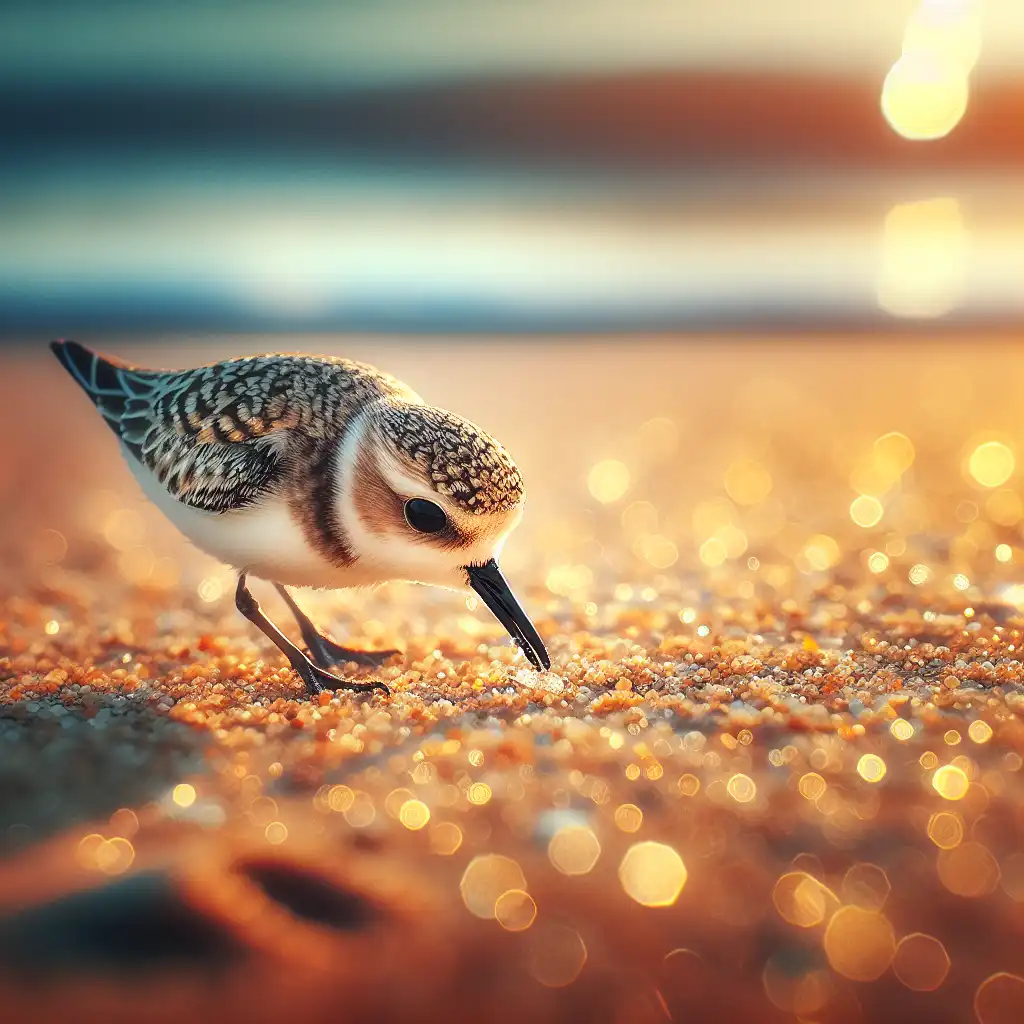
dunlin
noun dunlin
ˈdʌnlɪn
A small bird which lives near water and is known for its long beak
We spotted a dunlin searching for food along the shoreline.
dunlin
ˈdʌnlɪn
Loading…
ˈdʌnlɪn
A small bird which lives near water and is known for its long beak
We spotted a dunlin searching for food along the shoreline.
Audio could not be loaded. Please try again later.
A dunlin is a type of bird that is small and brownish-gray in color. It is often found near the coastlines and can be seen running quickly along the shoreline. The word 'dunlin' may be used when learning about different types of birds or when discussing a specific species of bird found in coastal areas.
Avocet and dunlin are both types of shorebirds, but they have some differences.
An avocet is a type of bird that has a long, thin bill that curves upwards. They are found in coastal areas and feed on small invertebrates in mudflats and shallow waters.
In general, avocets are larger and have a more distinct coloration, while dunlins are smaller and have a more camouflaged appearance.
Open word: Avocet →A curlew is a larger bird with a long, curved bill, while a dunlin is a smaller bird with a straight, thin bill. Curlews are typically found in coastal areas and wetlands, while dunlins are found in a variety of habitats including beaches, mudflats, and grasslands.
Open word: Curlew →Both dunlin and plover are birds, but they belong to different families. Dunlins are sandpipers, while plovers are actual plovers.
Dunlins are smaller birds than plovers and have a long, slightly curved beak. They are often found in large flocks and are known for probing the mud for small invertebrates like worms and insects.
Plovers have short, sturdy bills and a distinctive black band on their chest. They are wading birds that inhabit shorelines, mudflats and other wet areas.
Plovers feed on small invertebrates such as worms and mollusks.
Open word: Plover →Dunlin and sandpiper are both types of small wading birds that live near bodies of water, but the main difference lies in their physical characteristics.
Sandpipers have straight, slender bills and tend to be smaller overall. They typically have longer wings and shorter legs than dunlins.
The terms dunlin and sandpiper are often used interchangeably to refer to various small wading birds, but there are subtle differences in their physical characteristics that can help you identify them more accurately.
Open word: Sandpiper →Dunlin and snipe are both types of birds, but they are different species. The dunlin is a small wading bird that is commonly found on beaches and mudflats, while the snipe is a medium-sized bird known for its long bill and ability to fly quickly and erratically.
Dunlins are typically found in coastal regions, while snipes can be found in a variety of habitats, including wetlands and grasslands.
The term dunlin is more specific to a particular type of bird, while snipe can refer to a broader group of birds.
Open word: Snipe →Dunlin is a specific type of bird species that belongs to the sandpiper family. Wader is a general term used for any bird that typically wades in the water while searching for food.
Therefore, all dunlins are waders, but not all waders are dunlins. Dunlins are only applicable while referring to that particular bird species, while wader is a general term applicable to all such water birds.
Open word: Wader →