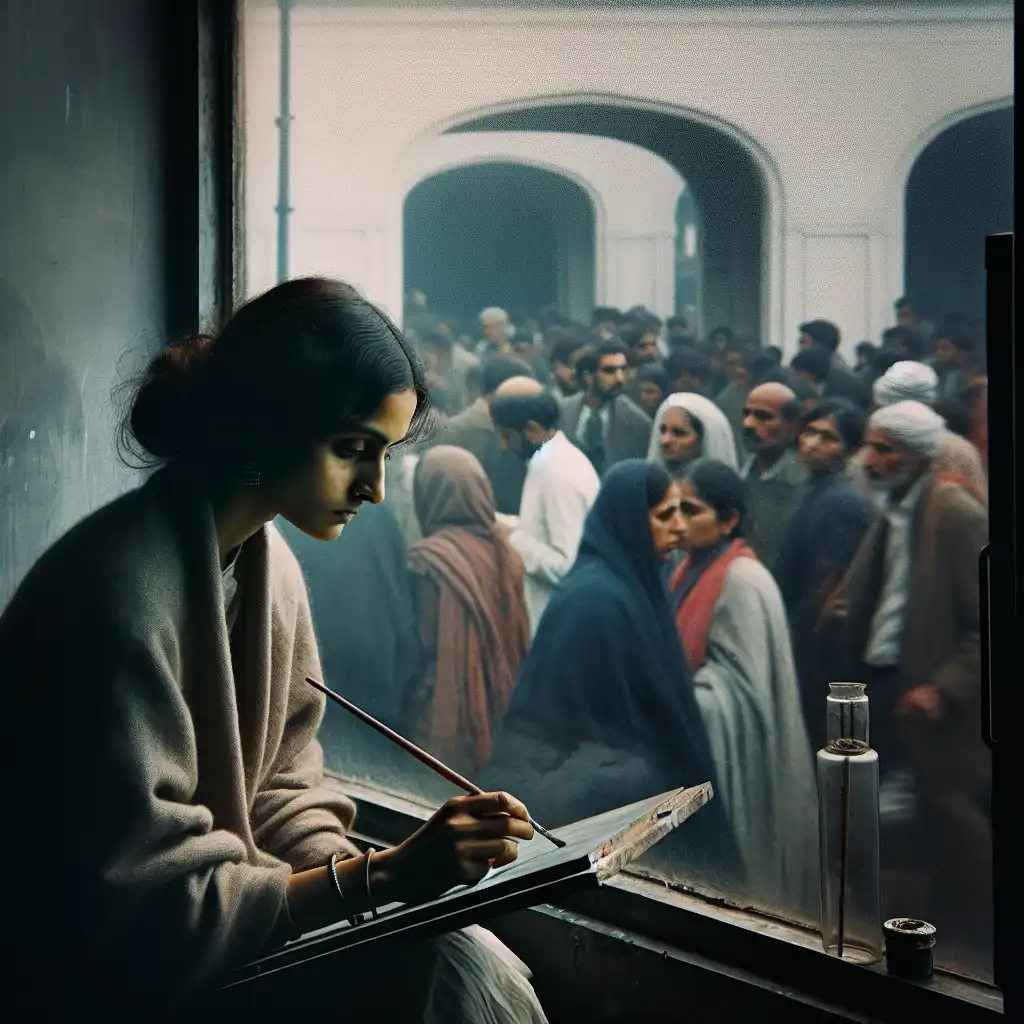
unacknowledged
adjective unacknowledged
ˌʌnəkˈnɑːlɪdʒd
Not recognized or admitted
The unacknowledged genius of his time.
unacknowledged
ˌʌnəkˈnɑːlɪdʒd
불러오는 중…
ˌʌnəkˈnɑːlɪdʒd
Not recognized or admitted
The unacknowledged genius of his time.

ˌʌnəkˈnɑːlɪdʒd
Not expressed or revealed
They had an unacknowledged love for each other.
오디오를 불러오지 못했어요. 잠시 후 다시 시도해 주세요.
The word 'unacknowledged' means something that has not been recognized or admitted. It is used when some person or thing has not been given credit or thanks for what they have done or contributed. For example, if you work hard on a project but your boss never appreciates your effort or acknowledges your work, you can say that your contribution was unacknowledged. Similarly, there may be some people or communities whose achievements, struggles or sufferings have not been recognized by the mainstream society, and they can be referred to as "unacknowledged" as well.
Accept means to admit or take something that is offered or given. For example, "I accept this gift from you."
It can also mean to believe something is true or valid. For example, "I accept that what you're saying is true."
Accept is about taking or believing something, while unacknowledged means that something hasn't been acknowledged or recognized.
단어 열기: Accept →Declare means to announce or state something officially.
It is used when making something known or revealing something publicly. For example, a country might declare war on another country.
Declare is used to make something official or known, while unacknowledged describes something that is existing but not accepted or recognized by others.
단어 열기: Declare →Ignore means that you intentionally or deliberately choose to not pay attention to something or someone. For example, if someone is trying to talk to you and you ignore them, you are purposefully not listening or responding to them.
The word unacknowledged means that something has not been recognized or accepted as existing or true, but not necessarily because it was intentionally ignored.
For example, if you send an email to someone and they do not reply, your email is unacknowledged, but that doesn't mean they ignored it on purpose - it could just mean they haven't had a chance to read or respond to it yet.
So, in short, ignore means to intentionally not pay attention to something, while unacknowledged means something has not been recognized or accepted as existing or true, but not necessarily due to intentional disregard.
단어 열기: Ignore →Unacknowledged refers to something that has not been recognized or admitted, while unreported refers to something that has not been publicly shared or documented.
An unreported crime would be a criminal act that has not been reported to the police or media.
Unacknowledged refers to lack of recognition or admission, while unreported refers to lack of public sharing or documentation.
단어 열기: Unreported →Stephen Burt: Why people...
YouTube에서 보기 ↗Poets are the unacknowledged legislators of the world.
Project Aquatone's U-2...
YouTube에서 보기 ↗I may have come into politics with an unacknowledged condescension toward the game and the people who played it, but I left with more respect for politicians than when I went in. The worst of them - the careerists and predators - you find in all professions. The best of them were a credit to democracy.
It is a truth universally unacknowledged at Westminster that there is life after politics.
I think the worst kind of grief is unacknowledged grief.
I think there's a tremendous amount of unacknowledged hostility in American culture.
The type of fig leaf which each culture employs to cover its social taboos offers a twofold description of its morality. It reveals that certain unacknowledged behavior exists and it suggests the form that such behavior takes.
In a certain way, novelists become unacknowledged historians, because we talk about small, tiny, little anonymous moments that won't necessarily make it into the history books.
As a child, I felt that the Indian part of me was unacknowledged, and therefore somehow negated, by my American environment and vice versa. Growing up, I was impatient with my parents for being so different, holding on to India the way they did, and always making me feel like I had to make a choice of which way I would go.