
bisect
verb bisect
baɪˈsekt
To divide something into two equal parts.
The road bisects the town into north and south sections.
bisect
baɪˈsekt
Cargando…
baɪˈsekt
To divide something into two equal parts.
The road bisects the town into north and south sections.
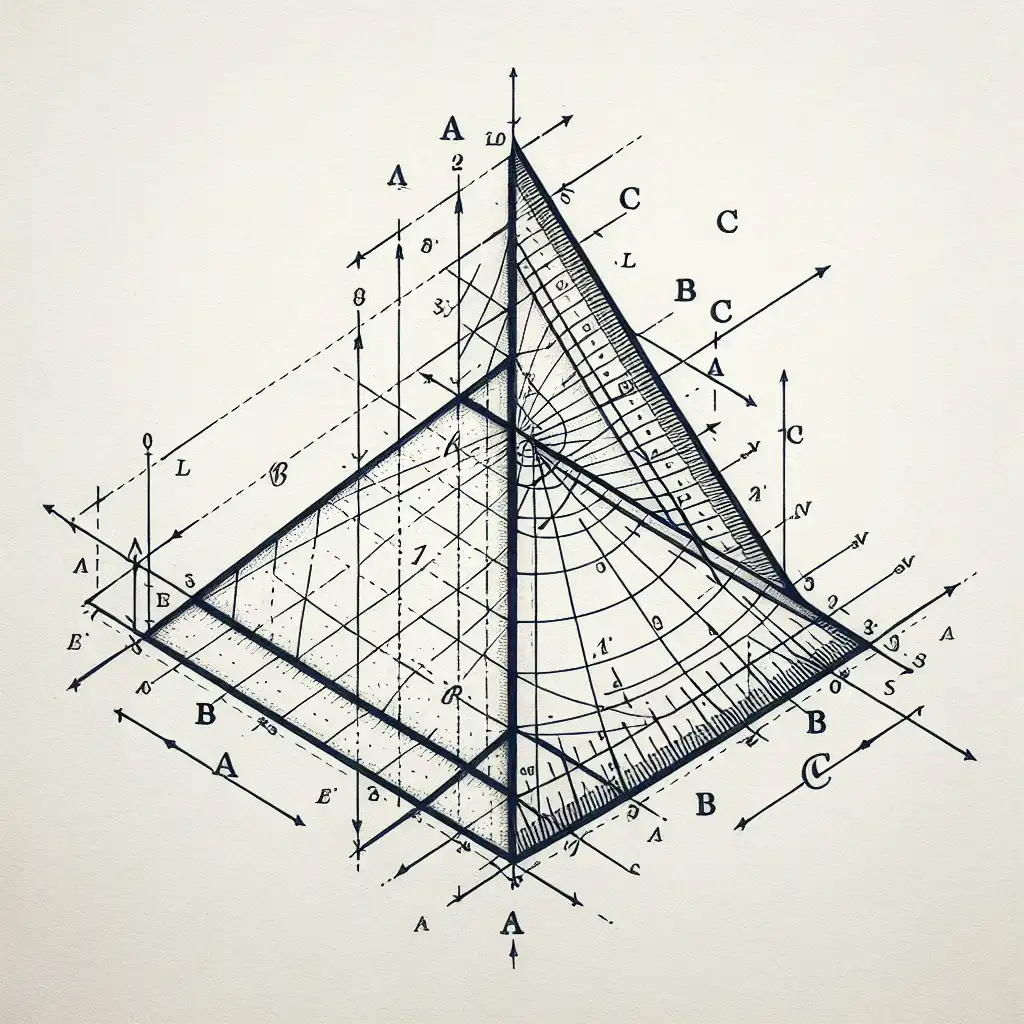
baɪˈsekt
In geometry, to draw a line that passes through the midpoint of a line segment or an angle.
Let's bisect the angle ABC, where B is the vertex.
No se pudo cargar el audio. Inténtalo de nuevo más tarde.
The word 'bisect' means to split or cut something into two equal parts. We can use it in different contexts such as a line, an angle or a shape. For example, if we draw a line in the middle of a rectangle, we can say that we bisected the rectangle. This means that we split it into two equal halves. We can also use the word 'bisect' when we divide an angle into two equal parts or cut a cake into two equal pieces.
Cleave means to split or divide something, usually with force. For example, if you cleave a piece of wood with an axe, it means you have split it in two.
The main difference between the two is that bisect implies equal division while cleave does not necessarily imply equality.
Bisect is commonly used in geometry and mathematics, while cleave is often used in everyday language to describe the action of splitting something apart, such as cutting meat or chopping wood.
Abrir palabra: Cleave →Bisect is specifically used when dividing something into two equal parts.
Divide means to split something into parts, which may or may not be equal. For example, if you divide a pizza between three people, each person may get a different amount of pizza.
Divide is a more general term that can be used when splitting something into any number of parts, whether they are equal or not.
Bisect is used when dividing something into two equal parts, while divide is used when splitting something into any number of parts, equal or not.
Abrir palabra: Divide →Bisect means to divide something into two equal parts, while halve means to divide something into two parts, which need not be equal.
However, if you cut a pizza into two parts, which are not necessarily equal, you could say you halved the pizza.
Bisect is more appropriate when dividing something equally, while halve is used when dividing something without the need for equality.
Abrir palabra: Halve →Bisect means to divide something into two equal parts, while partition means to divide something into two or more smaller parts.
For example, a line can be bisected to create two equal parts, while a room can be partitioned into two smaller rooms.
Bisect is more commonly used when referring to dividing a single object or space into two equal parts, while partition is more commonly used when referring to dividing a larger object or space into multiple smaller parts.
Abrir palabra: Partition →Sever means to cut something apart or separate it completely. For example, you can sever a rope by cutting it with scissors or a knife.
The main difference between the two words is that bisecting involves dividing something into two equal parts, while severing involves cutting something apart or separating it completely.
Abrir palabra: Sever →Equinoxes %\PIPE% National...
Ver en YouTube ↗Jared Ficklin: New ways...
Ver en YouTube ↗How to create a space...
Ver en YouTube ↗