leftover
noun leftover
ˈleftəʊvər
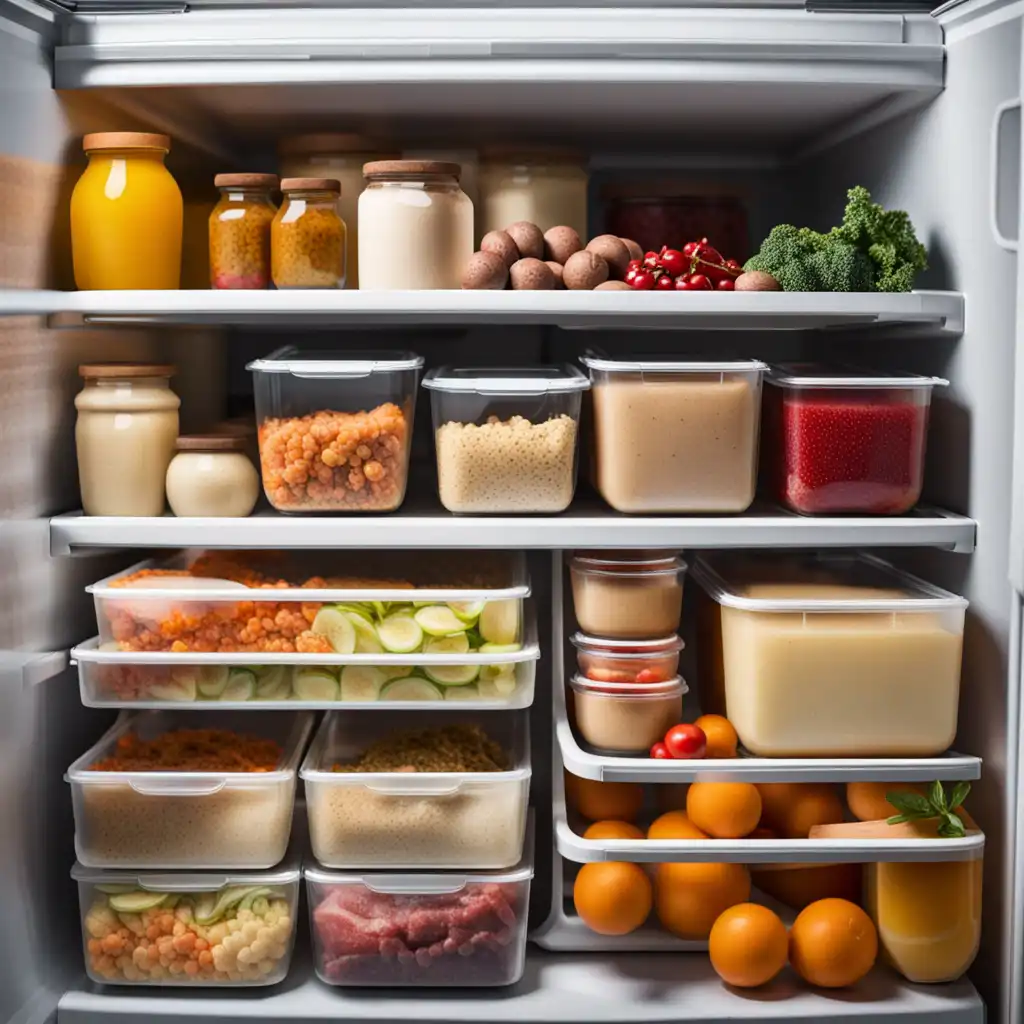
Food that remained uneaten after a meal and is saved for later.
We had a lot of leftovers from the party, so we don't need to cook dinner tonight.
leftover
ˈleftəʊvər
불러오는 중…
ˈleftəʊvər
Food that remained uneaten after a meal and is saved for later.
We had a lot of leftovers from the party, so we don't need to cook dinner tonight.
ˈleftəʊvər
Something that is left or remains after the rest has been used or taken.
They sold the leftover goods at a discounted price.
오디오를 불러오지 못했어요. 잠시 후 다시 시도해 주세요.
The word 'leftover' refers to any amount of food or other material that remains after a meal or an event. For example, after Thanksgiving dinner, you might have leftover turkey that you can use to make sandwiches the next day. In a similar way, after a party, you might have leftover balloons or decorations that you can use for another occasion. The word leftover suggests items that are still useful or relevant, but simply have not been fully consumed or utilized.
Balance refers to the remaining amount of something after you have subtracted what you have already used or spent.
For example, if you have $100 in your bank account and you spend $20, the balance in your account would be $80.
Balance is applicable when talking about the remaining total of something while leftover is applicable when talking about the remaining portion of something after some of it has been used or consumed.
단어 열기: Balance →Excess means having more than what is necessary or what is wanted. For example, if you have too much food on your plate and cannot finish it, the remaining food is said to be in excess.
In summary, while excess refers to having too much of something, leftover refers to what remains after the main portion has been used or consumed.
단어 열기: Excess →Leftover and remainder have a similar meaning that something is still remaining after some portion has been taken away.
Remainder refers to any remaining quantity or number after dividing by something. For example, if you have 10 cookies, and you eat 4, the leftover cookies are the 6 uneaten ones.
If you divide 10 by 3, the remainder is 1 (because 3 goes into 10 three times with 1 left over). Leftover is used for food, and remainder is used for numbers.
단어 열기: Remainder →Both leftover and remnant refer to something that is remaining after some part has been used or removed.
Remnant can refer to any type of object or material that is left over after some portion has been removed, used, or destroyed.
It is usually used in a wider sense than leftover. For example, if you have some fabric scraps after making a piece of clothing, you might call them remnants and use them for a future project.
Remnants can also refer to historical artifacts or buildings that are left over from a past era or civilization.
단어 열기: Remnant →Leftover refers to food or other items that remain unused after a meal or specific activity. Residue refers to a small amount of a substance that remains after a process or event.
Leftovers are usually applicable in the context of food, while residue is applicable in various contexts, including chemistry, manufacturing, and environmental studies.
In simpler terms, leftovers are what's left of food, while residue is what's left of something after a process.
단어 열기: Residue →Leftover refers to the food that remains after a meal, while scrap refers to the small pieces of material that are left over after cutting or shaping something.
Scrap is applicable in the context of materials, as it refers to the small pieces left over after cutting or shaping something.
For example, if you were building a wooden birdhouse and had some small pieces of wood left over after cutting out the main shapes, those would be considered scraps of wood.
The main difference between the two words is their context and application. Leftover is used for food, while scrap is used for materials.
단어 열기: Scrap →Surplus refers to an excess of something that is no longer needed or useful. It is applicable in the context of goods that have been produced or acquired in excess of what is needed or expected.
For example, a surplus of pencils that are no longer needed after the school year has ended.
Leftover refers to the remaining portion of something that has been partially used, while surplus refers to an excess amount of something that is no longer needed.
단어 열기: Surplus →Why is biodiversity so...
YouTube에서 보기 ↗I spent half my life being hurt. The leftovers of hurt are an automatic gesture, like a dog that salivates.
BBC Earth 50 Top Natural...
YouTube에서 보기 ↗If variety is the spice of life, marriage is the big can of leftover Spam.
Innovating to zero! %\PIPE%...
YouTube에서 보기 ↗When we get there, if we don't find any life on Mars, from that point on there will be life on Mars because we'll bring it there, whether it's germs and leftover urine bags, whatever it is.
Wolf Hunting Tactics %\PIPE%...
YouTube에서 보기 ↗In the wrestling world, we say the Judo guys are just the leftover wrestlers that couldn't make the wrestling team.
Creating a Bio-Industrial...
YouTube에서 보기 ↗I go light on breakfast. Sometimes it's a yogurt, but a lot of times it's leftovers from one of my wife's dinners.
Botfly Larvae Removed...
YouTube에서 보기 ↗Another suggestion is to cook a meal, maybe not every night, but a couple more times a week than you usually do. That way you have leftovers, and you take your lunch to work.
What would happen if...
YouTube에서 보기 ↗I'm a leftover junkie.
Most Unusual Mating...
YouTube에서 보기 ↗I'm very average. I'm into fresh, yummy family food. I'm into leftovers.
A brief history of dogs...
YouTube에서 보기 ↗I sometimes take leftover food from craft services and give away a bunch of sandwiches on my way home.
The truth about...
YouTube에서 보기 ↗I'm a busy mom and I'm a big snacker throughout the day, so I'll do everything from leftovers from what my children did not eat, whether that's like a half bowl of cereal or a banana or whatever.