
ream
noun ream
riːm
A large amount of something, especially paper.
I have a ream of paperwork to go through before the meeting.
ream
riːm
Loading…
riːm
A large amount of something, especially paper.
I have a ream of paperwork to go through before the meeting.
riːm
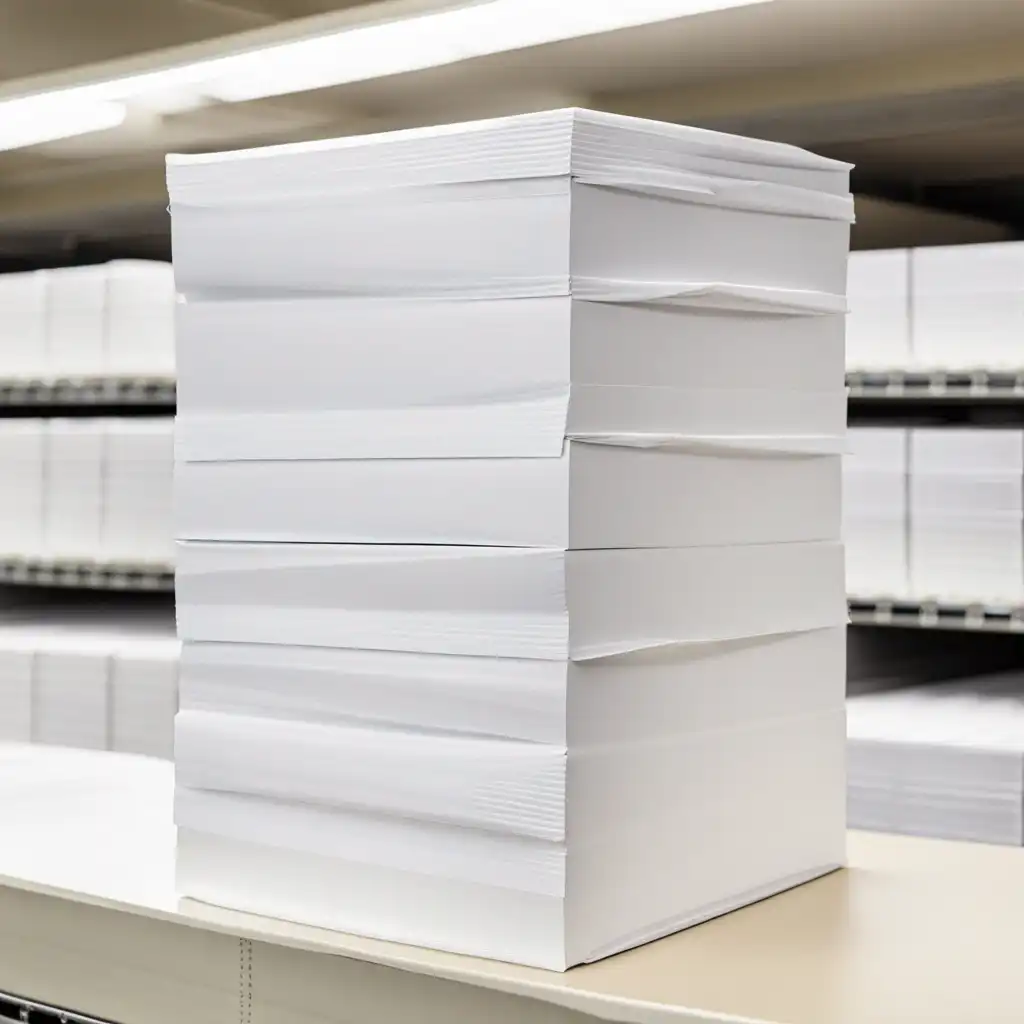
A measure of paper, equal to 500 sheets.
I bought a ream of paper for the printer.

riːm
Enlarge a hole or bore with a reamer; make a hole wider or smoother.
He reamed the hole to make it bigger.

riːm
To scold or criticize someone severely.
The coach reamed out the team for their poor performance.

riːm
A ancient tool used for shaping or smoothing the inside of a hole.
The carpenter used a ream to make the hole smoother.
Audio could not be loaded. Please try again later.
A ream is a unit of measurement for paper. It refers to a bundle of 500 sheets of paper of the same size and quality. For example, when you go to a store to buy printer paper, you might see that it comes in packs of 250 sheets or reams of 500 sheets. When you want to ask for a certain amount of paper, you can use the word "ream" to specify the quantity. For instance, you could say, "I need three reams of A4 paper." Overall, the word "ream" is mainly used when referring to paper and is a way to measure it in large quantities.
Accumulate means to gradually collect or gather things over time, like money in a savings account or books on a shelf.
Accumulate is a more neutral word that can be used in positive or negative contexts, while ream typically has a negative connotation and describes a sudden and often difficult-to-manage amount of something.
Open word: Accumulate →A bundle refers to a group of objects that are tied together, such as a bundle of sticks or a bundle of clothes.
It is used to refer to something that is relatively large and bulky but can be carried easily. For example, a bundle of firewood.
A bundle is a group of objects tied together, while a ream is usually a quantity of paper. Each term is applicable in different contexts depending on what the speaker wants to convey.
Open word: Bundle →Heap refers to a pile of things that are randomly placed, usually in a disorganized manner. The word ream refers to a large amount of paper or sheet material that is packaged or bound together.
Heap can be applicable in situations where there is no specific order in which things are placed or arranged.
For example, you might have a heap of laundry on the floor, or a heap of toys in the corner of your room.
Heap describes a pile of things that are disorganized, while ream refers to a package of paper or sheet material that is bound together.
Open word: Heap →Pile is used to refer to a group of things that are stacked on top of each other.
A ream is a unit of measurement and is equivalent to 500 sheets of paper. You could say you have a pile of books, but you can't have a ream of books.
Similarly, you can say you have a ream of paper, but you can't have a pile of paper unless it's stacked on top of each other.
Open word: Pile →Plethora and ream are both words that indicate a large quantity or amount, but they are used in different contexts.
Plethora refers to an excessive amount or an overwhelming abundance of something.
It is often used to describe a surplus, such as a plethora of options, a plethora of information, or a plethora of choices.
Plethora is used to express excessiveness, while ream refers to a specific quantity of something.
Open word: Plethora →Both profusion and ream refers to a large amount or quantity of something, but they are used in different contexts.
Profusion is used when there is a big and abundant amount of something, often implying a lavish or excessive amount. For example, you might say, "There was a profusion of flowers in the garden," meaning there were a vast number of flowers.
Profusion is used when referring to a large number or quantity that's beyond what's necessary or expected, while ream is used to refer to a specific quantity, often in the case of paper.
Open word: Profusion →Quantity refers to a general amount or number of something, whereas ream is a specific measure for paper.
For example, if someone were to ask how many apples were needed for a recipe, the answer would be a quantity, such as six apples.
Quantity describes a general amount or number, while ream is used specifically to measure paper.
Open word: Quantity →A stack refers to a group of objects that have been piled on top of each other. This term can be used in a variety of contexts, such as a stack of dishes, a stack of books, or a stack of boxes.
Ream is used to discuss a specific quantity of paper, while stack describes a pile of objects.
Open word: Stack →Abha Dawesar: Life in...
Watch on YouTube ↗In my own life, I've seen myself ramping up the amount of text I consume digitally. For me, it's the weight and inconvenience issue - I want anything that will spare me having to carry around reams of paper.
Safari Live - Day 329 %\PIPE%...
Watch on YouTube ↗I'll write maybe one long paragraph describing the events, then a page or two breaking the events into chapters, and then reams of pages delving into my characters. After that, I'm ready to begin.
How big is a mole? (Not...
Watch on YouTube ↗The truth is that the E.U. constrains us in all manner of ways and throws reams of red tape around British businesses.
I'm a very methodical writer. Before computers, I used reams of paper and stacks of index cards.
To be sure, if you watch CNBC all day long you'll pick up some interesting news about particular companies and the economy as a whole. Unfortunately, to get to the useful information, you have to wade through reams of useless stuff, with little guidance on how to distinguish between the two.
Producing more reams of detailed policies that have marginal and limited effects on our society is futile.
Productivity - the amount of output delivered per hour of work in the economy - is often viewed as the engine of progress in modern capitalist economies. Output is everything. Time is money. The quest for increased productivity occupies reams of academic literature and haunts the waking hours of C.E.O.s and finance ministers.
I've had so many little ideas I've written down here and there. Some ideas I've got reams of notes for.
You know how most kids have posters of sports heroes on their walls? They gave me reams of the old news copy, and I had those taped in my bedroom. And I would practice reading the news.
It costs so much to make films. With a novel, you can write the whole thing on a ream of paper from Staples for $4.