chieftain
noun chieftain
ˈtʃiːftən
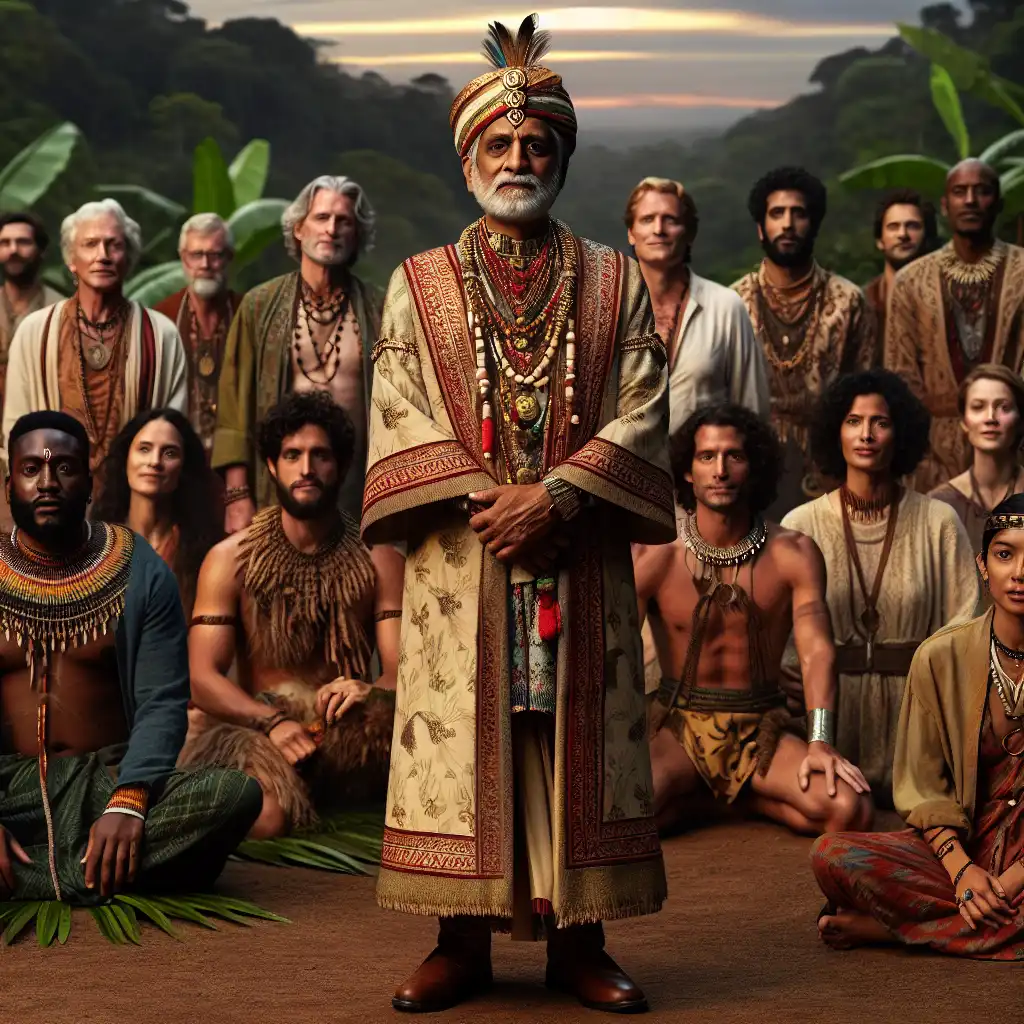
The head or leader of a people, group, or clan.
The chieftain of the tribe was respected by all.
chieftain
ˈtʃiːftən
Cargando…
ˈtʃiːftən
The head or leader of a people, group, or clan.
The chieftain of the tribe was respected by all.

ˈtʃiːftən
A powerful or influential person in a particular field or profession.
He was seen as a chieftain in the industry.
No se pudo cargar el audio. Inténtalo de nuevo más tarde.
The word 'chieftain' refers to a leader or a head of a group, typically in a clan, tribe or community. It is often used in historical or cultural contexts, such as referring to a Celtic chieftain or an Indigenous chieftain. In modern usage, the word can also refer to a leader of a local organization or group.
Chief generally refers to a person in a high ranking position of authority, leadership, or management.
Chieftain usually refers to the leader or ruler of a tribe or clan in a traditional society.
In summary, while both words refer to a person in a leadership or authoritative position, chief has a broader application and can be used in various contexts, whereas chieftain specifically refers to the leader of a traditional society or tribe.
Abrir palabra: Chief →Commander describes a leader who has authority over a group of people, such as soldiers or workers. They are responsible for giving orders and ensuring that they are carried out properly.
A chieftain is a leader of a community, whereas a commander is a leader with authority over a group of people.
Abrir palabra: Commander →Headman is a more general term used to describe a person who is in charge of a group or community. It is applicable in any context, from small towns to larger organizations or businesses.
Chieftain is a more specific term used to describe a leader in traditional or ancient societies, while headman is a more general term used to describe any person in charge of a group or community.
Abrir palabra: Headman →A king is the ruler of a kingdom or nation. They typically have much greater power, influence, and resources at their disposal, and their authority is often backed by military force or other forms of government power.
The term chieftain is applicable to smaller societies or groups, while the term king is used for larger political structures.
Abrir palabra: King →Chieftain typically refers to a leader within a tribal or clan community, often with inherited or traditional authority.
It can also suggest a more military or warrior-like leader. It tends to be used in historical or cultural contexts, rather than in contemporary or formal settings.
Leader is a more general term that can apply to anyone who takes charge or guides a group towards a goal or outcome.
It can refer to political, business or social leaders, as well as to sports or academic team leaders. It is a broader and more modern term for someone who is in charge or influential.
Chieftain tends to be more specific and traditional, referring to leaders in tribal or historical societies, while leader is a more general and modern term for someone who is in charge or influential.
Abrir palabra: Leader →Lord often refers to a person who has power and control over a large area or many people.
A chieftain is a leader of a smaller group of people, while a lord is a leader with more power and control over a larger area or many people.
Abrir palabra: Lord →A chieftain is a tribal leader, often of a smaller and less complex society, while a potentate is a ruler or leader of a large and complex society or state.
Chieftains are often associated with indigenous or traditional societies, while potentates are more commonly associated with modern nation-states.
For example, a chieftain might lead a tribe in a rural, undeveloped area, while a potentate might be the president or monarch of a developed country.
Abrir palabra: Potentate →Chieftain refers to the leader of a tribe or a group of people, usually in a traditional or tribal society. Ruler refers to someone who holds power or authority over a kingdom or country.
A chieftain would be applicable in settings where society is based on smaller groups or tribes, whereas a ruler would be used in larger societies or nations with a more centralized government.
For example, a Native American tribe might have a chieftain as their leader, while a country like England would have a ruler like a king or queen.
Abrir palabra: Ruler →Germanic tribes under their chieftain Arminius ambushed and destroyed three legions. Proceeding along a narrow path, the legions were attacked from forest cover under torrential rain with their escape blocked.
Ver en YouTube ↗For many years, I've wanted to do one, and I've always mentioned it to the chieftains, and they would say things like, 'Oh well. Christmas albums don't sell,' and things like that. But that's not the point. Christmas albums are important. The music is important. The season is important.
feel it feat that's for you know squat okay uh-huh ok now I'm not gliding down you're gonna grab her feet grab your feet chieftain yep curl up and you're gonna pop interesting okay go ahead yeah good good alright so where were the stresses could you feel them in your
Ver en YouTube ↗Man is made to adore and to obey: but if you will not command him, if you give him nothing to worship, he will fashion his own divinities, and find a chieftain in his own passions.
Nature hath given not only to the highest, but also to the inferior, classes of the people of this nation, a boldness and confidence in speaking and answering, even in the presence of their princes and chieftains.
Eventually, the tribe developed so much confidence in me that they invited me to be their chieftain.
Trump makes no pretense about being the commander in chief of all of the country, being president of all of the people, including the people who voted against him. He is, in effect, a tribal chieftain who has declared war on half of the country.
Trade is the key to the economic outlook in Britain and the E.U. Many corporate chieftains joined large bank CEOs and the fearmongering IMF to suggest that the E.U. will deal harshly with Britain if it leaves and stop all trade. That's mutually assured destruction - MAD.
Thus the castle of each feudal chieftain became a school of chivalry, into which any noble youth, whose parents were from poverty unable to educate him to the art of war, was readily received.
Every institution of India - politicians, journalists and corporate chieftains - comes within the purview of the judiciary but when it comes to auditing their own conscience, judges want everyone else to stay out.
In the event of a Mad Max-style post-apocalyptic dystopia, people with supplies of food and water could become warlords or chieftains in the social order that emerges out of the rubble.