manic
adjective manic
ˈmænɪk
Showing wild and apparently deranged excitement and energy.
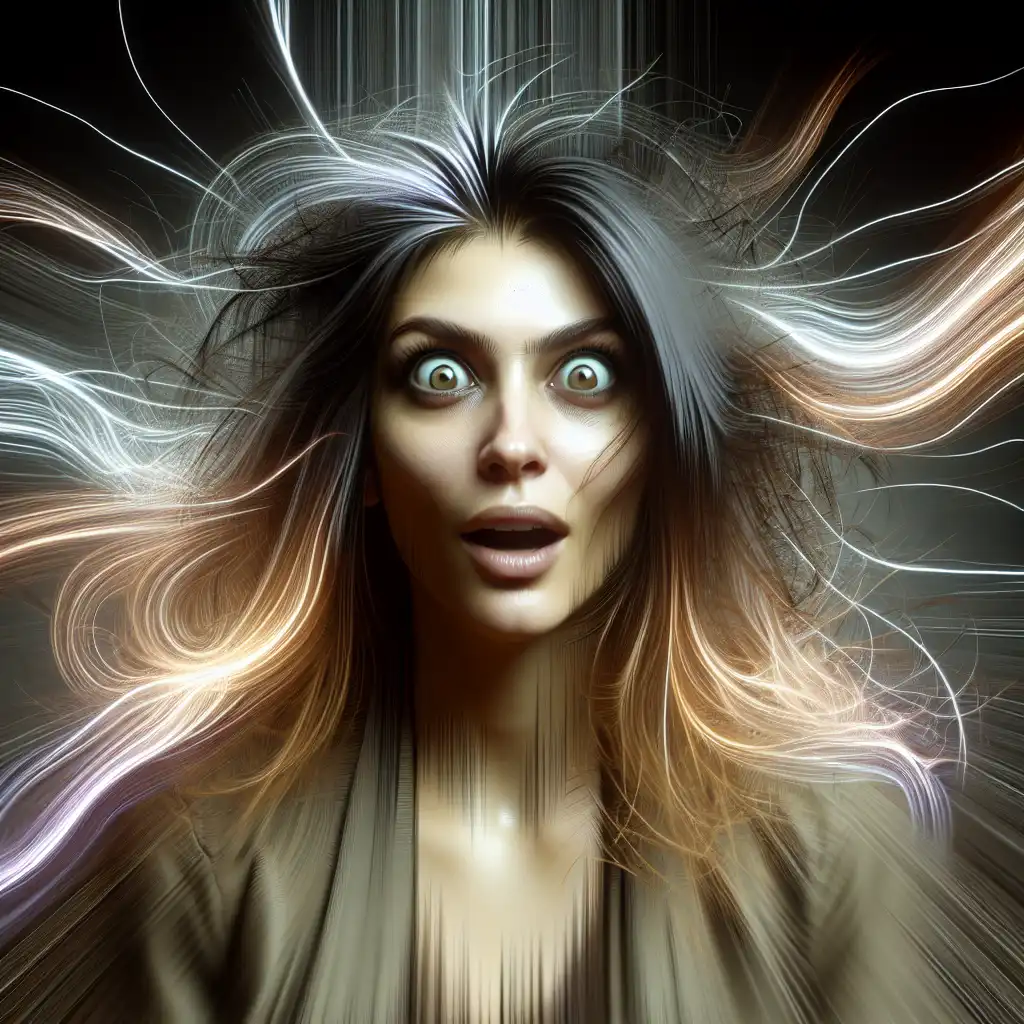
Her eyes were wide and manic.
manic
ˈmænɪk
読み込み中…
ˈmænɪk
Showing wild and apparently deranged excitement and energy.
Her eyes were wide and manic.

音声を読み込めませんでした。しばらくしてからもう一度お試しください。
The word 'manic' is often used to describe a state of extreme excitement or frenzied behavior that can be difficult to control. It can be used to describe someone who is overly energetic or overly focused on a particular task or goal, to the point where it becomes unhealthy or disruptive. For example, someone who is experiencing a manic episode might talk very fast, feel very happy, have lots of energy, and have trouble sleeping. People might use the word 'manic' to describe this behavior, as it is often linked to bipolar disorder or other mental health conditions. However, the word can also be used more generally to describe someone who is simply very excited or enthusiastic, without any mental health issues involved. It is important to use the word 'manic' carefully, as it can have negative connotations and can be seen as stigmatizing towards people with mental health conditions. It is important to use the word in a respectful and empathetic way, and to avoid using it to describe people in a derogatory or dismissive way.
Agitate means to make someone feel anxious, troubled or upset, often by stirring up or disturbing their emotions. For example, a news story about a natural disaster might agitate people who are worried about similar events happening to them.
Agitate refers to a feeling of emotional disturbance, while manic describes a state of excessive, sometimes wild activity.
Agitate is applicable in situations where emotions are disturbed or disrupted, while manic is applicable when referring to extreme episodes of activity often associated with bipolar disorder.
単語を開く: Agitate →Delirious refers to a state of confusion or disorientation.
A delirious person might have difficulty understanding what is happening around them or communicating with others.
単語を開く: Delirious →Excite means to stimulate or arouse enthusiasm or excitement. This can happen in various situations, like when you watch your favorite sports team score a goal, when you receive good news, or even when you try a new activity or food.
Manic refers to a state of intense excitement or energy that is sometimes out of control.
Excite is a positive and controllable feeling that can happen in various situations, while manic is a more extreme and often negative state that is related to a mental health condition called bipolar disorder.
単語を開く: Excite →Feverish describes a state of high fever or intense activity or excitement. It refers to an increase in body temperature or an intense feeling, like a fever.
Overall, while both words describe intense or extreme states, feverish is more commonly used to describe physical symptoms, while manic is closely associated with mental health conditions.
単語を開く: Feverish →Frantic refers to a state of great worry, anxiety, and urgency.
In essence, frantic implies worry and rushing around, while manic implies intense excitement and hyperactivity. Both words can describe a person's emotional state, but the difference lies in the characteristics associated with each state.
単語を開く: Frantic →Both frenzied and manic refer to a state of intense activity or excitement, but there is a slight difference in their meaning.
Frenzied refers to a state of wild or uncontrolled activity, often driven by emotion or a sense of urgency. It suggests a feeling of chaos or frenzy, where things are happening quickly and with a lot of energy.
Frenzied describes something that is happening in a chaotic or uncontrolled way, while manic describes someone who is acting in an overly enthusiastic or hyperactive manner.
単語を開く: Frenzied →Hyperactive refers to a state of being very active, restless, or easily distracted.
単語を開く: Hyperactive →Restless refers to a feeling of being unable to stay still or calm. Restlessness can be caused by physical discomfort, boredom, or a desire for change.
Manic is more extreme and can be associated with mental health, while restless is a more common feeling that can be caused by a variety of factors.
単語を開く: Restless →What is bipolar...
YouTube で見る ↗The world of manic depression is a world of bad judgment calls.
How to spot a liar %\PIPE%...
YouTube で見る ↗I was brought up with a lot of love in my family, and I've always been supported. My family has always protected me in a sort of manic way.
Safari Live - Day 12 %\PIPE%...
YouTube で見る ↗Sometimes you don't want to abandon a project to go to another move and come back, so maybe because I have a manic obsession I stick to my idea, and I'd rather wait than do something that is not my main passion.
Our natural sleep cycle...
YouTube で見る ↗Getting help for my issues was one of the hardest things I've ever done, because when I get dangerously sad or manic, those feelings seek to perpetuate themselves.
A juror's reflections on...
YouTube で見る ↗My sets are not peaceful. It's a beautiful catastrophe. I am running around like a headless chicken. I don't sleep because I am writing. It's manic.
Gregory Stock: To...
YouTube で見る ↗Do I perform sometimes in a manic style? Yes. Am I manic all the time? No. Do I get sad? Oh yeah. Does it hit me hard? Oh yeah.
Robert Gupta: Music is...
YouTube で見る ↗I can't be manic without it feeling false to me.
Joshua Walters: On being...
YouTube で見る ↗I don't find I'm manic at all. I'm very chill.
Depression the secret...
YouTube で見る ↗I'm manic about my schedule.
We're building a...
YouTube で見る ↗My pregnancy was great, but the last three weeks were manic because my blood pressure was going up and up.