
curtsy
noun curtsy
ˈkɜːrtsi
A traditional gesture where a girl or woman bends her knees while bowing her head, used to show respect or gratitude.
The little girl gave a curtsy to the queen.
curtsy
ˈkɜːrtsi
Loading…
ˈkɜːrtsi
A traditional gesture where a girl or woman bends her knees while bowing her head, used to show respect or gratitude.
The little girl gave a curtsy to the queen.
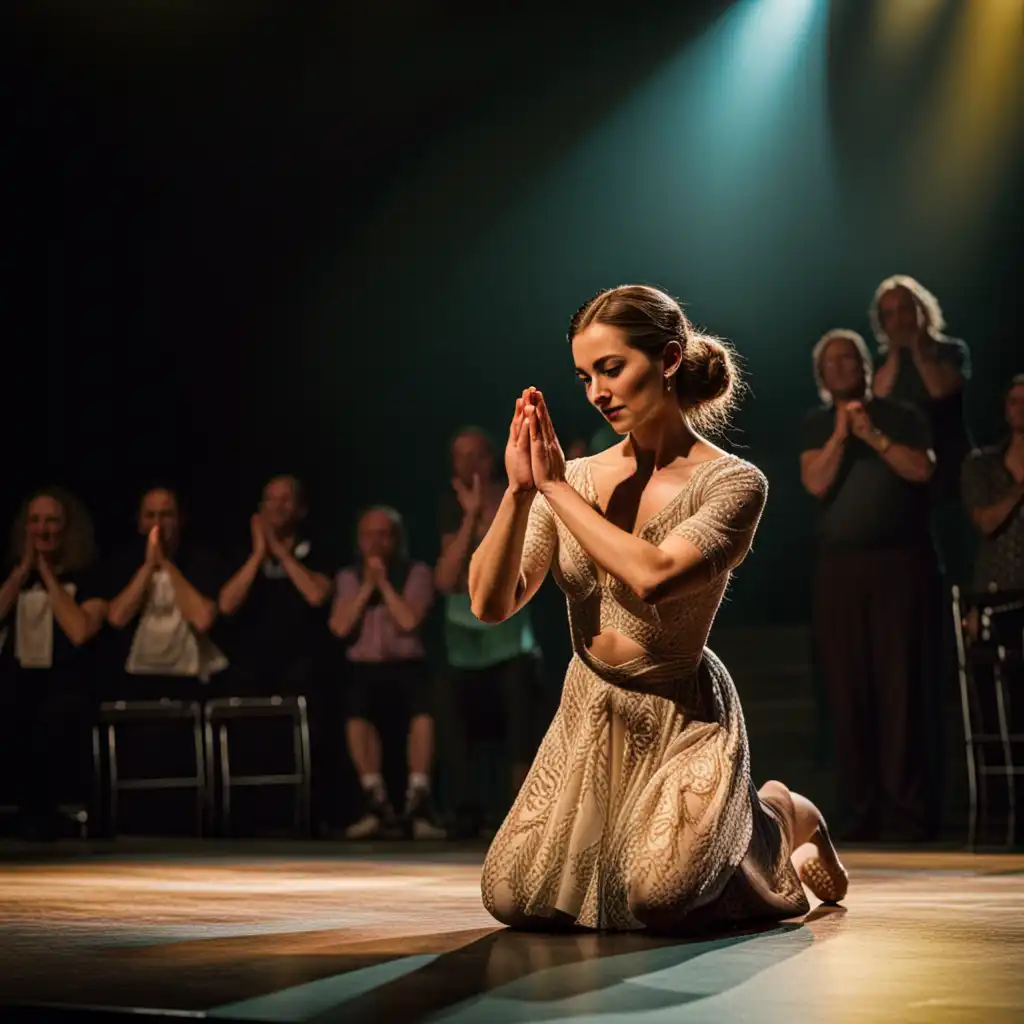
ˈkɜːrtsi
To lower your body briefly by bending one knee to the ground, typically in respect or to express a greeting or acknowledgement.
She curtsied to the audience after her performance.
Audio could not be loaded. Please try again later.
A curtsy is a polite way of showing respect to someone, typically a woman to another person who holds a higher social rank or authority, such as a queen or a teacher. To curtsy, a person bows their head slightly and bends their knees while keeping their feet together. This gesture is typically reserved for formal occasions, such as meeting royalty or in a dance performance. As an English learner, it's important to note the appropriate context in which to use this word and gesture to show proper respect and etiquette.
Acknowledge means to accept or admit the existence or truth of something, or to show recognition or appreciation for something.
Open word: Acknowledge →A bow is a gesture of respect made by bending your head forward from your waist.
It is a more formal and traditional gesture than a bow.
Open word: Bow →‘Courtesy’ means polite behavior, manners, or respect shown to others. For example, holding the door open for someone is a form of courtesy.
In short, ‘courtesy’ describes polite behavior in general, while ‘curtsy’ refers specifically to a physical gesture of respect made by women.
Open word: Courtesy →It is usually used as a form of greeting in formal events, such as meeting a queen or a person of high authority.
Greet simply means to say hello or welcome someone warmly, usually by shaking hands, giving a hug or a pat on the back.
Curtsy is a specific form of greeting that is reserved for formal occasions, while greet is a more general term used in a variety of situations to welcome someone.
Open word: Greet →A nod is a gesture of acknowledgement or agreement, where a person lowers their head slightly to indicate that they have understood or acknowledged something.
A curtsy is a formal greeting or gesture of respect, typically performed by women, while a nod is a more informal gesture of acknowledgement or agreement that can be used in a variety of situations.
Open word: Nod →Both curtsy and reverence are gestures of respect, but they are used in different contexts.
Reverence is a gesture of great respect or deep admiration, where a person bows or inclines their head in deference.
It is often used in religious contexts, such as towards a deity or holy person, but can also be used in other situations where a person wishes to show great respect or reverence towards someone or something.
Curtsy is a specific gesture used in formal settings to show respect, while reverence is a general gesture used to express deep respect or admiration.
Open word: Reverence →Salute is a formal gesture of respect or greeting by raising your right hand to your forehead, often used in military or official situations.
It can also be used as a way to show appreciation or recognition, like saluting a hero or essential worker.
Salute is a formal gesture of respect by raising your hand, typically used in military or official situations to show appreciation or recognition.
Open word: Salute →I'm a boss by nature. I'm bossy. I'm not imperious, but I don't really want people to curtsy low before me and back out of rooms, but I do like to run things.
When I first met Clint Eastwood, I bobbed him a curtsy. I still cringe about that to this day.