gargoyle
noun gargoyle
ˈɡɑːrɡɔɪl
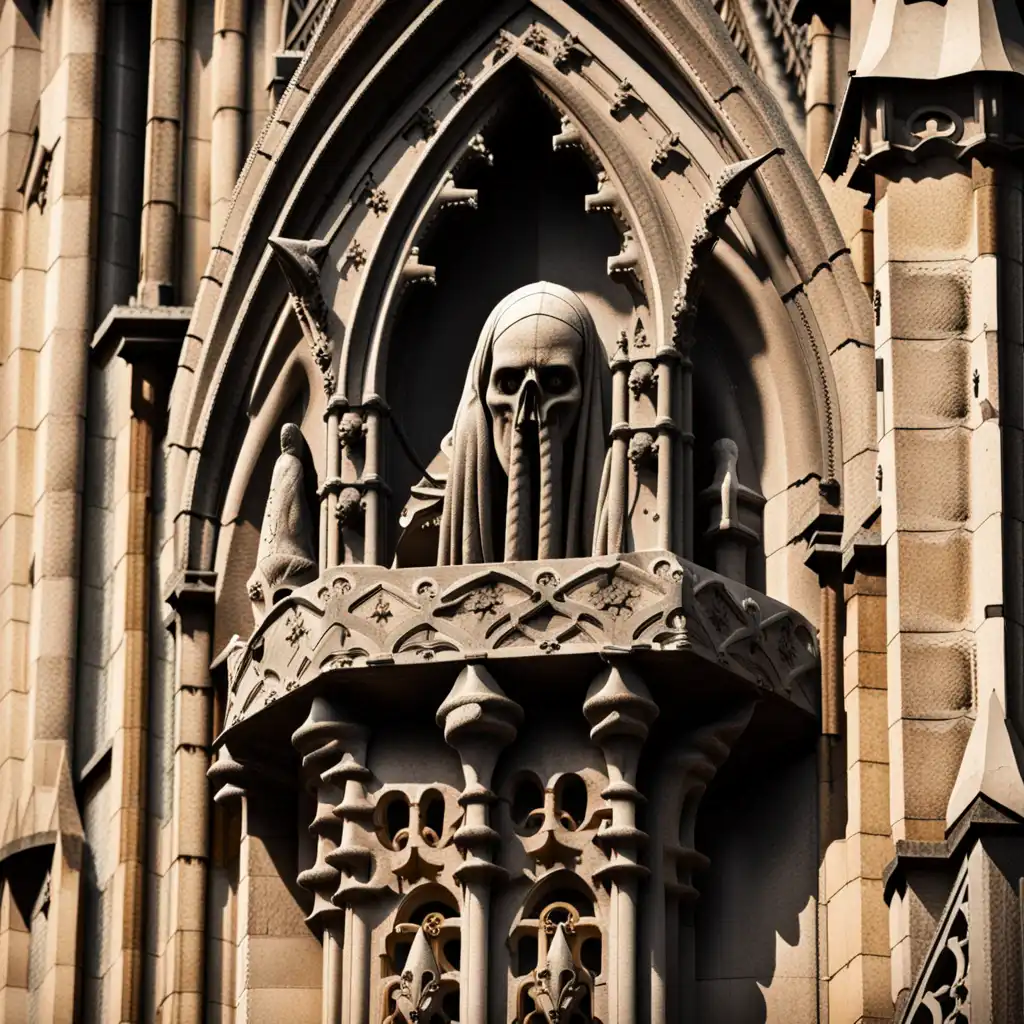
A stone figure, usually scary or strange, on a building, especially in Gothic architecture.
The medieval cathedral is adorned with carved gargoyles.
gargoyle
ˈɡɑːrɡɔɪl
Cargando…
ˈɡɑːrɡɔɪl
A stone figure, usually scary or strange, on a building, especially in Gothic architecture.
The medieval cathedral is adorned with carved gargoyles.
ˈɡɑːrɡɔɪl
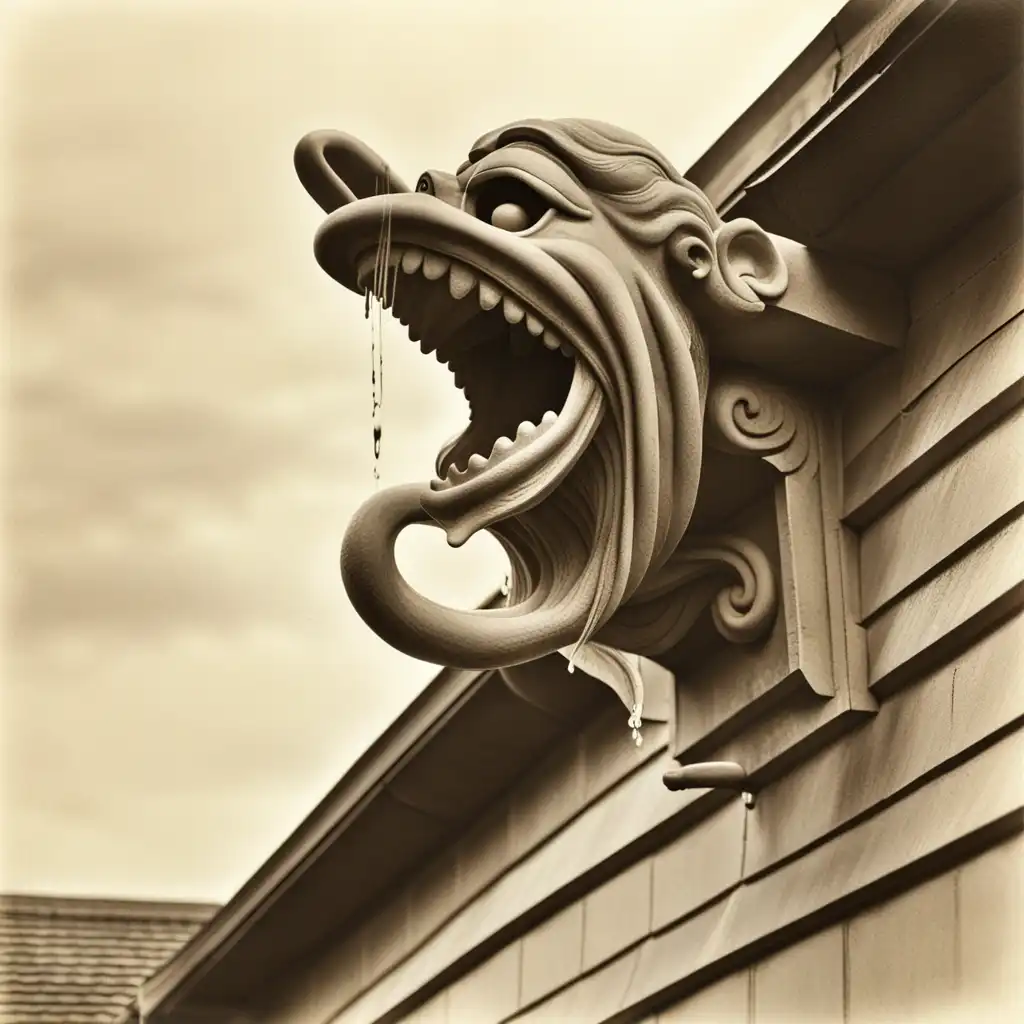
A waterspout, often in the form of a grotesque figure, projecting from the roof gutter of a building.
The water flows out of the gargoyle's mouth when it's raining.
ˈɡɑːrɡɔɪl
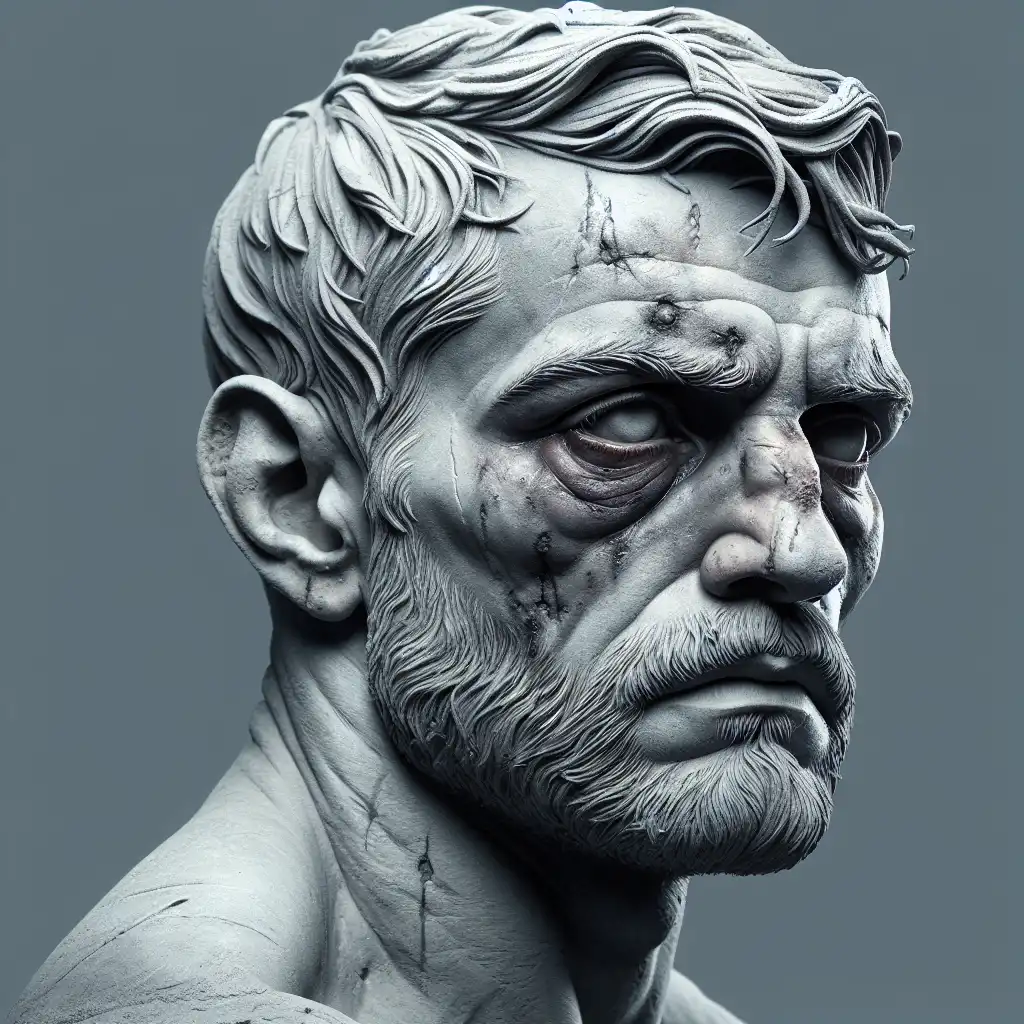
A person who is very ugly or frightening.
After his boxing match, his face was bruised so badly that he looked like a gargoyle.
No se pudo cargar el audio. Inténtalo de nuevo más tarde.
A gargoyle is a decorative statue that often has the shape of a strange or scary creature. They are usually placed on the outside of buildings, such as churches, to drain rainwater away from the roof. You might see gargoyles on older buildings, especially those built in Gothic or medieval styles. People also use the word gargoyle to describe a person who has a strange or frightening appearance or personality.
Carve means to cut or shape a material, usually wood or stone, to create a specific design or object. This can be applied to many different things, such as carving a statue or carving a birthday cake.
These creatures are often carved with grotesque features and are designed to serve as water spouts, directing rainwater away from the building.
So, while carving is a broader term that can be applied to many different things, a gargoyle is a specific type of carved decoration that serves a particular function on a building.
Abrir palabra: Carve →A chimera typically refers to a mythical creature that is made up of parts from different animals, such as a lion's head, a goat's body, and a serpent's tail.
In essence, a chimera is a mythical creature that embodies a blend of different traits, while a gargoyle is a decorative feature that is typically used in architecture.
Abrir palabra: Chimera →Decorate means to add ornamentation or embellishments to something, typically to make it more attractive or festive. This could mean adding decorations to a room or putting up Christmas lights.
Decorate is used to enhance the appearance of something, while a gargoyle is a specific type of decorative feature found on buildings.
Abrir palabra: Decorate →A figure is a general term used to describe any kind of sculpted or carved object that represents a person, animal, or object.
A gargoyle is a specific type of figure that is often found on buildings or architecture.
It is typically a carved, grotesque figure of an animal or mythical creature that serves as a decorative spout for water to drain from a roof.
A figure is a general term for a sculpted or carved object, while a gargoyle is a specific type of figure used as a decorative spout on buildings.
Abrir palabra: Figure →A grotesque is a decorative element, often on buildings, that features an exaggerated and distorted or ugly figure. It is primarily meant for decoration and is not necessarily functional like a gargoyle.
In summary, gargoyles are typically found on the roof of a building and serve a functional purpose, while grotesques are often found on various parts of a building and are intended for ornamental purposes.
Abrir palabra: Grotesque →An ornament is any decorative object that is used to add beauty or interest to a space or object. They can be used on buildings, furniture, and even Christmas trees.
Ornaments do not have a functional purpose, they are purely decorative.
A gargoyle is a type of ornament that serves a functional purpose on buildings, while an ornament is any decorative object that is used solely for decoration purposes.
Abrir palabra: Ornament →A gargoyle is a type of sculpture that's usually attached to a building. Its purpose is to divert rainwater away from the building's walls.
These sculptures usually depict grotesque creatures or monsters, and they're often carved in stone or other durable materials.
A sculpture can be any type of artwork that's created by carving, shaping, or molding a material such as clay, stone, or metal.
Sculptures can depict almost anything, from animals and people to abstract shapes and ideas.
So, while both gargoyles and sculptures are forms of art, gargoyles have a specific function and are usually associated with architectural elements of a building, whereas sculptures can be standalone pieces that can depict anything the artist wishes to represent.
Abrir palabra: Sculpture →A gargoyle is a type of statue that is often found on the roofs of buildings, especially Gothic cathedrals. They are carved with grotesque features and are typically designed to direct rainwater away from the building.
A statue is a more general term for any kind of sculpture, usually made to represent a person or an animal.
Statues can be found in many different locations, both indoors and outdoors, and can vary greatly in size and design.
A gargoyle is a specific type of statue that has functional and decorative purposes, while a statue can be any kind of sculpture used for artistic or commemorative purposes.
Abrir palabra: Statue →Rory Stewart: Why...
Ver en YouTube ↗In northern architecture - the cathedrals of Europe and all the little churches - the details, the carving of stone, become necessary because the light is not there to help you very much. You have to enrich surfaces. The desert reduces form to its simplest nature. There is no need for gargoyles or flying buttresses in the desert.
Resurrecting Notre-Dame...
Ver en YouTube ↗And it has some weight, I mean, the whole history of the gargoyles, that's some wonderful stuff.
Why democracy matters -...
Ver en YouTube ↗The biggest problem I see with early-stage entrepreneurs is they get the idea in their head, and they leave it in their head. And they begin embellishing it in their head, making it more ornate. They add on the second story to their dream house - then add the tennis court and the turrets and the gargoyles.
I decided to finish at Oxford because I looked up at the top of the buildings - the gargoyles and spires - and decided to stay.
When I started studying architecture, people would say, you know, 'Can you tell me why are all modern buildings so boring?' Because, like, people had this idea that in the good old days, architecture had, like, ornament and little towers and spires and gargoyles, and today, it just becomes very practical.
When I went to Europe a few years ago, I felt very at home there, and I loved standing in Notre Dame and looking at all the gargoyles on the outside of that building and realizing that, as scary and frightening as they were, what I was looking at was something that was built to the glory of God.
Even without seeing the crickets, grasshoppers, cicadas and katydids, we hear them shrilling in this season and trust that they're the tiny living gargoyles entomologists claim.