navigable
adjective navigable
ˈnævɪɡəbl
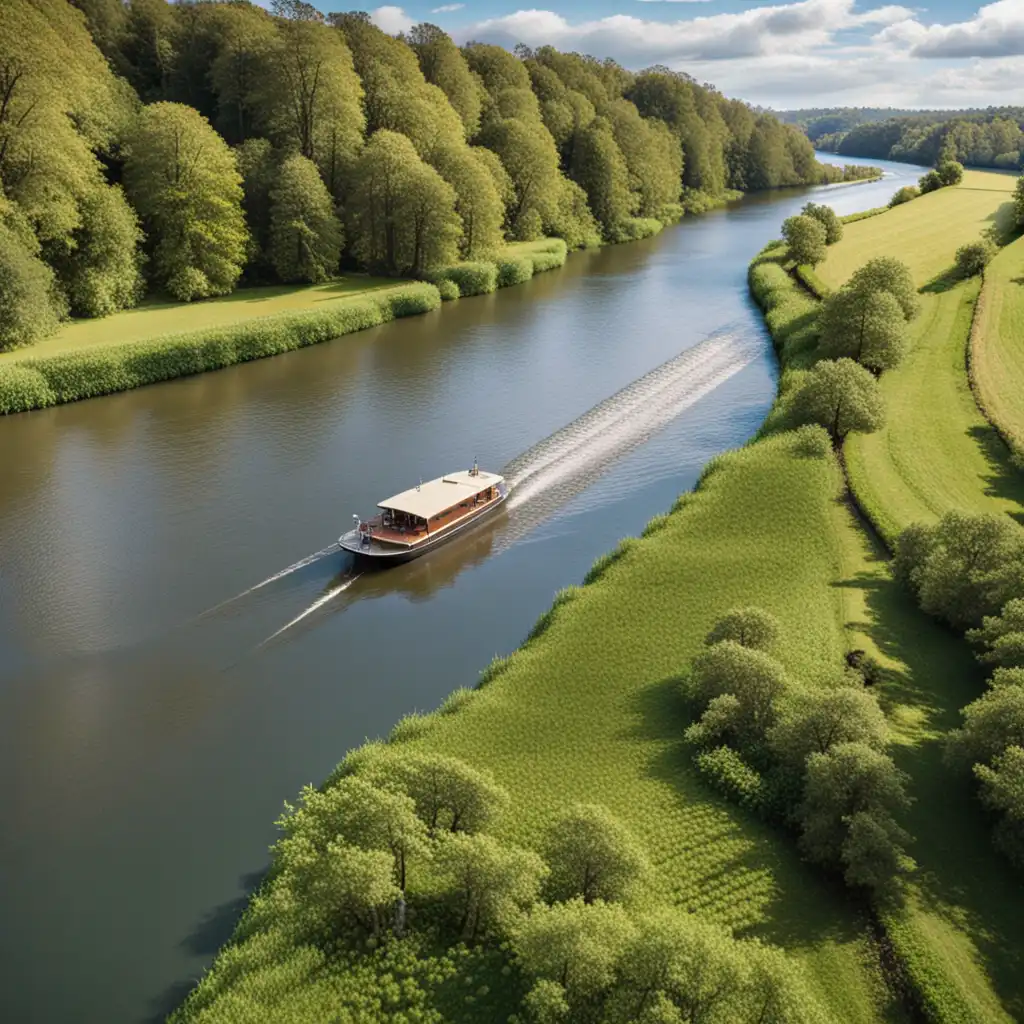
Can be traveled or sailed on
The river is navigable for most of the year.
navigable
ˈnævɪɡəbl
불러오는 중…
ˈnævɪɡəbl
Can be traveled or sailed on
The river is navigable for most of the year.

ˈnævɪɡəbl
Easy to navigate or move around in
The new software is very navigable, with a user-friendly interface.
오디오를 불러오지 못했어요. 잠시 후 다시 시도해 주세요.
The word 'navigable' means that a body of water, such as a river or canal, is big enough and deep enough for boats or ships to travel on without getting stuck or hitting the bottom. It is often used to describe waterways that can be used for transportation or shipping. For example, the Mississippi River in the United States is navigable, as large barges and riverboats can travel up and down it.
Accessible means something that can be easily reached or entered, such as a building that has ramps or elevators for people with disabilities.
Accessible applies more to physical spaces and the ability to enter them, while navigable applies more to ease of movement or exploration within a space, whether it be physical or digital.
단어 열기: Accessible →Clear means that something is visible and easy to understand, while the word navigable means that something is easy to travel through, especially by boat or ship.
For example, a river can be clear if its water is transparent, which means people can see through it easily. A river can also be navigable if it is wide and free of obstacles, which makes it easy for boats to travel through it.
Thus, clear is more applicable to describing visibility and understanding, while navigable describes ease of travel or movement.
단어 열기: Clear →Navigable means that something can be traveled through by boat or other watercraft, while negotiable means that something can be discussed and agreed upon.
For example, a river may be navigable if it has enough depth and width for boats to safely travel through, while a contract may be negotiable if the terms can be discussed and altered to reach a mutually acceptable agreement.
Navigable relates to physical accessibility for travel by watercraft, while negotiable relates to the ability to discuss and agree upon terms or conditions.
단어 열기: Negotiable →Open means that something is accessible or available for use. For example, a store can be open if it is available to customers to enter and buy goods.
Navigable refers to the ability to travel safely or easily through a specific route or passage, while open simply means that something is accessible or available for use.
Navigable is typically used when talking about waterways or transportation routes, while open is used in a variety of contexts.
단어 열기: Open →Passable refers to a path, road or way that is easy enough to travel on foot, bike or vehicle.
In simpler terms, navigable means something that can be traveled on water, while passable means something that can be traveled on land.
단어 열기: Passable →Safe, on the other hand, means that something is free from danger or harm.
While a waterway may be deemed navigable, it doesn't necessarily mean that it is safe for boats to navigate. For example, a river may be deep enough to allow boats to pass through, but if the river has a strong current or dangerous rocks, it may not be considered safe for navigation.
Navigable applies to the ability of a waterway to allow boats to pass through, while safe pertains to ensuring that boats can pass through without danger or risk of harm.
단어 열기: Safe →Tranquil means that something is calm, peaceful, and free from disturbance or interruption. This term is generally used to describe a place that is quiet, relaxing, and serene, and could refer to natural settings like forests, lakes, or gardens.
Navigable refers to a waterway that can accommodate transportation, while tranquil implies a setting that is peaceful and serene.
단어 열기: Tranquil →Why This Sailboat Brings...
YouTube에서 보기 ↗If you have a vision for something, things are navigable. If it gets fuzzy, then obstacles become much more formidable.
How Magellan circumnaviga...
YouTube에서 보기 ↗Americans deserve to feel secure in their own lives, in their own middle-class aspirations, before you go to them and say, 'We're going to have to enforce navigable sea lanes in the South China Sea.
How human noise affects...
YouTube에서 보기 ↗The EPA has no legal authority to expand the definition of navigable waters under the Clean Water Act, as the Supreme Court has repeatedly made clear.
Under the Clean Water Act, the federal government has jurisdiction over navigable waters - defined as the 'waters of the United States.' Federal regulators and the courts have broadened this definition over time, moving from waters a vessel can navigate to ponds and wetlands as well.