
equivocal
adjective equivocal
ɪˈkwɪvəkl
Not clear, uncertain or questionable in nature.
His response to the question was equivocal, and therefore, they couldn't make any concrete decisions.
equivocal
ɪˈkwɪvəkl
Loading…
ɪˈkwɪvəkl
Not clear, uncertain or questionable in nature.
His response to the question was equivocal, and therefore, they couldn't make any concrete decisions.
ɪˈkwɪvəkl
Open to more than one interpretation; deliberately vague or uncertain.
The politician gave an equivocal answer to avoid taking a clear stand on the issue.
Audio could not be loaded. Please try again later.
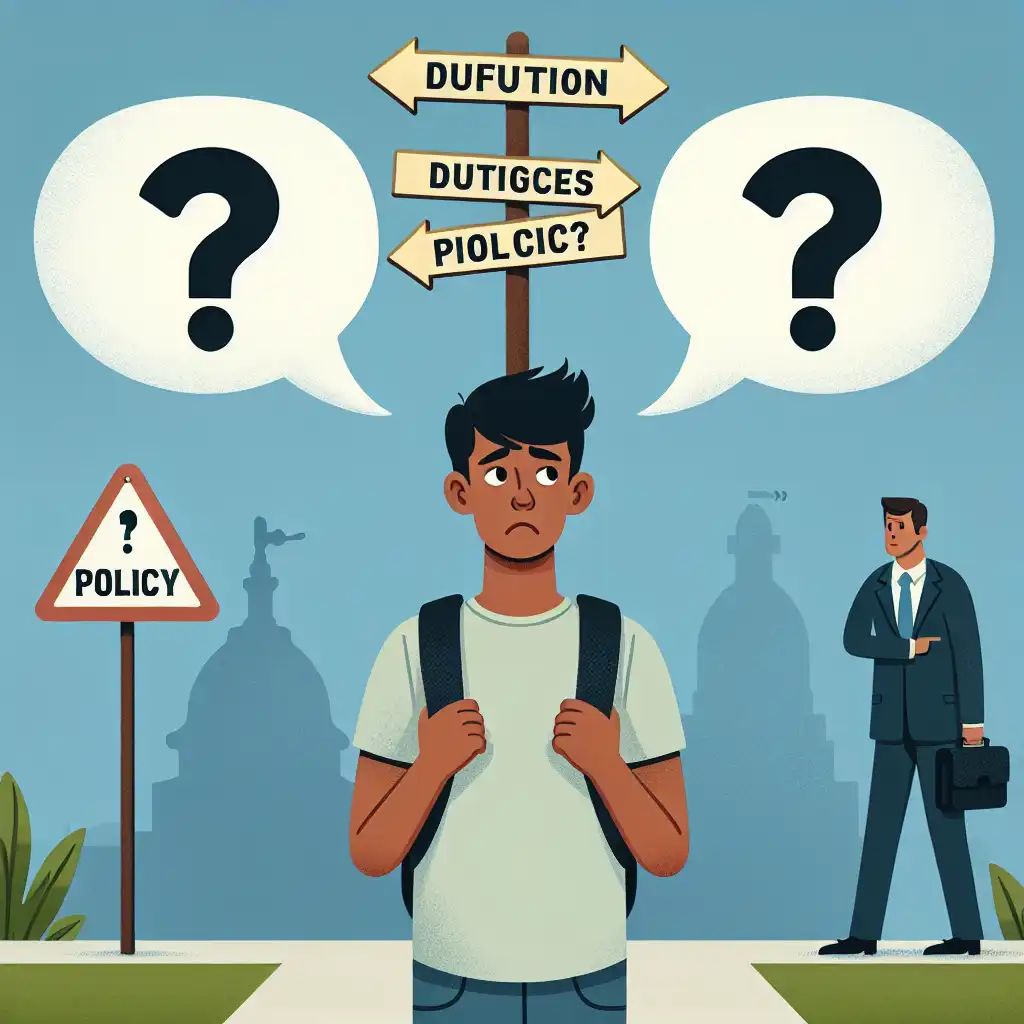
The word 'equivocal' is used when something is confusing and has multiple interpretations. For example, if someone's answer to a question is not clear and could be interpreted in different ways, you can say that their response is equivocal. It can also be used to describe situations or statements that are ambiguous and unclear.
The words ambiguous and equivocal are synonyms, meaning they have similar meanings. They both refer to something that is unclear or has more than one meaning.
However, ambiguous usually describes language or words that have an unclear or multiple meanings, while equivocal describes situations or actions that have multiple interpretations or motives.
Ambiguous would be used to describe a sentence or phrase that could mean different things to different people, while equivocal would be used to describe a situation or action that could have different motives or consequences depending on how it is interpreted.
Open word: Ambiguous →Certain means something is clear and definite, without any doubt. It is applicable when referring to something that is known for sure or has been proven to be true.
For example, "I am certain that the earth is round."
Equivocal means something is ambiguous or uncertain, with more than one possible interpretation. It is applicable when referring to something that is open to debate or not clearly defined.
Certain means something is definite and undisputed, while equivocal means something is open to interpretation or unclear.
Open word: Certain →Clear means that something is easy to understand, without any confusion or doubt. It is applicable when there is no ambiguity or uncertainty in the statement or message.
Equivocal means that something is ambiguous or unclear, and can have multiple meanings or interpretations. It is applicable when there is a lack of clarity and certainty in the statement or message, and the meaning is not easily understood.
Open word: Clear →Dubious means hesitating or doubting something, while equivocal means having multiple meanings or interpretations.
Dubious is more applicable when there is a sense of uncertainty or skepticism about something. For example, if someone makes a claim that sounds unlikely or suspicious, you might say "I am dubious about that claim.".
Open word: Dubious →Equivocate means to use ambiguous or unclear language when you are trying to avoid making a clear statement or taking a clear position.
For example, a politician might equivocate when they are asked a difficult question, by saying things that sound like an answer but don't actually commit them to a specific position.
The difference between the two words is that equivocal describes something that is unclear or ambiguous, while equivocate describes the act of being intentionally unclear or ambiguous in your language.
Open word: Equivocate →Equivocal means having multiple possible meanings or interpretations, while the word evasive means avoiding giving a direct answer or response to a question.
An evasive person might avoid answering a question altogether or redirect the conversation to avoid giving a clear answer.
Open word: Evasive →Questionable means something is doubtful, suspicious or uncertain. It often implies that something is not trustworthy or doubtful in quality.
For example, if someone has questionable character, it means their actions or behavior are not to be trusted or are suspicious.
Equivocal is used when something has multiple possible meanings, while questionable is used when something is doubted or suspected to be unreliable.
Open word: Questionable →Vague means that something is unclear or not well defined. For example, if someone says "I'm going to buy some stuff today", that statement is vague because it's not clear what the person is going to buy or even where they're going to buy it.
Equivocal is used when there are multiple interpretations or meanings, while vague is used when there is uncertainty or lack of specific details.
Open word: Vague →Is It OK to Let These...
Watch on YouTube ↗It has been my fate in a long life of production to be credited chiefly with the equivocal virtue of industry, a quality so excellent in morals, so little satisfactory in art.
There is something suspicious about music, gentlemen. I insist that she is, by her nature, equivocal. I shall not be going too far in saying at once that she is politically suspect.
A tale is born from an image, and the image extends and creates a network of meanings that are always equivocal.
I believe that body and spirit are not really separate, though it often seems that way. I believe that redemption is never impossible and always equivocal. But I guess that I just don't know.