animus
noun animus
ˈænɪməs
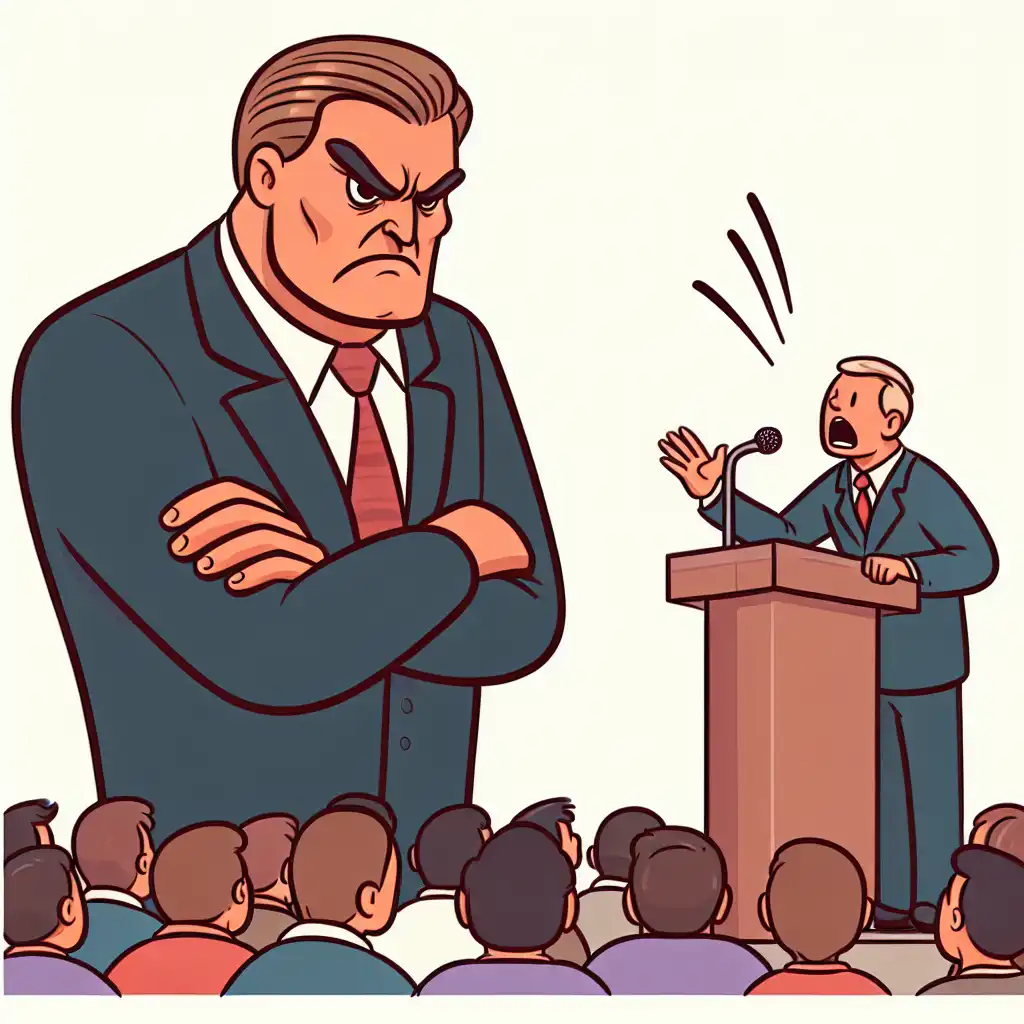
A feeling of strong dislike or anger.
He has an obvious animus against his political rivals.
animus
ˈænɪməs
Đang tải…
ˈænɪməs
A feeling of strong dislike or anger.
He has an obvious animus against his political rivals.

ˈænɪməs
The intention to do something, especially to harm somebody.
In court, the plaintiff must prove that the defendant acted with animus.

ˈænɪməs
The masculine part of the personality in the analytic psychology of Carl Jung.
In Jungian psychology, the animus is an aspect of the collective unconscious.
Không tải được âm thanh. Vui lòng thử lại sau.
The word 'animus' generally refers to a feeling of strong hostility or opposition towards something or someone. For example, if someone holds an animus towards a political leader, it means they strongly dislike them and may express their contempt openly. The word 'animus' can also be used to refer to an individual's intention or motivation behind their actions. It's important to note that this word is somewhat formal and isn't used in everyday conversation, but may be encountered in written or formal contexts.
Animosity means a feeling of strong dislike, hostility or hatred towards someone or something.
Animosity is broader and implies a general sense of enmity towards a group or idea, while animus refers to a specific hostility towards an individual or idea based on personal bias or belief.
Mở từ: Animosity →Antagonism refers to a strong feeling of opposition or hostility towards someone or something.
Antagonism can be directed towards a person, group, idea, or institution.
The main difference between animus and antagonism is that animus is a feeling of deep-seated dislike, while antagonism is a feeling of opposition or hostility.
Animus is applicable when talking about someone's personal feelings and emotions, while antagonism is applicable when discussing conflicts between two people or groups.
Mở từ: Antagonism →Animus and antipathy are both words that describe a dislike or hostility towards someone or something.
Antipathy is more of a general feeling of dislike or aversion towards someone or something.
You might use animus to describe the intense hatred that two political parties have towards each other, while antipathy might be used to describe a general dislike of a type of food or music.
Animus is a stronger and more specific word than antipathy.
Mở từ: Antipathy →Enmity refers to a state of open and extreme hostility or hatred towards someone. Unlike animus, enmity involves active opposition and ill will towards a person or group, often leading to conflict, rivalry, or even violence.
Animus is a general feeling of dislike or hostility, while enmity is a more extreme form of hostility that involves active opposition and hatred towards someone.
Mở từ: Enmity →Hatred, on the other hand, refers to a strong aversion or dislike towards someone or something.
Both animus and hatred can be damaging and harmful, but animus is often seen as more extreme and can lead to actions such as discrimination, harassment, or violence.
Hatred, while still negative, is generally less extreme and can be expressed in less harmful ways such as avoidance or criticism.
Hatred is more commonly used in situations where there is a strong emotional reaction to a person or idea, but may not necessarily involve a power dynamic.
Mở từ: Hatred →Hostility refers to hostile behavior or actions towards someone or something. It is an active display of anger or aggression towards others.
So, while animus describes a feeling, hostility describes an action. Animus may be applicable in situations where someone has a strong feeling of dislike towards another person or a particular thing, but may not necessarily act on it.
Hostility describes situations where someone actively shows anger or aggression towards someone or something.
Mở từ: Hostility →Both animus and malice refer to negative feelings towards someone or something, but they have slightly different connotations.
Malice refers to a desire to harm or cause suffering to someone, often without any particular reason or justification.
For example, if someone intentionally spreads a rumor about someone else to damage their reputation, that would be an act of malice.
Animus is a feeling of strong dislike or hostility based on a particular difference, while malice is a desire to harm or cause suffering without a specific reason.
Mở từ: Malice →Resent refers to a feeling of bitterness or anger towards a situation, circumstance, or person that is perceived as unfair or unjust.
It may not necessarily be directed towards anyone in particular, but it stems from a sense of feeling wronged. Resentment is applicable when someone feels unfairly treated or when something has gone wrong, and they feel angry or displeased about it.
Mở từ: Resent →Safari Live - Day 249 %\PIPE%...
Xem trên YouTube ↗Out of your surplus, you can help your allies, and Israel is a great ally. And this is no particular animus of Israel, but what I will say, and I will say over and over again, we cannot give away money we don't have.
Our immigration...
Xem trên YouTube ↗Who cares if virtually the entire world views Obama's drone attacks as unjustified and wrong? Who cares if the Muslim world continues to seethe with anti-American animus as a result of this aggression? Empires do what they want.
Realism implicated that imperialism and imperialist conquests or prestige can be pursued as part of the animus dominandi, the desire to dominate, which is the social force that determines political activity.
Unsuccessful businessmen and workers do not have the same animus against the capitalist system as do the wordsmith intellectuals. Only the sense of unrecognized superiority, of entitlement betrayed, produces that animus.
One of the things I endeavor to remind people of consistently when I am asked to speak to groups around the country is to consider the possibility that we are led by a pack of idiots. This is not out of any animus toward our leadership class, but borne out of experience.
Obama's ascendancy unhinged the radical right, offering a unified target to competing camps of racial, nativist and religious animus.
If this war makes anything clear, it is that Israel can do nothing to appease the Muslim animus against her.
For my grandfather, there was no distinction. There was no tension between his support for civil rights for black people and his animus toward gay people because both of those positions were scripturally derived.
As a woman, as a Jew, as a lesbian, as a labor leader in a time of great anti-union animus, I know that other people project their biases on me. But it is nothing like the experience of our African-American brothers and sisters, especially black and brown men and boys.
I have no animus toward digital, though I still pretty much take everything on a silver-based negative, either a wet plate or just regular silver 8x10. But I've started messing a little bit with scanning the negative and then reworking it just slightly.