distributive
adjective distributive
dɪˈstrɪbjətɪv
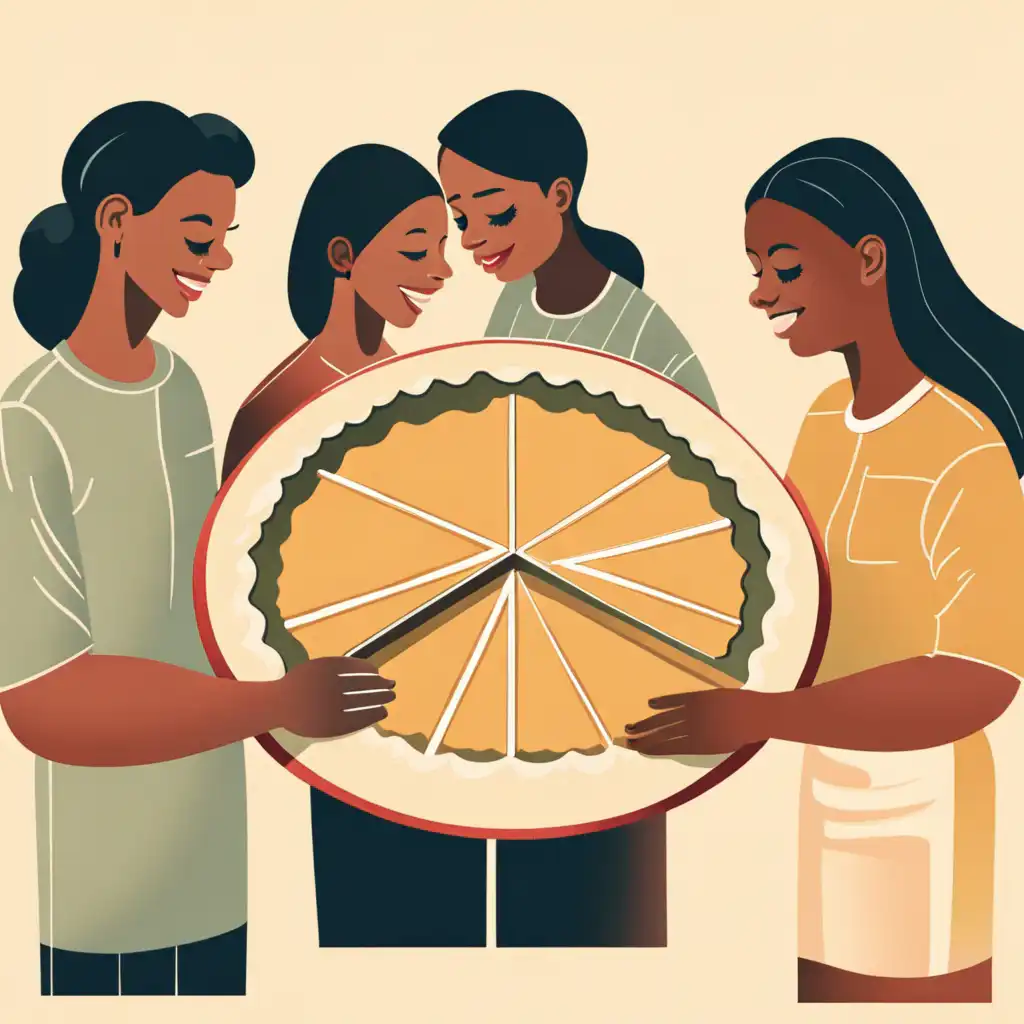
Related to sharing, or dividing things out in a fair way.
The distributive share of the profits was equally divided among the partners.
distributive
dɪˈstrɪbjətɪv
読み込み中…
dɪˈstrɪbjətɪv
Related to sharing, or dividing things out in a fair way.
The distributive share of the profits was equally divided among the partners.
dɪˈstrɪbjətɪv
In mathematics, the term 'distributive' describes an operation (like multiplication over addition) where numbers can be grouped differently and still achieve the same result.
In algebra, the distributive property is used to solve equations.

dɪˈstrɪbjətɪv
Describing a term used in grammar for words like 'each' or 'every' that refer to individual members of a group.
In the sentence 'Each student will receive a certificate', 'each' is a distributive pronoun.
音声を読み込めませんでした。しばらくしてからもう一度お試しください。
The word "distributive" is used to describe something that is divided or shared among different people or groups. For example, if a teacher gives out pencils to every student in the class, that is a distributive action. In math, "distributive property" means that when you multiply a number by a certain factor, you can distribute or divide that factor among the numbers being multiplied. It is a way of breaking a big problem into smaller parts. Overall, "distributive" refers to the act of dividing or sharing something in a fair and equal way.
Allot means to give a specific amount or share of something to someone or something. For example, a teacher may allot each student a certain amount of time to complete a task.
In simpler terms, allot is used when dividing something among specific recipients and distributive is used when dividing something equally or proportionally among all deserving parties.
単語を開く: Allot →Apportion refers to dividing something into smaller parts based on a specific formula or criteria.
So, while both words refer to dividing things, apportion is more formulaic and structured, while distributive has a greater emphasis on fairness and equality.
単語を開く: Apportion →Dispersion refers to the spreading out or scattering of something over an area or volume. This term is commonly used in science and refers to the way light and sound waves spread out when they travel through a medium.
Dispersion relates to spreading out over space, while distributive relates to dividing up among people or groups.
単語を開く: Dispersion →Disseminate means to spread something widely, like information or knowledge. For example, a teacher might disseminate information to their students so they can learn new things.
So, while both words involve the act of sharing things, disseminate is about spreading something widely, while distributive is about dividing something evenly.
単語を開く: Disseminate →Distributive means to divide something equally among a certain number of people or things. It implies that there is a fixed amount to be split equally.
Divide means to separate something into parts, without necessarily implying that the parts are equal.
For example, if you want to divide a pizza between two people, one person might get a bigger slice than the other, depending on how you cut it.
Distributive is applicable when there is a fixed amount of something to be split equally, while divide is applicable when something needs to be separated into parts, which may or may not be equal.
単語を開く: Divide →Fragmentary means something that is incomplete or made up of small pieces that don't fit together well. For example, if you read a book with missing pages, it would be fragmentary because the story is incomplete and has missing pieces.
The word distributive relates to things that are divided equally, while the word fragmentary relates to things that are incomplete or made up of small, disjointed pieces.
単語を開く: Fragmentary →Distributive refers to sharing or dividing things equally among a group of people or objects, while partition means dividing something into separate sections or parts, often with the intention of creating individual units or spaces.
For example, if you have a bag of sweets and you want to give them out equally to your friends, you would use the word 'distributive.' If you want to divide a large room into smaller spaces with separate entrances, you would use the word 'partition.'
Distributive refers to dividing things equally among a group, while partition refers to dividing something into separate sections or parts.
単語を開く: Partition →Distributive refers to the act of dividing something equally among a group of people or things. This means that each person or thing gets an equal share.
Share can also refer to dividing something, but it doesn't necessarily mean the shares are equal. For example, if you have four cookies and you give one to your friend, you are sharing them, but you are not distributing them equally.
Distributive means dividing something equally, while share means dividing something, but the shares may not be equal.
単語を開く: Share →A healthy economy should...
YouTube で見る ↗We must face the fact that the preservation of individual freedom is incompatible with a full satisfaction of our views of distributive justice.
Why can't you divide by...
YouTube で見る ↗What is superfluous to your poor estate, distribute. This is distributive charity: a virtue so sacred that crimes against it are the forerunner of inevitable doom.
Education for all seems to be the product of a type of distributive justice that is in no way related to the individual.
Taken as a whole, the work of Marx, at the same times it shows the thesis of the growing pauperization of the non-propertied classes, relativizes it when contemplating the possibility that the class struggles result in distributive effects.
We've been having a lot of hearings lately about the reliability of the grid and the need for more distributive generation. We can be a leader of that here in Connecticut.