
confederation
noun confederation
kənˌfedəˈreɪʃn
An organization consisting of different groups united for a common purpose.
The Swiss Confederation is an example of a nation that operates on this principle.
confederation
kənˌfedəˈreɪʃn
Cargando…
kənˌfedəˈreɪʃn
An organization consisting of different groups united for a common purpose.
The Swiss Confederation is an example of a nation that operates on this principle.

kənˌfedəˈreɪʃn
The act of forming into a group or an alliance.
The confederation of the rebel forces greatly concerned the empire.
kənˌfedəˈreɪʃn
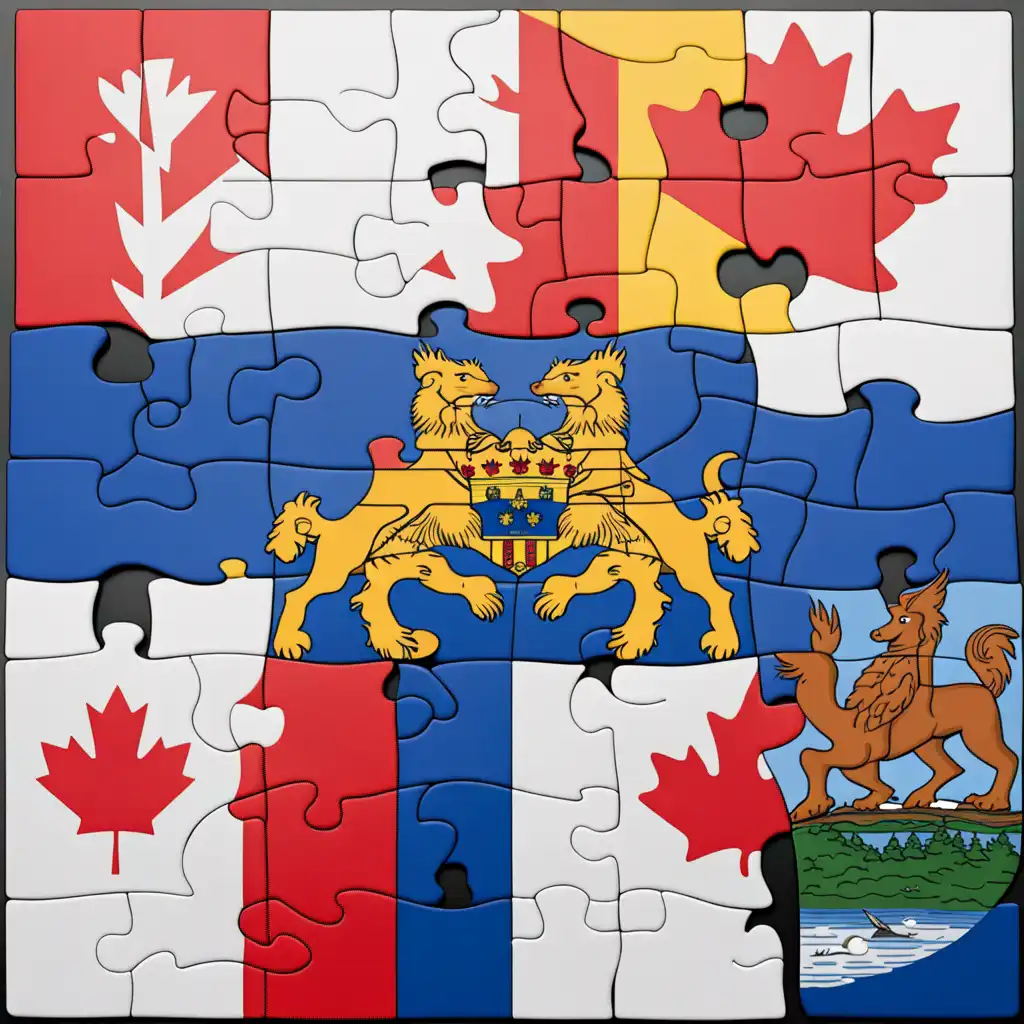
In the context of Canadian history, Confederation refers specificlaly to the political union of the three provinces - Nova Scotia, New Brunswick and the Province of Canada in 1867, and the subsequent addition of other provinces and territories.
The Confederation of Canada marked an important milestone in the nation's history.
No se pudo cargar el audio. Inténtalo de nuevo más tarde.
Confederation is a word that is often used to describe a group or alliance of different states, tribes, or organizations that come together for a common purpose. The word is usually associated with political systems, and is often used to describe the union of smaller states into a larger, more powerful entity. For example, the United States of America is a confederation of states that work together to provide services and maintain their collective security. The term can also be used to describe other forms of cooperation, such as an economic confederation or a cultural confederation of different communities. If you are an English learner, it is important to understand the context in which the word is used in order to use it correctly.
An alliance is a relationship between two or more countries or groups that work together for a common purpose, such as mutual defense or economic benefits.
This relationship is usually more loose and flexible than an alliance, with each member retaining their own autonomy and sovereignty.
An alliance is typically applicable when countries or groups want to work closely together and share resources and expertise in pursuit of specific goals.
For example, NATO (North Atlantic Treaty Organization) is an alliance of countries that work together to provide collective defense against external threats.
An alliance is a tight partnership between countries or groups with specific goals in mind, while a confederation is a looser union of smaller entities that work together while maintaining their own independence.
Abrir palabra: Alliance →Association refers to a group of people or organizations that come together for a common purpose or goal. For example, a student association at a school or a professional association for doctors.
Associations are applicable in situations where people or organizations want to work together for a common goal, but are not necessarily equal in power or status.
Abrir palabra: Association →A coalition is a temporary alliance or partnership between two or more groups with a common purpose or goal.
It is often formed to achieve a specific objective and may dissolve once that objective is achieved. For example, political parties may form a coalition to gain a majority in a government and pass certain policies.
A coalition is a temporary partnership while a confederation is a more permanent union.
A coalition is applicable when groups come together for a specific objective while a confederation is applicable when independent entities come together for mutual benefit and protection.
Abrir palabra: Coalition →Confederacy refers to a group of states or organizations that have formed an alliance for a common purpose or goal, such as the Confederate States of America during the American Civil War.
Confederacy refers to a more formal and centralized alliance, while a confederation is a looser and more decentralized union.
Abrir palabra: Confederacy →A consortium is a group of businesses or organizations that work together to achieve a shared goal, such as research, development, or marketing.
A confederation is a political alliance between independent entities, while a consortium is a commercial collaboration between businesses.
Abrir palabra: Consortium →A confederation is a loose association of sovereign states that come together to achieve a common goal. The states retain their independence and have a high degree of autonomy.
An example of confederation is the European Union.
A federation is a union of sovereign states that agree to delegate some of their powers to a centralized government. The states retain some degree of autonomy, but the federal government has more authority to make decisions on behalf of the entire union.
An example of a federation is the United States of America.
Confederation is applicable when states want to work together towards a common goal, while retaining their independence, while a federation is applicable when states want to form a union and delegate some of their powers to a centralized government.
Abrir palabra: Federation →A league refers to an association or alliance of people, groups or nations formed to achieve a specific purpose. An example of a league is the National Basketball Association (NBA).
The term league can be used for a variety of purposes such as sports, business, trade, or social.
In summary, while both confederation and league involve a group of entities coming together, confederation is more commonly used for political purposes while league is used for a variety of purposes beyond politics such as sports or business.
Abrir palabra: League →Confederation and partnership are both terms that refer to the cooperation and collaboration between different groups or entities.
A partnership is a more formal and structured relationship between two or more entities, usually businesses, organizations or individuals, that agree to work together towards achieving mutual goals or objectives.
Partnerships are often formed to tap into each other's expertise, resources, and networks. Unlike confederations, partnerships generally have a more hierarchical structure, with clear roles and responsibilities defined for each partner.
Examples of partnerships include joint ventures between companies, public-private partnerships, and strategic alliances.
In short, confederations are more appropriate for situations where large groups of states or regions need to work together to address common problems, while partnerships are more suited for situations where smaller, more focused groups or entities collaborate to achieve shared goals.
Abrir palabra: Partnership →The main purpose is to cooperate on specific issues or goals. An example of a confederation is the European Union, where different countries cooperate on trade, law and human rights.
A union is a more structured and centralized entity where different states or groups come together to form a single entity, like a nation or federation.
The members lose some of their autonomy by agreeing to a common constitution, laws and government. Examples of unions include the United States and Canada.
A confederation is a loose alliance where members cooperate but retain significant independence, while a union is a more centralized entity where members form a single entity and have less independence.
Abrir palabra: Union →Queens of the High Seas...
Ver en YouTube ↗This world of ours... must avoid becoming a community of dreadful fear and hate, and be, instead, a proud confederation of mutual trust and respect.
The most successful...
Ver en YouTube ↗If Yugoslavia is to exist, it can exist only as an alliance, a confederation of independent states.
In Switzerland, we have a centuries-old tradition of living together in one confederation and one society. That holds us back from excesses. We are a civilized and enlightened community and, by practising multicultural tolerance, we manage to stop extreme developments from going too far.
Well, what there ought to be is an international labor organization, a confederation of the trade unions of all the countries speaking for the workers who are competing with one another, and talking about the difference in wage levels between, say, Europe and Indonesia.
Slavery existed before the formation of this Union. It derived from the Constitution that recognition which it would not have enjoyed without the confederation. If the States had not united together, there would have been no obligation on adjoining States to regard any species of property unknown to themselves.
When the Canadian confederation took place in 1867, a lot of people in Quebec said, 'Could we have a referendum?' They said, 'Oh, no. In the British tradition, the Parliament can do anything, excluding changing a man into a woman, and, therefore, no referendum' - and that was that.
Our articles of confederation ought to be revised and measures immediately taken to invigorate the Continental Union. Depend upon it: there lies the danger for America. This last stroke is wanting, and unless the states be strongly bound to each other, we have to fear from British and, indeed, from European politics.
Confederation is a compact, made originally by four provinces but adhered to by all the nine provinces who have entered it, and I submit to the judgment of this house and to the best consideration of its members, that this compact should not be lightly altered.