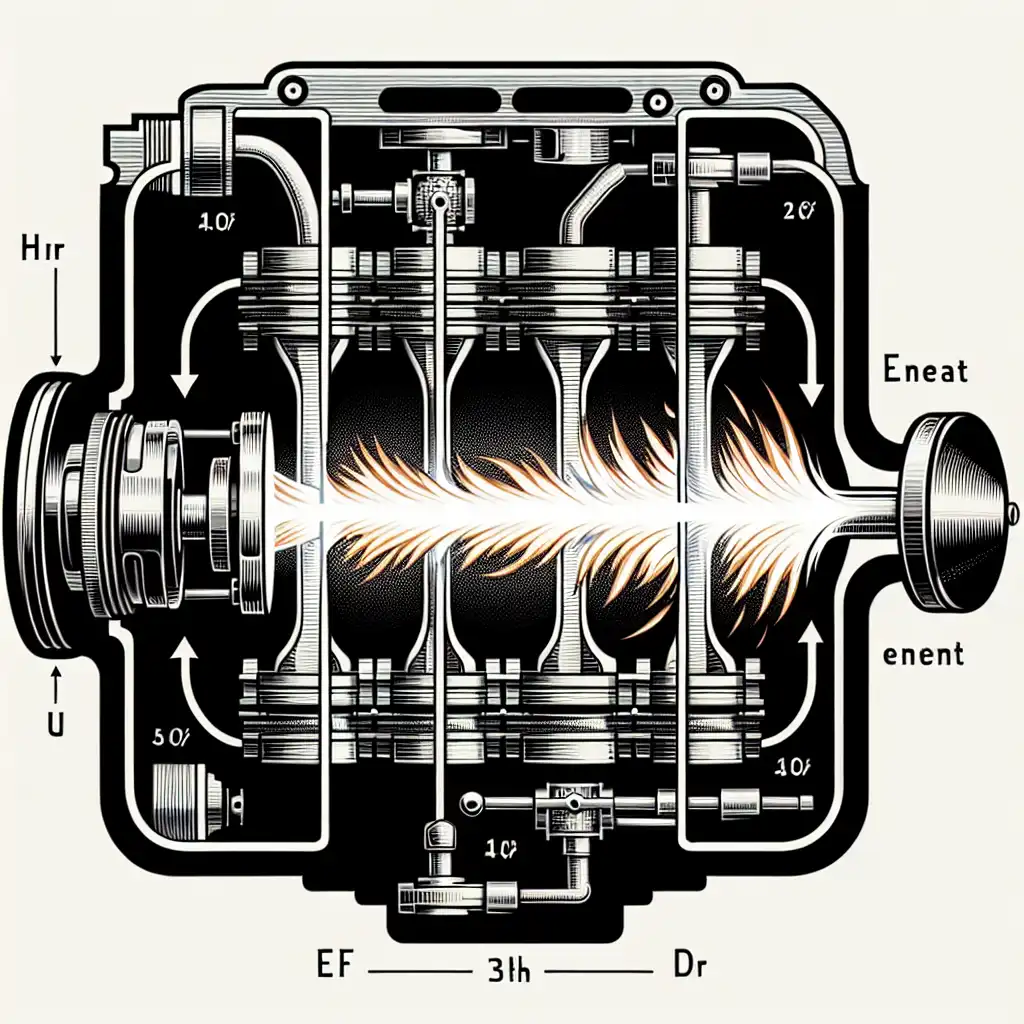
The word ‘thermodynamic’ is often used to describe how heat and energy interact with materials. It is commonly used in science and engineering to study how things like engines, power plants, and chemical reactions work. It refers to the study of how heat and energy move and change within a system. You might hear this word used in a physics or chemistry class, or when talking about energy production or climate change.
Energetic refers to the amount of energy of an object or a system.
It is applicable in physics and chemistry, especially in the study of heat and work. Energetic describes something's energy level, while thermodynamic is used to study how energy is transferred and transformed in a system.
Thermal refers to heat energy, while thermodynamic refers to the study of the relationship between energy and motion.
Thermal is often used to describe the transfer of heat energy from one object to another, while thermodynamics is used to analyze how energy is transferred and transformed within a system.
For example, when you heat up water on a stove, that is a thermal process. When you use a thermodynamic analysis to calculate the maximum efficiency of an engine, that is a thermodynamic process.
We need to treat the planet as a system, and up until now, we've operated more as if the world were made of separate parts - this part is environment, this part is economy. But everything is connected. You can't fix global warming with a Ph.D. in thermodynamics!
Meteorologists don't use a script, and most create their own graphics and certainly put together their own forecasts. Most of us went to school to become scientists - at least I did - and studied thermodynamics, physics, and tons of calculus to take this young science to the next level. Our accuracy is amazing and will only continue to improve.
The thermodynamic properties of electrolyte solutions can be determined from the measurements of the voltage between electrodes reversible to both ions.
As soon as we step beyond the established boundaries of pure thermodynamic theory, we enter a trackless region confronting us with obstacles which even the most astute of us are almost at a loss to tackle.
It reflects a prevailing myth that production technology is no more amenable to human judgment or social interests than the laws of thermodynamics, atomic structure or biological inheritance.
When I was studying at Purdue, we learned our thermodynamics from an antique steam engine. When I went back in 1964, I found the laboratories packed with the most modern equipment for the study of thermodynamics, some of which had been built by the students themselves.