discontinuous
adjective discontinuous
ˌdɪskənˈtɪnjuəs
Not continuous; having interruptions or gaps.
There are discontinuous intervals in the recording where the artist paused to think.
discontinuous
ˌdɪskənˈtɪnjuəs
読み込み中…
ˌdɪskənˈtɪnjuəs
Not continuous; having interruptions or gaps.
There are discontinuous intervals in the recording where the artist paused to think.

ˌdɪskənˈtɪnjuəs
Present in some places and absent in others; not uniformly present.
In snakes, the scale pattern is discontinuous and complex.
ˌdɪskənˈtɪnjuəs
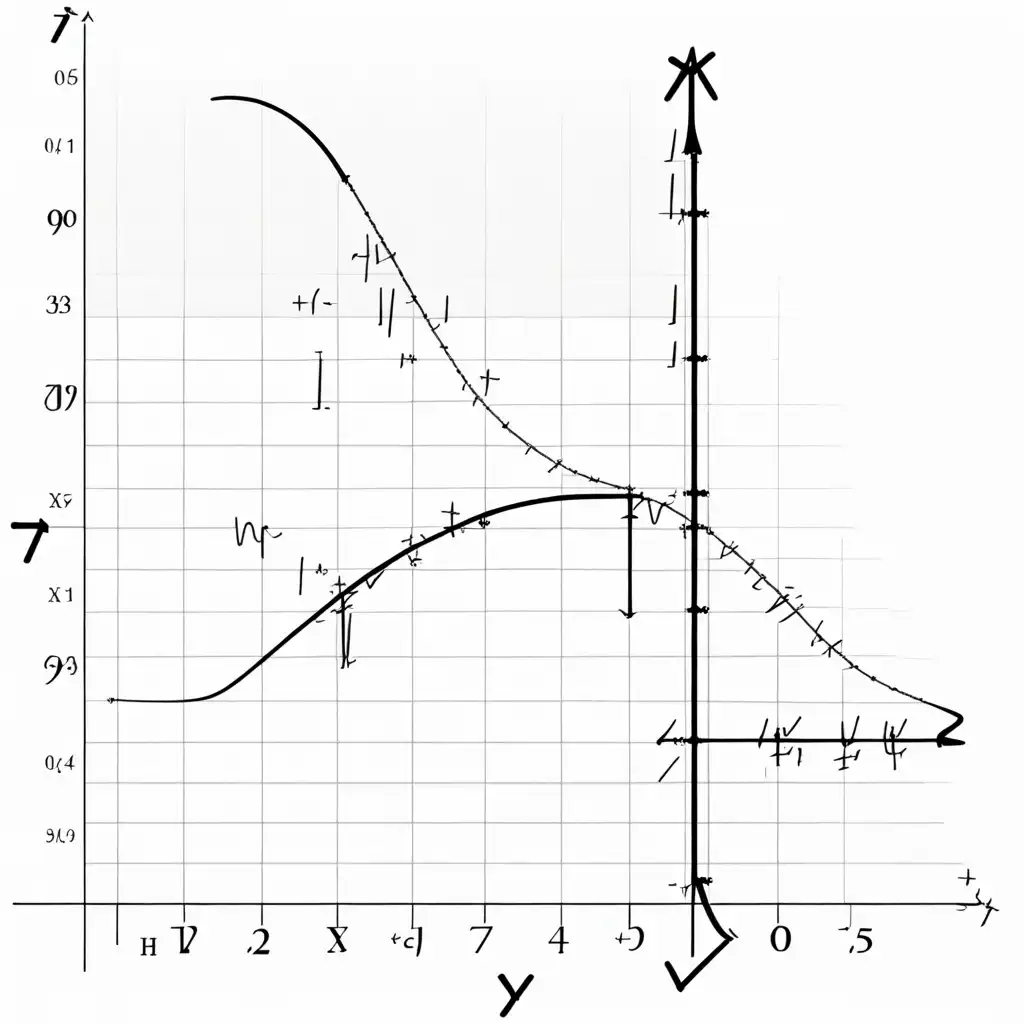
Not smooth or continuous in transition.
A discontinuous function has points where the value jumps suddenly.
ˌdɪskənˈtɪnjuəs
Occurring or existing at distinct or separate times.
His discontinuous attendance at school has hindered his learning.
音声を読み込めませんでした。しばらくしてからもう一度お試しください。
The word 'discontinuous' means that something is not happening in a continuous or uninterrupted way. For example, if you are talking about a process that stops and starts frequently, you could say that it is discontinuous. This word can also be used to describe things that are not connected to each other or are not in a smooth sequence. So, if you are talking about a set of numbers that do not follow a pattern or are not in order, you could say that they are discontinuous. Essentially, the word 'discontinuous' is used to describe something that is not smooth or continuous in some way.
Disconnect refers to breaking a connection or a link between two things or people.
It can be used in situations where there is a physical or emotional separation between two entities. For example, unplugging a cable from a device disconnects it from the network, or ending a relationship may emotionally disconnect two people.
Both words relate to a break or a gap, but disconnect pertains to a connection being severed, while discontinuous pertains to a sequence being interrupted.
単語を開く: Disconnect →Discontinuous means having interruptions or gaps in between, while disjointed means lacking coherence or connection.
A disjointed sentence is a sentence that does not flow or make sense, the words or ideas are not connected.
Discontinuous is applicable to something that has physical or temporal gaps, such as a discontinuous line, while disjointed is applicable to things that lack coherence or connection, such as disjointed ideas or a disjointed sentence.
単語を開く: Disjointed →Disorganized refers to something that is messy or chaotic. For example, a messy room with clothes everywhere would be disorganized.
Both words describe something that is not continuous or organized, but they are used in different contexts. Discontinuous is more appropriate for describing something that is broken up into parts, while Disorganized is more appropriate for describing something that is messy or chaotic.
単語を開く: Disorganized →Fragment means a small piece or part of something that has been broken or split off from the whole.
So, while both words relate to things that are broken or incomplete, discontinuous implies that there are gaps or interruptions between separate pieces, while fragment implies that there's a single larger whole that's been broken into smaller pieces.
If you take a glass bottle and smash it into tiny pieces, you'd end up with fragments of glass.
単語を開く: Fragment →The words discontinuous and incoherent both describe something that doesn't make sense or lacks a logical connection, but they are used in different contexts.
Incoherent refers to something that is not logically connected and is therefore difficult to understand.
For example, a speech or paragraph that jumps around from topic to topic and doesn't have a clear central point may be described as incoherent.
Discontinuous describes something with gaps, while incoherent describes something that lacks logical connection.
単語を開く: Incoherent →Intermittent means something that happens at irregular intervals or periodic pauses between repeated instances.
For example, an intermittent rainfall would be one that starts and stops randomly.
In simpler terms, discontinuous means something is not consistently continuous, while intermittent refers to something that happens irregularly.
単語を開く: Intermittent →Patchy means not consistent or uneven across an area or surface.
It is often used to describe something that has irregular or inconsistent patches or sections. For example, a lawn that has some areas of lush green grass and some areas of dry brown grass is patchy because it is not consistent throughout the entire lawn.
Discontinuous refers to a complete break or interruption while patchy refers to irregular or inconsistent areas within a surface or area.
単語を開く: Patchy →Discontinuous means interrupted or not continuous, while sporadic means occurring at irregular intervals or scattered.
Sporadic describes something that happens irregularly or infrequently. For example, if you only see your grandmother a few times a year, you could say you have a sporadic relationship with her.
Discontinuous refers to something that is interrupted, while sporadic refers to something that is irregular or occasional.
単語を開く: Sporadic →What COVID-19 means for...
YouTube で見る ↗Life for the unwell is discontinuous and unpredictable. Things just come out of nowhere. People try but mostly do a lousy job of taking care of you.
Pirate Ship Wreck...
YouTube で見る ↗Classical - perhaps I should say 'orchestral' - music is so digital, so cut up, rhythmically, pitchwise and in terms of the roles of the musicians. It's all in little boxes. The reason you get child prodigies in chess, arithmetic, and classical composition is that they are all worlds of discontinuous, parceled-up possibilities.
In relativity, movement is continuous, causally determinate and well defined, while in quantum mechanics it is discontinuous, not causally determinate and not well defined.