earthwork
noun earthwork
ˈɜːrθwɜːrk
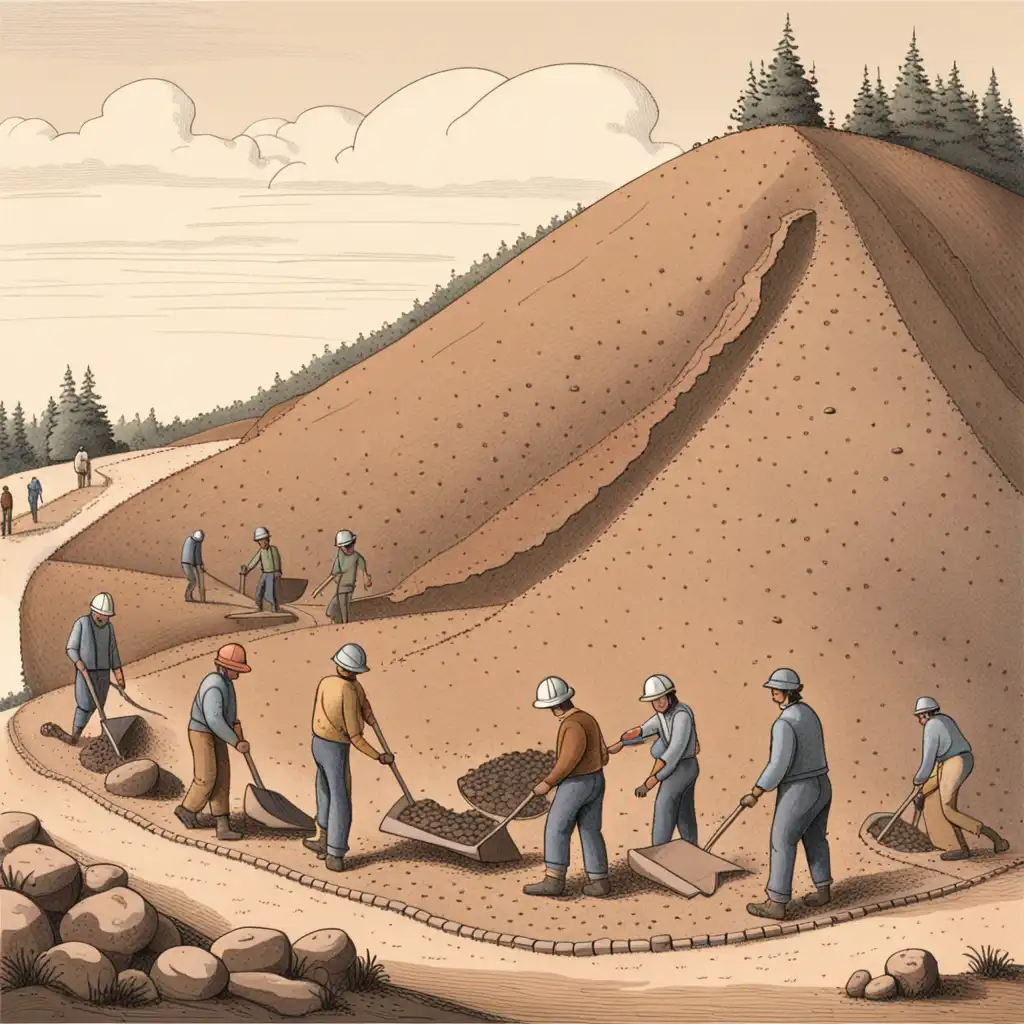
A large artificial mound or hill made from piles of soil or rock
The workers are constructing an earthwork for the new road.
earthwork
ˈɜːrθwɜːrk
読み込み中…
ˈɜːrθwɜːrk
A large artificial mound or hill made from piles of soil or rock
The workers are constructing an earthwork for the new road.
ˈɜːrθwɜːrk
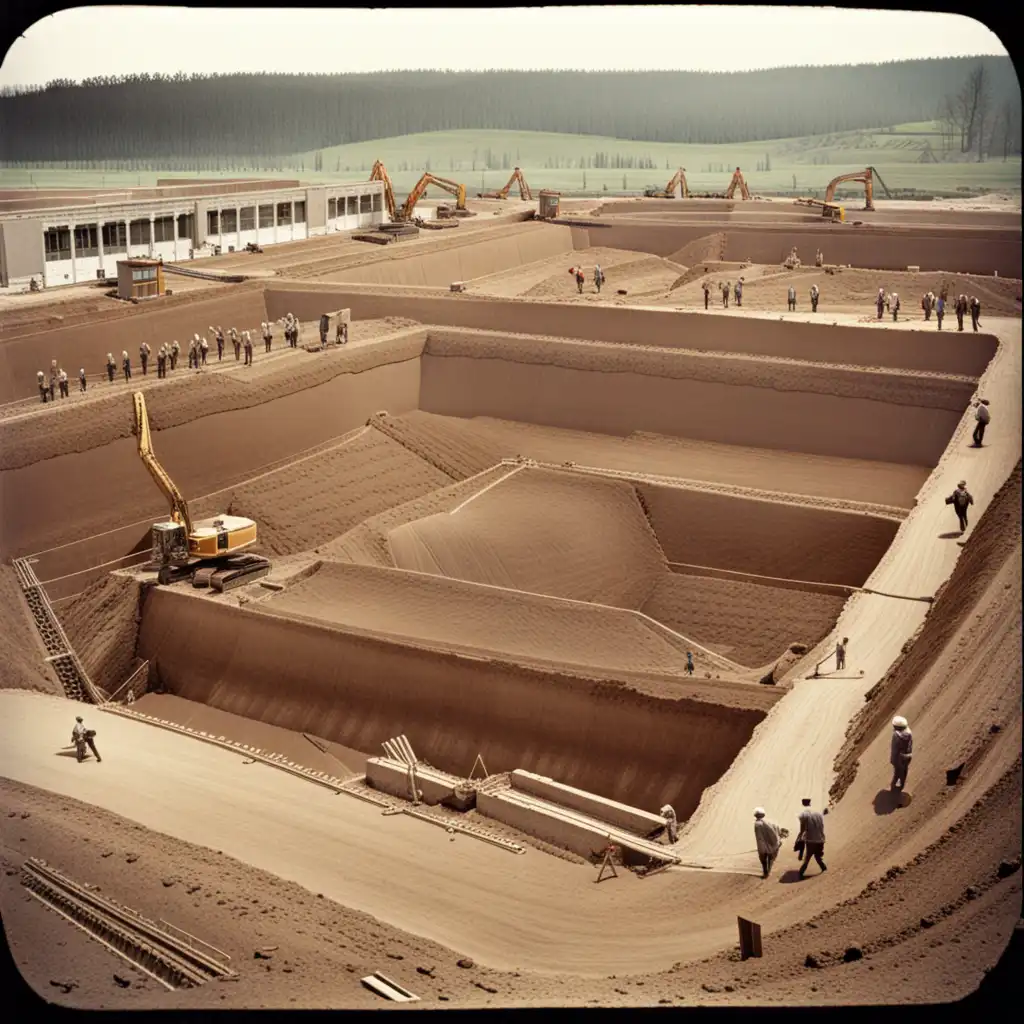
The process or activity of digging the earth and moving it to make a structure
The construction site began with earthwork before laying the foundation.
音声を読み込めませんでした。しばらくしてからもう一度お試しください。
Earthwork is a word commonly used in the construction industry to refer to any work done on the ground that involves digging, moving or shaping soil and rocks. Earthworks can be used to build roads, dams, and buildings, usually involving heavy machinery like bulldozers, excavators and cranes. The word is also used in archaeology to describe the construction work humans did with the earth in ancient times, such as the building of mounds and trenches for defense or religious purposes. Overall, earthwork refers to any activity related to the reshaping or modification of the earth's surface.
A barricade is an obstacle that is created to block or prevent access to something, typically made of materials like wood, concrete, or metal.
It is used to prevent people or vehicles from passing through a certain area. For example, during a protest, protesters might put up barricades to prevent police from entering certain streets.
A barricade is a physical barrier used to stop people, while an earthwork is a defensive structure made of earth or other materials.
単語を開く: Barricade →A bulwark is a defensive barrier, typically made of concrete or stone, that is used to protect against attacks from enemies, such as a fortress or a wall on a ship.
A bulwark is a man-made fortification that is designed to withstand attacks from all sides, while an earthwork is more of a makeshift fortification that is built quickly and can be easily modified or dismantled as needed.
A bulwark is usually permanent, while an earthwork is often temporary and may be abandoned after a battle or war.
単語を開く: Bulwark →Dyke describes a wall or barrier used to hold back water or prevent flooding. It is commonly used to refer to man-made barriers that are built along riverbanks or coasts.
Generally speaking, dyke is used in the context of water management, while earthwork can refer to a broad range of construction or landscapting activities.
単語を開く: Dyke →An embankment refers specifically to a raised mound or bank of earth that is constructed to support a road, railroad, or other type of infrastructure.
The embankment is typically sloped to prevent erosion and can be used to support the weight of the structure above it. Embankments are commonly employed in transportation projects, such as highway construction or railway development.
So essentially, earthwork is a broad term that encompasses any activity that involves moving or altering large amounts of earth, while an embankment is a specific form of earthwork that is used to construct raised slopes to support infrastructure.
単語を開く: Embankment →Earthworks and mounds are both piles of earth, but they have different meanings.
A mound is a type of earthwork that is specifically built up into a high, rounded shape. Mounds are often made from a combination of earth, stone, and other materials, and they can be found in many different cultures and time periods around the world.
Mounds have been used for many different purposes, such as burial sites, ceremonial sites, observation points, or defensive positions.
So, in summary, earthworks are any kind of structure built from earth, while mounds are specific types of earthworks that are built up into rounded shapes.
単語を開く: Mound →A rampart is a defensive wall or embankment built for protection.
A rampart is usually higher and more substantial than an earthwork and has a specific purpose in protecting against danger or enemies.
An earthwork is a man-made structure constructed of earth, while a rampart is a defensive wall or embankment built for protection.
Earthworks are typically used for landscaping or military fortification where ramparts are built as a defense against an enemy in military situations.
単語を開く: Rampart →A terrace is a leveled section of a hill or slope that is used for farming or gardening. The slope is turned into a series of flat levels with raised earth walls.
Terraces prevent soil erosion, making it possible to grow crops on steep land. They are also used for decorative purposes in landscaping.
In simpler terms, earthwork is used to reshape the land for building or transportation purposes, while terraces are used to create flat spaces for gardening or agriculture on a hill or slope.
単語を開く: Terrace →Trenches are narrow and deep excavations in the ground usually used for burial, drainage, or military fortification. They are often dug in a straight line and can be used for hiding in or for protection from enemy fire.
Earthwork is applicable in construction projects such as roads, dams, and buildings while trenches are useful in military and civil engineering works where underground drainage or passage of utilities, like pipes or electrical cables, are necessary.
単語を開く: Trench →A Soldier's Script %\PIPE% Nat...
YouTube で見る ↗