detonator
noun detonator
ˈdetəneɪtər
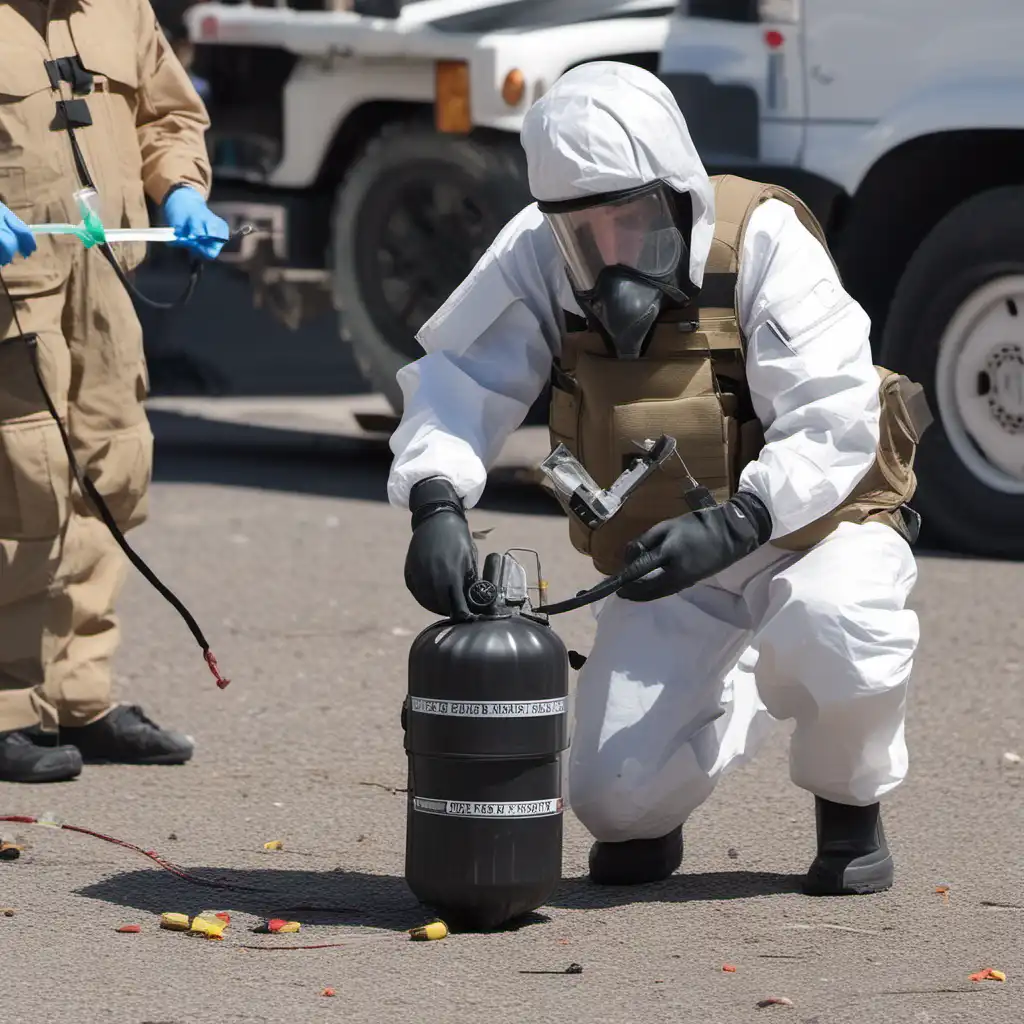
A device or substance that is used to cause an explosive to explode.
The bomb squad carefully removed the detonator from the explosive device.
detonator
ˈdetəneɪtər
Chargement…
ˈdetəneɪtər
A device or substance that is used to cause an explosive to explode.
The bomb squad carefully removed the detonator from the explosive device.
Impossible de charger l’audio. Réessayez plus tard.
A detonator is something that sets off an explosion. It is usually used when talking about explosives like dynamite or bombs. It is important to handle detonators carefully and only use them in safe and appropriate situations, such as in mining or construction. It is not a word that is commonly used in everyday conversation.
Blast refers to an explosion or a powerful burst of air or sound that can be caused by an explosive device or a strong wind.
A blast is a result of an explosion while a detonator is a device used to cause an explosion.
Ouvrir le mot: Blast →An explosive is a substance that can generate a lot of energy in a short amount of time, causing a violent release of gases and heat.
A detonator is a device that starts the reaction of an explosive by providing a spark or shockwave.
It is used to initiate the explosion of the explosive.
An explosive is the substance that explodes, while a detonator is the device that triggers the explosion.
Ouvrir le mot: Explosive →A firework is a device that produces a display of colored light or smoke, or sometimes noise, and is mainly used for celebrations or entertainment purposes.
A detonator is a device that triggers an explosion, while a firework is a device that creates visual or audible entertainment.
Detonators are used in controlled environments like construction sites or military bases, while fireworks are used for celebrations like the 4th of July or New Year's Eve.
Ouvrir le mot: Firework →A fuse is a long, thin, flexible piece of wire or cord that burns slowly when set on fire.
It is used to ignite explosives, fireworks or other combustible materials. Fuses are common in household appliances like fuses that control the amount of electrical energy that flows in them.
A detonator is used to initiate a controlled explosion or blasting, while a fuse is used to ignite and control the burning of materials like fireworks or fuses in electrical appliances.
Ouvrir le mot: Fuse →A detonator is a device used to set off an explosion, usually in explosives like dynamite. An initiator is a much smaller device that is used to start a chain reaction that leads to an explosion, often in military applications like missiles or bombs.
In simpler terms, a detonator is like the "big button" that sets off a bomb, while an initiator is like the "little button" that starts the process that leads to the explosion.
Ouvrir le mot: Initiator →A primer is a small explosive charge that is used to ignite a larger explosive charge.
It is often used as the first stage in a sequence of explosions. Primers are commonly used in ammunition, where the primer is used to ignite the gunpowder or other explosive material inside the bullet casing.
In simpler terms, a detonator is used to set off a big explosion, while a primer is used to start a smaller explosion that leads to a bigger one.
Ouvrir le mot: Primer →A detonator is a device that is capable of setting off an explosive material such as dynamite, while a squib is a small explosive device used in practical effects in movies and stage performances to simulate gunfire or other explosions.
On the other hand, squibs are mostly used in entertainment industries to create visual and audio effects.
The primary difference between detonators and squibs is their application; detonators are used to set off explosives in heavy industries, while squibs are primarily used for special effects in movies and stage performances.
Ouvrir le mot: Squib →because whether he knew it or not, as soon as he decided to use his cell phone, he stepped into the realm of cyber. A well-crafted cyber attack could break into his phone, disable the overvoltage protections on his battery, drastically overload the circuit, cause the battery to overheat and explode. No more phone no more detonator,
Voir sur YouTube ↗In all the writers I admire, the common detonator is their courage to walk naked.
stuff richard gage disagrees with Blanchard's conclusion it's a different kind of detonation they would not leave detonator cords and devices as they do in traditional more economical detonations this is this is a very different kind of operation there's a
Voir sur YouTube ↗I always think the relationship between a teacher and a student should be short and maybe violent. You don't need to spend years together. All you need is an explosion: you are the material to explode; the teacher is the detonator.