vaccine
noun vaccine
vækˈsiːn
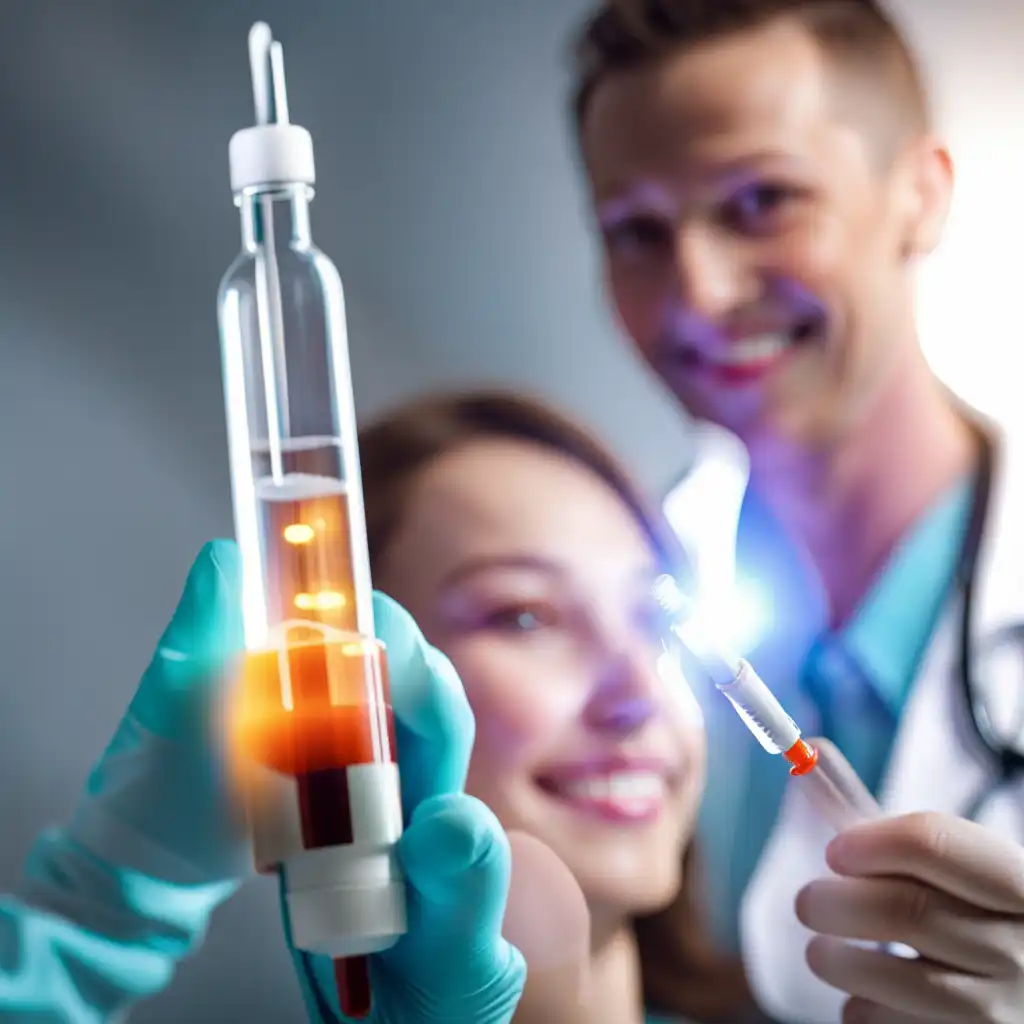
A substance given to people to protect them from a certain disease.
The flu vaccine is given once a year.
vaccine
vækˈsiːn
Đang tải…
vækˈsiːn
A substance given to people to protect them from a certain disease.
The flu vaccine is given once a year.
Không tải được âm thanh. Vui lòng thử lại sau.
A vaccine is a medicine that helps to protect you from getting sick. It works by tricking your body into thinking that it has already fought off a disease, so that it is better prepared to fight it off for real if you are exposed to it in the future. Vaccines are usually given as injections or as drops or sprays that you put in your mouth, and they are most often used to prevent diseases like measles, chickenpox, or the flu. It's important to get vaccinated to stay healthy and avoid getting sick.
A dose refers to the amount of medicine or a drug that a person is supposed to take at one time. For example, if a doctor prescribes a medication, they may say to take one tablet, or one dose, three times a day.
A dose can refer to any type of medication, including vaccines.
So while a dose may refer to any type of medication, a vaccine specifically refers to a type of medicine that helps protect against a specific disease.
When someone receives a vaccine, they may receive multiple doses over a certain period of time in order to ensure that they develop full immunity to the disease.
Mở từ: Dose →An injection is a general term used for administering medication or a substance into the body through a needle or a syringe.
A vaccine is a type of injection that is used to prevent specific illnesses or diseases. Vaccines contain a small amount of a virus or bacteria that have been weakened or killed, or parts of the germ that trigger an immune response in the body.
So, injections are a general term for any medication that is administered by a needle, while vaccines are a specific kind of injection used to protect against infectious diseases.
Mở từ: Injection →Inoculate means to introduce a small amount of a disease into a person's body in order to make them immune to that disease.
Both inoculation and vaccination can protect people from diseases, but a vaccine is a safer and more effective way to do so.
Inoculation is an older technique, and vaccines have largely replaced it as a means of preventing disease. Vaccines are applicable in preventing diseases that can be severe or life-threatening, such as measles, mumps, and polio.
Inoculation, while still sometimes used, is generally only used in limited cases, such as for specific types of diseases where a vaccine is not available.
Both inoculation and vaccination are important tools for preventing the spread of disease and ensuring that people can stay healthy.
Mở từ: Inoculate →Preventive refers to measures taken to avoid or stop something from happening. This can include lifestyle changes like eating a healthy diet or exercise, using protective equipment like helmets, or avoiding risky activities altogether.
A vaccine is a specific type of preventive measure that involves introducing a small amount of a virus or bacteria into the body to stimulate the immune system and produce immunity to the disease.
Preventive is a broad category of actions taken to prevent something from happening, while a vaccine is a specific type of preventive measure that involves stimulating the immune system to produce immunity to a particular disease.
Mở từ: Preventive →A prophylactic is something that is used to prevent a disease or infection from occurring. For example, using a condom can act as a prophylactic against sexually transmitted infections.
A vaccine is a specific type of prophylactic that is designed to help your body build up immunity to a specific infection or disease.
Both prophylactics and vaccines can be used against infectious diseases, but vaccines are a specific type of prophylactic that is designed to provide long-term protection against a specific disease.
Mở từ: Prophylactic →Serum refers to a type of liquid that contains antibodies, which are proteins made by the body to fight off infections.
A serum is like a treatment for a specific disease or infection.
Serum is used to treat an existing illness, while a vaccine is used to prevent illness.
Mở từ: Serum →Shoot and vaccine are two different words with different meanings.
Shoot refers to the act of firing a gun or a weapon, and it is commonly used in the context of hunting, sports, or self-defense.
So, while shoot is applicable in situations involving guns or weapons, vaccine is applicable in situations related to medical treatment and disease prevention.
Mở từ: Shoot →Toxins are harmful substances produced by living organisms (such as bacteria, fungi, and plants) that can cause damage to cells, tissues, and organs.
Exposure to toxins can result in illness or even death.
Toxins are applicable in situations where harmful substances need to be identified and avoided, while vaccines are applicable in situations where diseases need to be prevented.
To put it another way, toxins are negative things to be avoided, while vaccines are positive things that help protect against diseases.
Mở từ: Toxin →with a hunch that this would provide the protection needed to save people from deadly outbreaks of the related smallpox virus. It was a success. The eight-year-old was inoculated against the disease and this became the first ever vaccine. But why did it work?
Xem trên YouTube ↗Vaccines are safe, effective, and lifesaving.
to get information from the public and get information out to them. We have satellite maps where we can see where people are and where they're moving. We have advances in biology that should dramatically change the turnaround time to look at a pathogen and be able to make drugs and vaccines that fit for that pathogen. So we can have tools,
Xem trên YouTube ↗If only there was a vaccine to protect against breast cancer, we'd be lining up - wouldn't we?
why is it that this conventional wisdom that the only good bat is a dead bat isn't actually doing its purpose. So one of the most I think innovative and exciting ideas we've had in the last really six months is whether we can replace the poison that's used in the vampiricide with an oral rabies vaccine.
Xem trên YouTube ↗The simple truth is, the short-term solution is for the FDA to allow more importation of safe vaccines from other nations. But the long-term solution is to get more vaccine production within the U.S.
experience as a keeper to good use starting at the cheetah enclosure we'll take the animals they'll go in the corridor and put them into a squeeze cage and then if you can help us we'll give them a cat flu vaccine a rabies jab
Xem trên YouTube ↗The greatest grand challenge for any scientist is discovering how to prevent the spread of HIV and finding the cure or an effective vaccine for AIDS.
about it so no one came with vaccines or with medicine that was twenty years ago but millions of millions of people around the world are still uncounted like this if you believe like I do that every life counts then you can't do very
Xem trên YouTube ↗Vaccines are extremely cost-effective, giving kids a healthy start in life and supporting the economic and educational foundations of entire communities. They directly lead to a healthy workforce, which is so critical to long-term development and prosperity in all countries.
even without a lab test. The lack of such practical diagnostic tools for diseases with non-specific symptoms or that have long incubation periods, such as AIDS makes their eradication more difficult. Third the availability of a smallpox vaccine
Xem trên YouTube ↗I think that the discoveries of antibiotics and vaccines have contributed to the improvement of the quality of life, making it possible to prevent contagious diseases.
their anti-drying technique, to survive other stresses. If we can understand how they and other creatures, stabilize their sensitive biological molecules, perhaps we could apply this knowledge to help us stabilize vaccines,
Xem trên YouTube ↗If you have a vaccine or an antidote that people can benefit from, you're not going to want to keep it to yourself. You're going to want to spread that wisdom or whatever to as many people as you can, so everybody can benefit from it.
Other scientists are investigating alternate solutions, such as phage therapy or using vaccines to prevent infections. Most importantly curbing the excessive and unnecessary use of antibiotics, such as for minor infections that can resolve on their own, as well as changing medical practice to prevent hospital infections,
Xem trên YouTube ↗We continue to recommend flu vaccine as the single best way to protect yourself against the flu. The vaccine will protect against strains covered in the vaccine, and it may have some effectiveness in the drifted strains.
is no more risky than older methods of genetic modification. These are precisely the same organizations that most of us trust when it comes to other important scientific issues such as global climate change or the safety of vaccines.
Xem trên YouTube ↗Although it is still important to develop an HIV vaccine, we have significant tools already at our disposal that can make a major impact on the trajectory of this epidemic.
whose study of microorganisms led to the development of the first vaccines. By challenging assumptions with data-driven research, these scientists discredited an age-old theory and sparked a revolution that was incredibly beneficial to public health. But all of this raises the question,
Xem trên YouTube ↗I view receiving the COVID-19 vaccine as part of my obligation to protect myself, members of my administration, and my family.