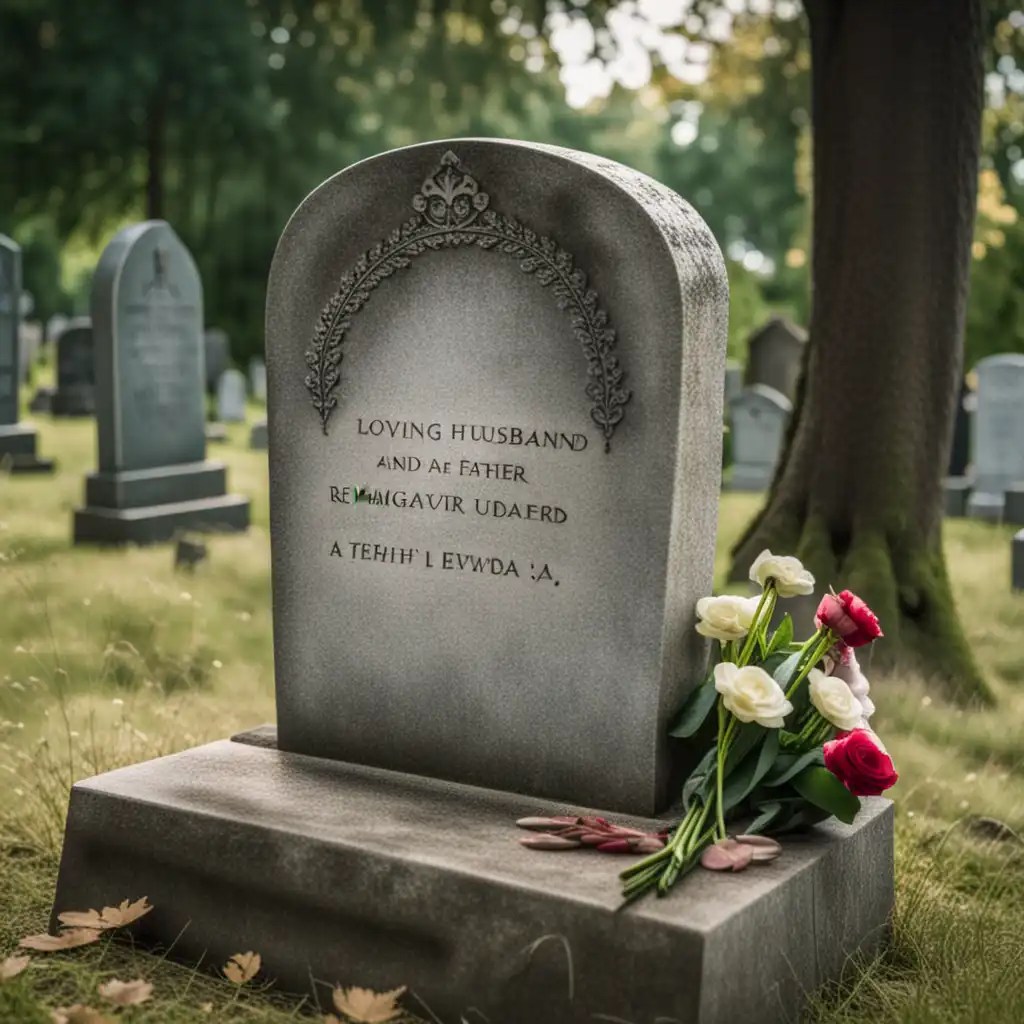
epitaph
noun epitaph
ˈepɪtæf
A message written on a tomb or gravestone in memory of the person buried there
His epitaph reads, 'Loving husband and father.'
epitaph
ˈepɪtæf
読み込み中…
ˈepɪtæf
A message written on a tomb or gravestone in memory of the person buried there
His epitaph reads, 'Loving husband and father.'
ˈepɪtæf
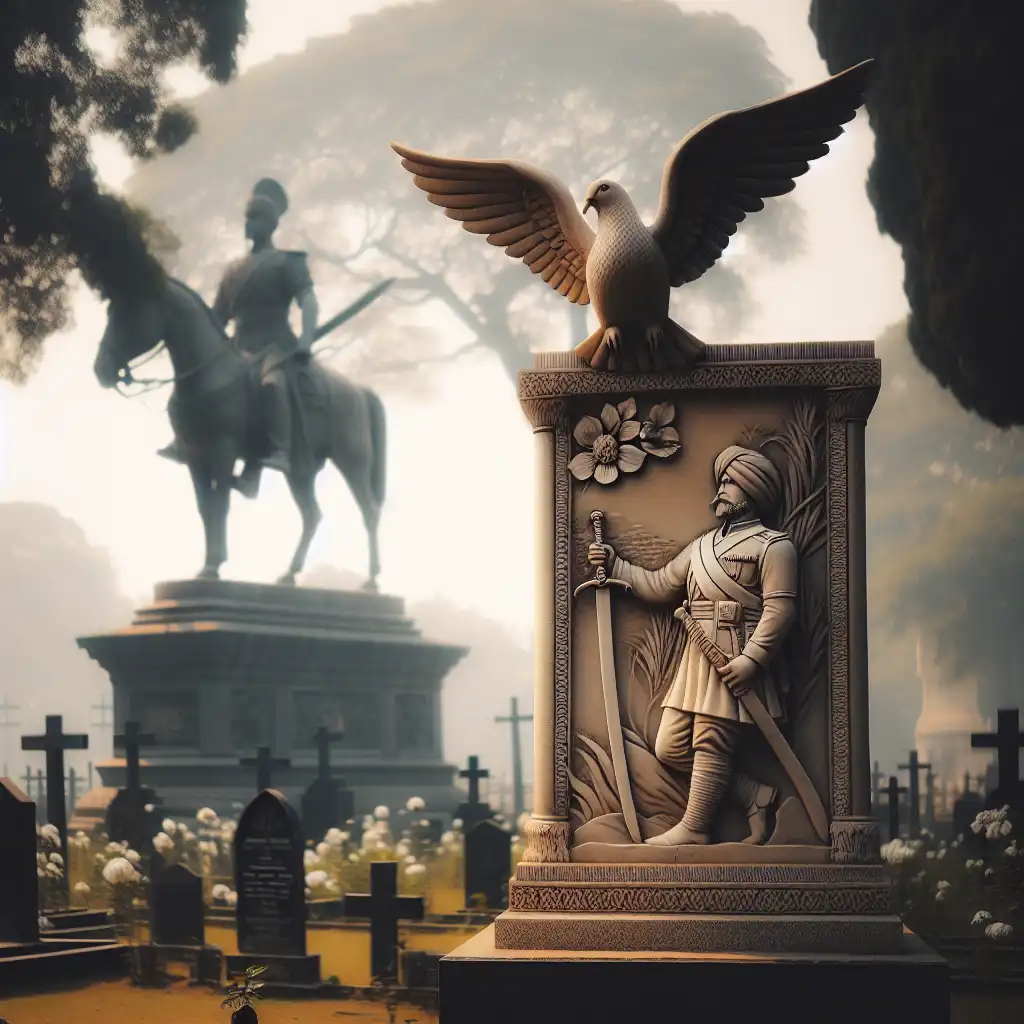
A phrase or statement that represents someone or something, especially someone who has died or something that has ended
His brave actions against the enemy became his epitaph.
音声を読み込めませんでした。しばらくしてからもう一度お試しください。
The word 'epitaph' refers to a short piece of writing on a tombstone or a grave marker that honors or remembers a person who has died. It is usually a sentence or a few lines long, and it often includes the person's name, dates of birth and death, and a few words that describe their life, accomplishments or character. In a broader sense, the word can also refer to any written tribute or memorial about someone who has passed away, such as a poem, a speech or a song. It is typically used in the context of death and funerals, and it is a way for people to express their love, respect or admiration for someone who has died.
Commemorate means to remember or honor a person or event in a ceremonial or public way, often through the creation of a monument or celebration.
Commemorate is used when we want to remember or honor an event or person through a special ceremony, monument or celebration.
単語を開く: Commemorate →A eulogy is a speech or piece of writing that is given at a funeral or memorial service to honor and praise the deceased person.
The main difference is that an epitaph is a brief inscription on a grave marker, while a eulogy is a longer speech or piece of writing given at a funeral or memorial service.
単語を開く: Eulogy →An epitaph is the inscription on a gravestone or a small plaque that is used to honor a deceased person. It could be a quote or a saying that signifies the person's life or some memorable event in their life.
A gravestone is a stone marker that is placed over a grave as a memorial. It usually contains the person's name, date of birth, and death, and any other significant details.
A gravestone is a physical object placed on a grave to mark the location, while an epitaph is a commemorative message or quote inscribed on the gravestone or a plaque.
単語を開く: Gravestone →An inscription is a piece of writing that is carved or written on a building, monument or object, such as a plaque, statue, coin or medal.
Inscriptions can include names, dates, phrases, symbols or quotes. They can be used to mark historical events, commemorate important people or deeds, or convey a message or meaning.
Inscriptions are more versatile than epitaphs as they can be used to mark anything that needs to be remembered or celebrated.
In summary, epitaphs are used on tombstones and memorials, while inscriptions are used on a variety of objects and monuments.
単語を開く: Inscription →A memorial is a physical or symbolic structure or object built to honor and remember a person or event.
An epitaph is applicable to a tombstone or grave marker, while a memorial is applicable to a public space or building. Both are ways to remember and pay tribute to someone who has passed away.
単語を開く: Memorial →Remembrance is the act of remembering someone or something. It involves recalling memories, experiences, and emotions associated with that person or thing.
Epitaph is applicable to the cemetery or burial site, while remembrance is applicable in everyday life when we recall memories of a loved one.
単語を開く: Remembrance →An epitaph is a phrase or piece of writing that is inscribed on a tombstone or monument to honor the person buried there.
A tombstone is a physical object that marks the location of a person's grave. It may include the person's name, dates of birth and death, and other information, but does not necessarily include an epitaph.
A tombstone is applicable specifically as a physical marker for a grave.
Thus, while both terms relate to grave sites, an epitaph is a piece of writing that is inscribed on a tombstone or monument, while a tombstone is the physical marker itself.
単語を開く: Tombstone →A tribute is an act or statement that honors someone as a way of showing admiration, gratitude, or respect.
An epitaph is applicable to a deceased person's tombstone or memorial, while a tribute can be applicable to a living or deceased person in any form of expression or acknowledgment.
単語を開く: Tribute →no symptoms to make matters worse the government doesn't seem to be doing much to help find a cure I came here today in the hope that my epitaph would that read that I died of red tape but there's no delay at school
YouTube で見る ↗The rarest quality in an epitaph is truth.
Now we're talking the potential for real change. But it's never going to happen by forcing these organizations to lower their horizons to the demoralizing objective of keeping their overhead low. Our generation does not want its epitaph to read,
YouTube で見る ↗And were an epitaph to be my story I'd have a short one ready for my own. I would have written of me on my stone: I had a lover's quarrel with the world.
Let no man write my epitaph... When my country takes her place among the nations of the earth, then shall my character be vindicated, then may my epitaph be written.
Those who say that life is worth living at any cost have already written an epitaph of infamy, for there is no cause and no person that they will not betray to stay alive.
It's not an epitaph. I felt I could look back at my life and get a good story out of it. It's a picture of somebody trying to figure things out. I'm not trying to create some impression about myself. That doesn't interest me.
One of the lines from my books is about having respect for different minds, and if I had to have an epitaph at this point in my life, that would be it.
We need to make sure that the Voyager probes carrying a record of human civilization speeding beyond our solar system remain an introduction to the world that sent them and not an epitaph for a civilization that caused its own ruin.
Wit is the epitaph of an emotion.
I always thought I'd like my own tombstone to be blank. No epitaph, and no name. Well, actually, I'd like it to say 'figment.
I haven't written my own epitaph, and I'm not sure I should. Whatever it is, I hope it will be simple, and that it will point people not to me, but to the One I served.