
colossus
noun colossus
kəˈlɑːsəs
A very large or important thing or person.
The shopping mall is a colossus of consumer culture.
colossus
kəˈlɑːsəs
불러오는 중…
kəˈlɑːsəs
A very large or important thing or person.
The shopping mall is a colossus of consumer culture.
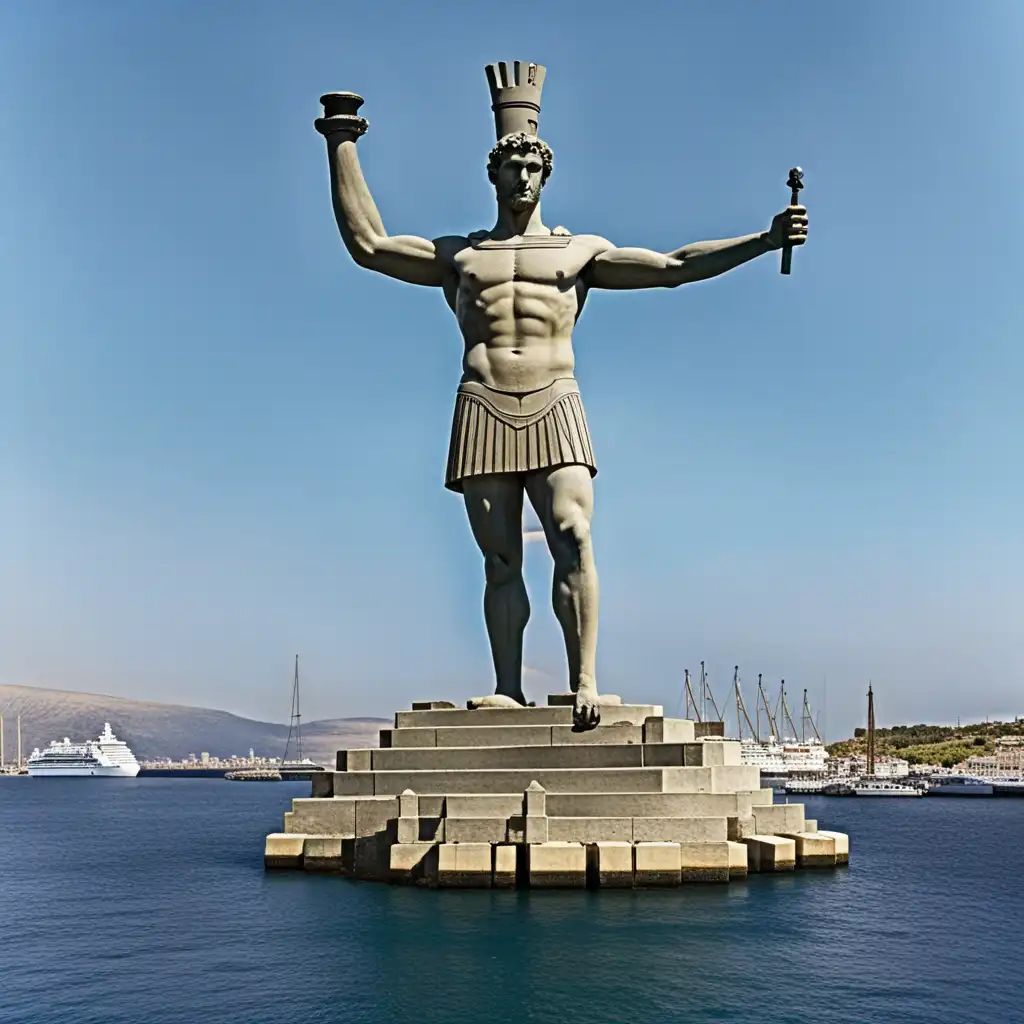
kəˈlɑːsəs
An ancient Greek statue which was very big.
The Colossus of Rhodes is one of the Seven Wonders of the Ancient World.
오디오를 불러오지 못했어요. 잠시 후 다시 시도해 주세요.
'Colossus' is a word used to describe something that is very big, huge, or massive in size. It can be used to describe a person or an object that is very impressive due to its size. For example, "The Colossus of Rhodes was a huge statue in ancient Greece" or "The new skyscraper in the city is a colossus of modern architecture". It is not a word that is commonly used in everyday conversations, but it can be used to create a vivid description of something that is amazingly large.
The words behemoth and colossus both mean something that is big or huge.
However, behemoth is used to refer to something that is unusually large or powerful, while colossus describes something that is monumental or impressive.
Behemoth is applicable for describing things like giant animals or machines, while colossus is often used to describe statues or buildings that are very grand and imposing.
단어 열기: Behemoth →Giant also refers to something that is very large, but it is more commonly used to describe a living creature or a mythical character.
Giants are often portrayed as being larger than life and possessing immense strength. For example, the story of 'Jack and the Beanstalk' features a giant who lives in the clouds and has magical powers.
Colossus describes something huge and impressive, while giant describes a large living or mythical creature.
단어 열기: Giant →Huge simply means something that is very large in size.
You would use the word huge to describe things like a big, hearty meal, or perhaps a really large animal like an elephant.
Colossus implies both size and strength/impressiveness, while huge just speaks to size alone.
단어 열기: Huge →Both colossus and juggernaut generally refer to something huge, powerful, and unstoppable.
However, colossus carries more of a connotation of sheer size and grandeur, while juggernaut suggests more of an overwhelming force or influence.
You might use juggernaut to describe a political or cultural movement that seems to be gaining momentum faster than anyone can stop it, such as a social media trend or a political party gaining widespread support.
Colossus tends to describe physical objects or structures, while juggernaut conveys a sense of unstoppable momentum or power, even if the subject isn't necessarily tangible.
단어 열기: Juggernaut →Both colossus and leviathan refer to something that is huge and impressive, but they differ slightly in their connotations and usage.
Leviathan also refers to something large and impressive, but the term has a more dynamic and sometimes ominous connotation.
Originally, leviathan was a sea monster from Jewish mythology that symbolized chaos and destruction. Today, the term is often used to describe something that is massive, uncontrollable or dangerous.
For example, a massive hurricane or earthquake might be described as a leviathan, as might a government or corporation that exercises great power over people's lives.
Colossus is often applied to indicate something that is impressive, stable and strong, while leviathan implies something that is massive and powerful, yet with an element of danger or unpredictability.
단어 열기: Leviathan →Colossus typically refers to a giant statue or monument, often representing a renowned or powerful historical figure. Meanwhile, the term mammoth generally refers to a prehistoric species of elephant-like animals that are extinct.
Mammoth can also describe something that is surprisingly large or significant. Colossus is more applicable when talking about history, art or architecture while mammoth is more suited when describing something that is impressively large.
단어 열기: Mammoth →Colossus and monster are both words used to describe something of immense size, but they have slightly different connotations.
Monster often evokes a more negative connotation.
This word suggests something that is not only large, but is also menacing or terrifying in some way. For example, one might call a giant sea creature or a horrifying creature from a horror movie a "monster.".
Colossus is a more positive term that suggests greatness and importance, while monster is a more negative term that suggests something dangerous or frightening.
단어 열기: Monster →Both colossus and titan refer to something very large or powerful.
However, colossus generally refers to a statue or monument that is enormous in size, often depicted as a human figure, while titan refers to a figure from Greek mythology who is known for their colossal strength and power.
Colossus is applicable when discussing physical objects, while titan is often used in a metaphorical sense to describe a person or thing that is powerful and dominant.
단어 열기: Titan →Depression the secret...
YouTube에서 보기 ↗Bruckner's Eighth is a colossus.
"New Colossus" by Emma...
YouTube에서 보기 ↗Some anti-Americanism derives simply from our being a colossus that bestrides the earth. But much anti-Americanism derives from the role U.S. political, economic and military power has played in denying such freedoms to others.
Sewer Diver Loves His...
YouTube에서 보기 ↗My head is in India, yet my body remains in Britain. I straddle the world like a colossus. Like a 5ft. 7in. colossus.
Top 5 Animal Superpowers!...
YouTube에서 보기 ↗It's easy to grow 300% in your first year or two, when you're starting with nothing and people first hear about your service. What separates a potential colossus from other businesses is the capacity to keep growing at that rate in years four, five, and beyond.
Coach Amodu without question is a colossus and football icon and has over the years made meaningful contribution to Nigerian football both at club and international levels.
I grew up mainly in the Far East, where my father worked for the Hong Kong and Shanghai Bank, which was then a small, well-run colonial institution and not the global colossus it is today.