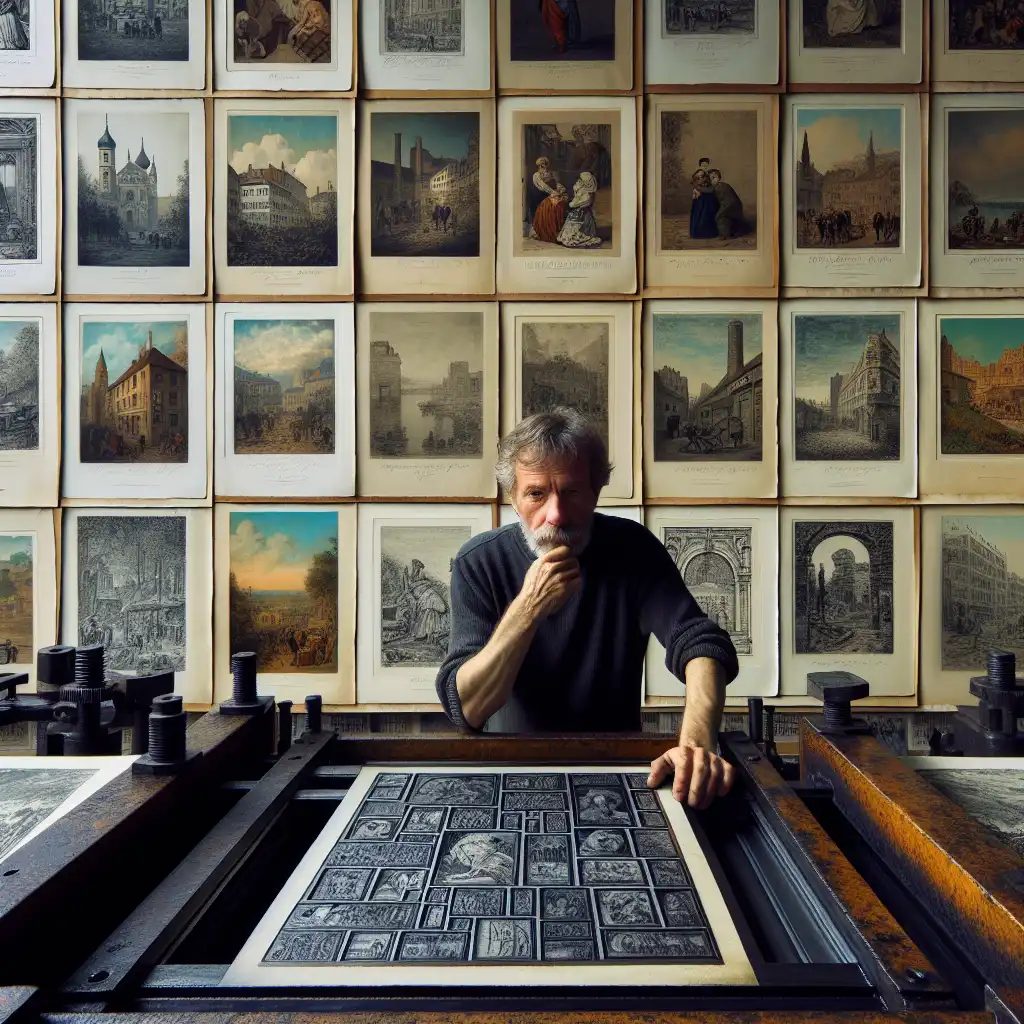
lithographic
adjective lithographic
ˌlɪθəˈɡræfɪk
related to, produced by, or involving lithography, which is a method of printing from a flat surface
They had a collection of lithographic prints from the 19th century.
lithographic
ˌlɪθəˈɡræfɪk
Loading…
ˌlɪθəˈɡræfɪk
related to, produced by, or involving lithography, which is a method of printing from a flat surface
They had a collection of lithographic prints from the 19th century.

ˌlɪθəˈɡræfɪk
description of an artwork or graphic work produced by lithography
The museum showcased lithographic art from various artists around the world.
Audio could not be loaded. Please try again later.
The word 'lithographic' refers to the process of printing images or designs on paper, metal, or other materials using a special kind of press. This process involves using a flat stone or metal plate to create a pattern or design, which is then transferred onto the surface of the material being printed. Lithographic printing is commonly used in the production of books, newspapers, magazines, and other printed materials.
Engrave refers to the process of carving, cutting or etching a design onto a hard surface like metal or wood. Engraving is best suited for producing detailed and precise designs on small, hard objects like jewelry or coins.
In summary, engraving is a method of carving or etching designs onto hard surfaces, while lithography is a printing process that creates a template for printing using chemicals and ink.
Open word: Engrave →Graphic refers to anything related to visual design or art, like illustrations or logos.
It can be used in various contexts like graphic design or graphic novels.
Lithographic refers to a specific type of printing method using a flat stone or metal plate. Lithography is often used for printing high-quality images in books, posters, and packaging materials.
Graphic is a broader term used to describe visual design elements while lithographic refers to a specific printing technique.
Open word: Graphic →Impress means to make a strong impact or influence on someone or something, while lithographic refers to a printing method that uses a flat stone or metal plate to transfer ink onto paper.
Impress can be used in many contexts, such as impressing someone with your skills, impressing a teacher with your work, or impressing a potential employer in a job interview.
Impress is a general term for making an impact, while lithographic is a technical term specific to the printing industry.
Open word: Impress →Lithography is a process of printing that involves using a flat surface, called a lithographic plate, to transfer an image onto paper.
This method is typically used for producing high-quality, large-scale commercial printing, such as posters, maps, and packaging.
Print is a more general term that encompasses a wide range of printing techniques, from digital printing to screen printing to lithography.
It can be used in a variety of settings, from personal projects to small-scale commercial printing.
To summarize, lithography is a specific type of printing that is typically used for high-quality, large-scale commercial printing, while print refers to a broader range of printing techniques that can be used in various settings.
Open word: Print →Lithographic is an adjective describing something that is created using a printing process that involves using a flat surface with a design on it to transfer ink onto paper, creating a reproduction of the design.
Reproduce is a verb meaning to create a copy or imitation of something. This can be done through various methods such as printing, copying, or tracing.
Lithographic refers specifically to the printing process involving a flat surface and ink transfer, while reproduce can refer to any method of creating a copy or imitation of something.
Open word: Reproduce →Lithographic and stereotype are two different printing techniques. Lithographic refers to a printing process where a flat stone or metal plate is used to create an image or text, which is then transferred onto paper or other materials.
Stereotype refers to a printing process where a metal or plaster cast is made of a specific page or section of a book or newspaper, which is then used to create multiple copies.
Lithography is typically used for high-quality prints, such as artwork, photographs, or maps, while stereotype is more commonly used for mass-produced materials, such as newspapers, magazines, or books.
In summary, lithography is a more complex and precise printing process that produces finer details, while stereotype is a simpler and faster printing process that is best suited for large-scale production of identical copies.
Open word: Stereotype →The slavery at Bufford's was too fresh in my recollection to let me care to bind myself again. From the time that I took my nose off that lithographic stone, I have had no master, and never shall have any.