
irritant
noun irritant
ˈɪrɪtənt
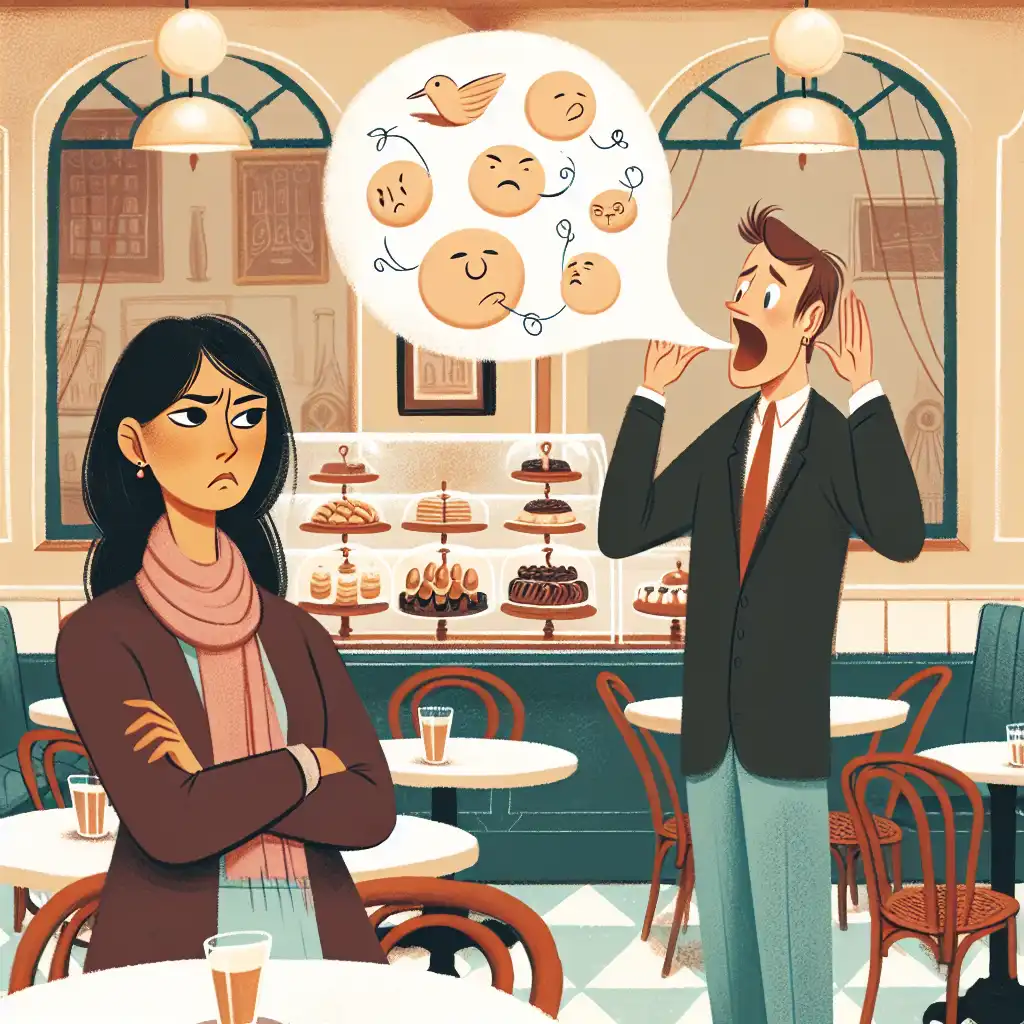
Something that causes discomfort or annoyance
Loud noises can be a irritant to someone trying to concentrate.
irritant
ˈɪrɪtənt
불러오는 중…
ˈɪrɪtənt
Something that causes discomfort or annoyance
Loud noises can be a irritant to someone trying to concentrate.

ˈɪrɪtənt
A substance that causes slight inflammation or other discomfort to the body
Capsaicin, the compound that makes chili peppers spicy, is an irritant to the skin and eyes.
ˈɪrɪtənt
Causing irritation or annoyance
His constant chatter was highly irritant.
오디오를 불러오지 못했어요. 잠시 후 다시 시도해 주세요.
The word 'irritant' is used to describe something that causes annoyance, frustration or discomfort. For example, if you have an itch on your skin or something is bothering your eyes, that thing is an 'irritant'. It can also be used to describe a person or thing that causes annoyance or frustration, like a noisy neighbor or a difficult boss. In everyday conversations, it's common to hear people say things like, "This noise is such an irritant, I can't concentrate!" or "My colleague can be quite an irritant at times."
Aggravate means to make a situation worse or more severe than it already is.
It is often used to describe how a person's actions can make a bad situation even worse. For example, if someone is already angry and you keep provoking them, you are aggravating the situation.
To summarize: Aggravate means to make a bad situation worse, while irritant refers to something that causes annoyance or discomfort.
단어 열기: Aggravate →Annoyance and irritant are both words used to describe something that bothers or vexes a person, but they have slightly different meanings.
Annoyance is a feeling of mild irritation or discomfort caused by something that is not very serious. For example, if you're trying to study and your neighbor is playing loud music, it might be an annoyance.
It can be more severe than an annoyance. For example, a substance like pollen that makes you sneeze and itch can be an irritant.
Annoyance is a mild irritation, while an irritant is something that causes strong discomfort or irritation.
단어 열기: Annoyance →Bother refers to a feeling of annoyance or inconvenience caused by something, while irritant refers to something that causes irritation or discomfort, often to the skin or eyes.
For example, if someone is bothered by a loud noise, they are annoyed or inconvenienced by it. If someone gets an irritant in their eye, it causes discomfort or even pain.
Bother is more focused on the emotional response to something, while irritant is focused on the physical discomfort caused by something.
단어 열기: Bother →Irritant refers to something that can cause irritation or annoyance. For example, a chemical in cleaning products can be an irritant to your skin.
Irritate means to cause annoyance or discomfort. For example, if a person keeps tapping their foot during a movie, it can irritate the people around them.
Irritant is the thing that causes irritation, and irritate is the action of causing irritation.
단어 열기: Irritate →Nuisance refers to something that is annoying or bothersome, but not necessarily causing physical or emotional discomfort.
It is applicable in situations when something is consistently bothering someone. For example, a barking dog may be a nuisance to neighbors or spam emails may be a nuisance to someone's inbox.
단어 열기: Nuisance →Pest refers to any animal or insect that is considered a nuisance, especially those that can cause damage to crops or to homes.
Some common examples of pests include ants, mice, and spiders.
Irritant describes things that cause irritation or discomfort, while pest describes animals or insects that are considered annoying or harmful.
단어 열기: Pest →A provocation is something that is done intentionally to provoke a reaction or response, whether it be anger, frustration, or some other emotion.
An irritant is a general source of annoyance or discomfort, while a provocation is a deliberate attempt to elicit a specific reaction or response.
단어 열기: Provocation →Vexation, on the other hand, refers to a feeling of annoyance or frustration caused by something that is perceived as unfair, unjust, or difficult to solve.
It is more commonly used to describe a situation or problem rather than a person or thing. For example, if you are trying to solve a math problem and can't figure it out, it may cause vexation.
Being stuck in traffic or waiting in a long line can also cause vexation.
Irritant describes something that causes annoyance directly, while vexation describes a feeling of annoyance that arises from a challenging situation or problem.
단어 열기: Vexation →How does asthma work? -...
YouTube에서 보기 ↗My ultimate vocation in life is to be an irritant.
Boniface Mwangi: The day...
YouTube에서 보기 ↗I'd rather have most of my life private. So, what you do see in me is on the court, and on the court, I am competitive. I'm an irritant to the other team. Emotional. Fired up. And so that's what people see, and that's what they judge off of.
What’s in Air Freshener?...
YouTube에서 보기 ↗Like the sand and the oyster, it's a creative irritant. In each poem, I'm trying to reveal a truth, so it can't have a fictional beginning.
Africa’s rhyming history...
YouTube에서 보기 ↗It is popular to call it a crisis of the Western world. It is in fact a crisis of the whole world. Communism, which claims to be a solution of the crisis, is itself a symptom and an irritant of the crisis.
We are in a phase of democratization. We are constructing a democracy. We cannot construct a democracy with irritants.
Like a layer on a pearl, you can't specifically identify the irritant, the moment of the irritant, but at the end of the day, you know you have a pearl.
Plants can't very well defend themselves by their behavior, so they resort to chemical warfare, and plants are saturated with toxins and irritants to deter creatures like us who want to eat them.
If a term becomes too popular, its irritant value is ramped up. The impulse is then to replace it with something else.
When obedience ceases to be an irritant and becomes our quest, in that moment God will endow us with power.
It's only in relatively recent years that Hollywood became the playground of multinational corporations which regard movies and TV shows as a minor irritant to their overall activity.