exposition
noun exposition
ˌekspəˈzɪʃn
A detailed explanation or description of something so as to make it clear
The author provides a thorough exposition of his theory in the book's introduction.
exposition
ˌekspəˈzɪʃn
Cargando…
ˌekspəˈzɪʃn
A detailed explanation or description of something so as to make it clear
The author provides a thorough exposition of his theory in the book's introduction.
ˌekspəˈzɪʃn
The part of a play or work of fiction in which the background to the main conflict is introduced
The exposition of the movie quickly introduces the main characters and their relationships with each other.
ˌekspəˈzɪʃn
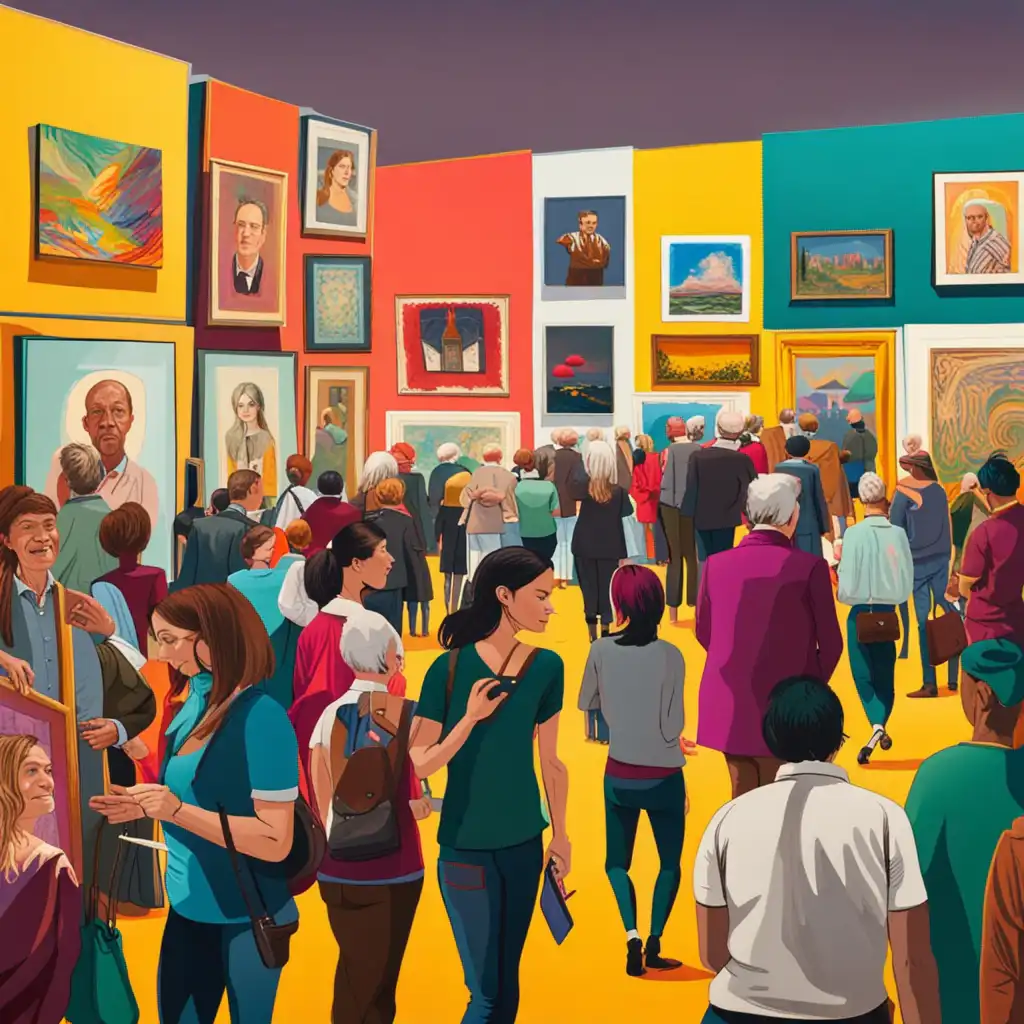
A public show or exhibition showcasing art, products, or skills
The International Exposition of Modern and Contemporary Art attracts millions of visitors each year.
No se pudo cargar el audio. Inténtalo de nuevo más tarde.
Exposition refers to a type of writing or speech that explains a topic or idea. It's often used in academic settings, such as in essays or lectures, but it can also be used in everyday conversations. When someone gives an exposition, they are giving information in a clear and organized manner. For example, a science teacher might give an exposition on the properties of water or a friend might give an exposition on their favorite hobby. It's important to use the word exposition when discussing formal or informative writing or speaking, and to use other words like explanation or description in more casual settings.
Clarify means to make something easier to understand, to remove confusion or ambiguity from something.
Clarify is used to make something easier to understand, while exposition is used to provide a more detailed explanation or interpretation.
Abrir palabra: Clarify →Demonstration refers to showing or explaining how something works, while exposition refers to explaining a topic or idea in detail.
A demonstration is usually hands-on or interactive, while an exposition is usually more verbal or written. Demonstrations are often used in science or technology settings, while expositions are commonly used in literature or art contexts.
For example, a science teacher may give a demonstration on how to conduct an experiment, while an art historian may give an exposition on the themes and techniques found in a particular painting.
Abrir palabra: Demonstration →Description is when you look at something and say what it looks, feels or sounds like. Exposition is when you explain something, usually with more detail, to help someone understand it better.
Description is used to give a visual picture of something, while exposition is used to explain something more in-depth.
Abrir palabra: Description →Elaborate means to develop, expand or add more details to a particular idea or topic. It implies going into more depth about something to make it clearer or more understandable.
Elaborate can be used in a variety of settings, such as when providing more information about a concept, elaborating on an argument in an essay, or adding more detail to a story.
In summary, elaboration means adding more detail to something, while exposition is a detailed explanation of a topic or subject.
Abrir palabra: Elaborate →Exegesis refers to the critical interpretation and analysis of a text, particularly a religious one. It involves an in-depth study of the text, its historical and cultural contexts, its language, and its theological implications.
Exegesis is usually done by scholars, theologians, and religious leaders.
Exegesis is a rigorous and scholarly approach to interpreting texts, while exposition is a more general and accessible way to explain them.
Abrir palabra: Exegesis →Explanation is a statement or account that makes something clear, while an exposition is a comprehensive description and explanation of an idea or theory.
Explanation is often used to clarify a specific point or concept, while exposition is typically used to provide a more detailed and thorough analysis of a complex topic.
For example, if someone asked you to explain how to solve a math problem, you would provide a brief explanation of the steps involved.
Abrir palabra: Explanation →Illustration refers to a visual representation, often in the form of a drawing or picture, that is used to clarify or support an idea or concept.
Exposition is applicable when you need to explain something using words while illustration is applicable when you need to show something using a visual representation.
Abrir palabra: Illustration →Interpretation is the act of explaining the meaning of something based on one's own understanding or personal perspective.
It's applicable when you're analyzing or evaluating something, such as a work of art or a piece of literature. For example, a critic might provide an interpretation of a novel, explaining what they believe the author intended to communicate or what deeper themes they think the story is exploring.
Abrir palabra: Interpret →It is typically used to describe a formal and structured event or activity that educates or informs the audience, such as a museum exhibit, a science fair presentation, or a book.
Presentation commonly refers to the act of showing or explaining something to a group of people.
A presentation usually has a specific purpose, such as persuading someone to do something, informing them about a particular topic, or entertaining them.
Exposition is a more formal and detailed form of explaining or demonstrating something, while presentation is a broader term that refers to showing or explaining something in any setting or context.
Abrir palabra: Presentation →identifying what is compelling from what is chatter? You ask surprising questions. To achieve the complicated fragile human connection, you regard the stories of every subject as sacred. Realize that an anecdote is oxygen that breathes life into a grey story of exposition,
Ver en YouTube ↗The show business has all phases and grades of dignity, from the exhibition of a monkey to the exposition of that highest art in music or the drama which secures for the gifted artists a world-wide fame princes well might envy.
We wanted to make an architecture of atmosphere. So no walls no roof no purpose -- just a mass of atomized water a big cloud. And this proposal was a reaction to the over-saturation of emergent technologies in recent national and world expositions,
Ver en YouTube ↗Keep everything in context, and try to have each line doing more than one thing - not just giving exposition but also revealing character and history, etc.
Magellan because he was definitely great Explorer he led the first expedition the circumnavigated the earth and reached a huge milestone at the time even though he didn't make it to the end of the exposition he has really changed the way people think of the world today
Ver en YouTube ↗I use voiceover just like I use dialogue. There's a way to give out information or give out insight to the character or give out their worldview, and maybe you have to slip in exposition, but it's all about how you write it.
I'm a huge fan of not doing world-building or exposition. My eyes glaze over when I see it.
The thing that I like about action sequences is that if they're done well, you get to know more about the character in those few minutes than you do through 10 minutes of exposition.
Exposition has legitimate uses. It's the most efficient way to summarize background information, including necessary information about a character's history. It can set the stage well for a major dramatized event.
American writers reduce the length of time devoted to exposition and character development.
People who lean on logic and philosophy and rational exposition end by starving the best part of the mind.
Every change of scene requires new expositions, descriptions, explanations.
I'm an enemy of exposition. I feel there's no need to overstate.