pharaoh
noun pharaoh
ˈferəʊ
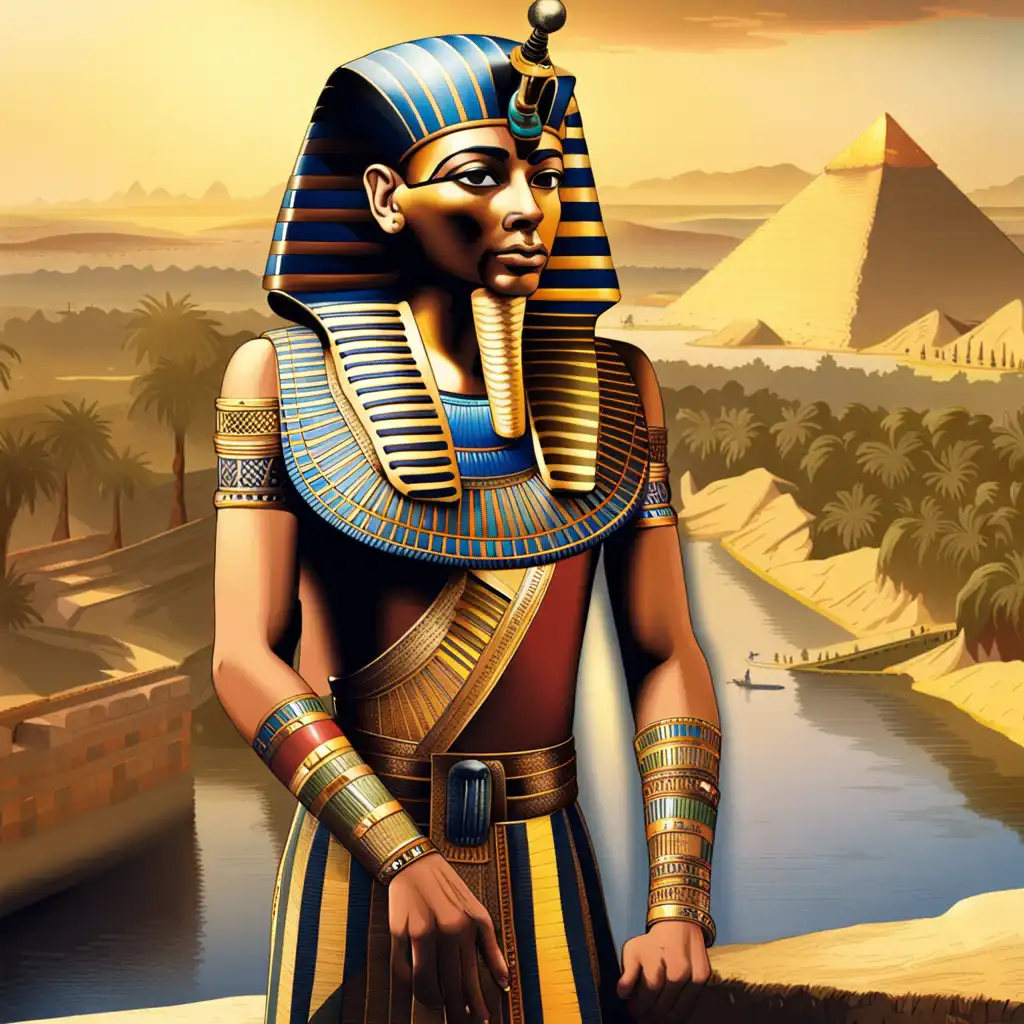
A king or queen of ancient Egypt.
Tutankhamun was a pharaoh of Egypt.
pharaoh
ˈferəʊ
Loading…
ˈferəʊ
A king or queen of ancient Egypt.
Tutankhamun was a pharaoh of Egypt.

ˈferəʊ
Someone who is very controlling or demanding.
My boss is a real pharaoh, always ordering everyone around.
Audio could not be loaded. Please try again later.
The word "pharaoh" refers to the rulers of ancient Egypt. They were like kings who had a lot of power and control over the country. The word can be used in history books or when talking about ancient Egypt.
A despot is a ruler who has complete control and uses their power in a cruel and unfair way. This term usually describes rulers of small states, countries or communities.
While both terms describe rulers, despot refers to a cruel and oppressive ruler while pharaoh refers to a divine ruler of an ancient empire.
Open word: Despot →An emperor is a ruler of an empire or a group of countries, whereas a pharaoh is a ruler of ancient Egypt. The term Emperor is more commonly used to describe rulers of various countries, while Pharaohs are specific to ancient Egypt.
Emperors often ruled over a diverse group of people with differing languages and cultures, while pharaohs ruled over a homogenous society with a unique religion and language.
Open word: Emperor →King generally refers to a male monarch who rules over a kingdom or country. This title is used widely throughout history and across different cultures.
Therefore, while both words refer to rulers, king is a more general term used for monarchs of different countries and time periods, while pharaoh refers specifically to the rulers of ancient Egypt.
Open word: King →Both monarch and pharaoh refer to a ruler or a leader of a country or a civilization.
A monarch refers to a king or a queen who leads a monarchy, a type of government where the power is vested in one individual or a family.
Monarchies were more prevalent in Europe till the early 20th century.
Monarch is a generic term for a king or a queen who rules a country, while a pharaoh is a specific title for the rulers of Ancient Egypt.
Open word: Monarch →A pharaoh was a ruler in ancient Egypt, while a potentate is a general term for any powerful ruler or monarch. Pharaoh is specifically used to refer to rulers of ancient Egypt, while potentate can be used to refer to rulers in any part of the world.
In other words, a pharaoh is a type of potentate, but a potentate is not necessarily a pharaoh.
Open word: Potentate →Ruler is a more general term that can refer to any leader or head of state, whether historical or modern.
Ruler can also refer to a measuring instrument used to draw straight lines or measure distances.
The term ruler can be used in any context where there is a need for a leader or a person in charge, while pharaoh specifically refers to rulers in ancient Egyptian history.
Open word: Ruler →Pharaoh refers specifically to the rulers of ancient Egypt, while sovereign refers more generally to any monarch or supreme ruler of a country or territory.
Pharaoh is only applicable to the rulers of ancient Egypt, while sovereign can be applied to rulers of any country or territory.
Open word: Sovereign →Tyrant refers to a ruler who exercises oppressive and unjust control over their subjects.
A tyrant is someone who abuses their power and does not care about the well-being of their people.
Both words refer to rulers, but they are applicable in different contexts. Pharaoh is used specifically for rulers of ancient Egypt, while tyrant describes rulers who abuse their power and mistreat their people in any context.
Open word: Tyrant →tombs and individual units within a vast temple network they were holy sites tended by royal priests built to safeguard the worldly remains of the Pharaohs from Thebes and transport them
Watch on YouTube ↗I really should have been a pharaoh - do you know that?
or 1,500 years before the pharaohs built the Great Pyramids of Giza. That original Chinese tea plant is the same type that's grown around the world today, yet it was originally consumed very differently. It was eaten as a vegetable or cooked with grain porridge.
Watch on YouTube ↗I think gold is made for kings and pharaohs - that's what I am.
but these things have given a sense of what's possible when the age-old model of power the pyramid, gets turned upside down putting the people on top and the pharaohs of today on the bottom as it were. It's also shown us that something as powerful
Watch on YouTube ↗When I was a child, one of my first games was a time machine which I made for my brother - a big box covered in silver and bits of cellophane. I'd close him up in it and joggle him and say, 'We're in Victorian times now... and now we're in Egyptian times, and I can see all these pyramids and pharaohs.
some historians recently and writers have called the black Pharaohs yeah this is a culture and a civilization distinct and different at some times in its history too to the civilization further
Watch on YouTube ↗clues the most important a broken arm found in nearby wrappings the hand once clenched a scepter the symbol of ultimate power in ancient Egypt the sign of a pharaoh or a queen other clues in the identification an indentation from a
Watch on YouTube ↗but there's no evidence the pharaohs enslaved people to build them. They didn't draw their power over the people from force. John believes what stood these kings apart was that they inspired devotion.
Watch on YouTube ↗and building temples and monuments that celebrated his mighty achievements. COLLEEN A lot of pharaohs including Ramses, used propaganda. But in the case of the peace treaty, these are real terms with a real foreign king.
Watch on YouTube ↗on instagram of people lounging in their living rooms watching tv with their cheetahs cheetahs have a long history as exotic pets they've been kept by egyptian pharaohs renaissance nobles and more recently instagram influencers social media definitely drives the trade particularly instagram you get people
Watch on YouTube ↗Kings where Egypt's pharaohs were laid to rest for nearly 500 years many of their tombs are now open to the public each offers a spectacular glimpse into the ritual lives of one of humanity's first great civilizations further south
Watch on YouTube ↗contrary to the burial rites of the Egyptian pharaohs the kings of cotner appear to have no interest in preserving the physical remains of their ancestors but evidence suggests their bond to their forefathers was important to them
Watch on YouTube ↗