gnaw
verb gnaw
nɔː
To chew something slowly and continuously
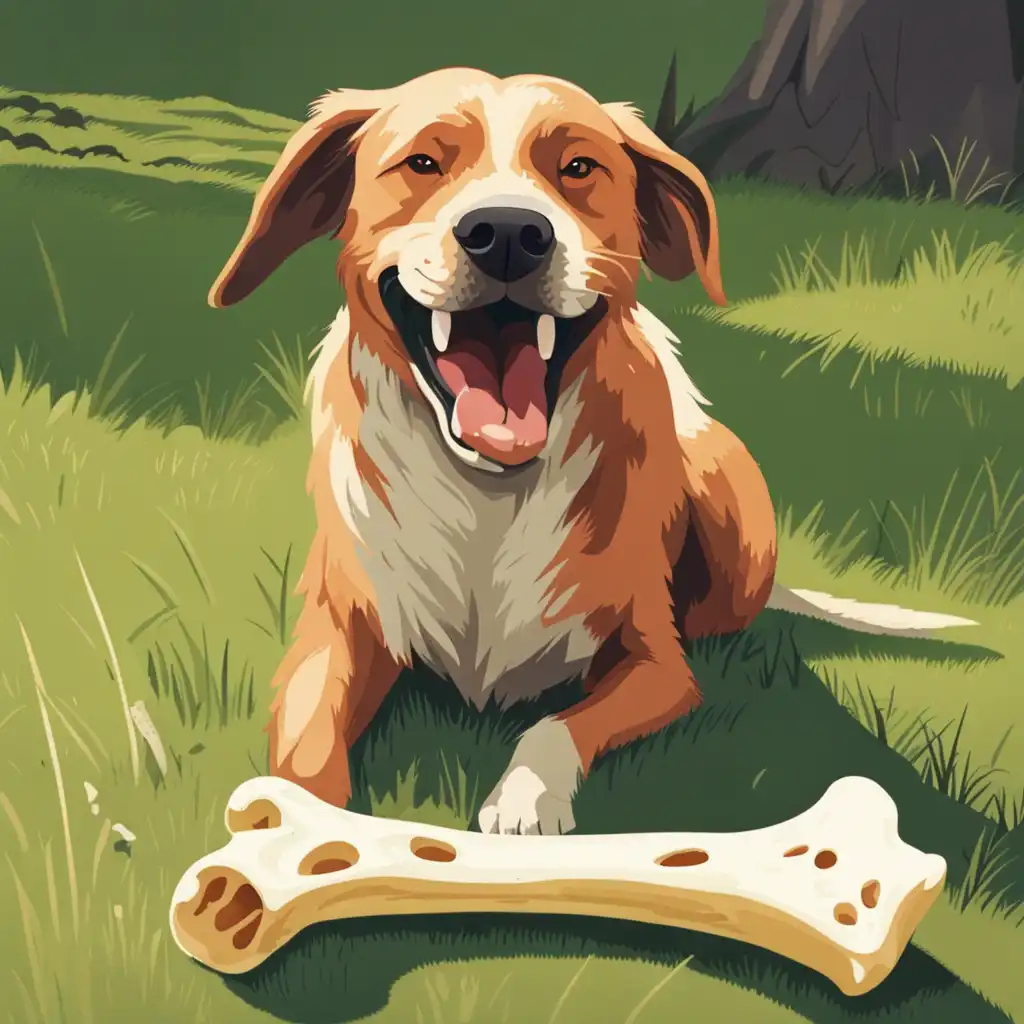
The dog spent hours gnawing on the bone.
gnaw
nɔː
불러오는 중…
nɔː
To chew something slowly and continuously
The dog spent hours gnawing on the bone.

nɔː
To cause anxiety or discomfort
The thought of the upcoming exam was gnawing at him.

nɔː
To destroy or wear away gradually
The sea gnawed at the coastline over the years.
오디오를 불러오지 못했어요. 잠시 후 다시 시도해 주세요.
The word 'gnaw' means to bite or chew with your teeth. You might use this word to describe how a mouse gnaws on a piece of cheese. It can also describe a feeling of persistent discomfort or worry, as in "anxiety gnawed at her." Overall, 'gnaw' is a strong verb used to show biting or chewing actions or to express feelings of unease.
Bite refers to the action of using teeth to cut or break up something, usually for eating purposes, such as biting into an apple.
Bite is used for a sharper and quicker action of using teeth, while gnaw is used for a longer and more persistent action.
단어 열기: Bite →Both chew and gnaw are verbs used to describe the act of biting and grinding food with the teeth, but chew describes the process of breaking down food with the help of saliva and teeth, while gnaw describes the act of biting and wearing down something hard and tough, such as a bone or a stick.
For example, you might chew your food when eating breakfast in the morning, but you might gnaw on a bone to break it down for a dog.
Chew describes breaking down food in the mouth, while gnaw describes biting and wearing away at something hard and tough.
단어 열기: Chew →Consume typically means to eat or drink something, usually in a civilized manner.
Consume is applicable when talking about eating or drinking, or when referring to using up something or being absorbed in thought, while gnaw is more applicable when talking about persistent biting or chewing or being persistently annoyed or anxious.
단어 열기: Consume →Corrode and gnaw are both words used to describe the process of something breaking down or deteriorating over time, but they are used in different contexts.
Corrode is used when talking about the erosion or breakdown of a material due to chemical reactions. For example, metal can corrode when it is exposed to air, water, or other substances that cause a reaction which causes it to break down over time.
Corrode describes the breakdown of a material due to chemical reactions, while gnaw describes the physical erosion or decay of something due to repeated biting, nibbling, or grinding.
단어 열기: Corrode →Devour means to eat something very quickly and greedily, usually swallowing it whole.
Devour is used when one eats something quickly and greedily, while gnaw is used when one bites or chews something persistently and slowly.
단어 열기: Devour →Erode typically refers to the gradual wearing away of something, usually by water or wind. For example, a river can erode the banks or shoreline over a period of time.
Erode refers to the slow wearing away of something, while gnaw refers to continuous biting or chewing.
단어 열기: Erode →Munch means to chew or eat something loudly and enthusiastically, like snacking on chips or popcorn.
Gnaw is used when you slowly and persistently bite or chew on something tough or hard, while munch is used when you eat something enthusiastically or snack on something in small pieces.
단어 열기: Munch →Nibble means to take small bites or nibbles of something, typically in a gentle or timid way.
Gnaw is aggressive and in a sense destructive, while nibble is gentle and cautious.
단어 열기: Nibble →Gnaw refers to the process of biting off small pieces of something with the teeth or jaws, while wear away refers to the gradual process of eroding or rubbing away the surface of something through constant use or friction.
Wear away is applicable in situations where something is slowly deteriorating or eroding, such as when rocks are worn away by water or when a rug becomes threadbare from constant use.
단어 열기: Wear away →The tale of the boy who...
YouTube에서 보기 ↗Our heart glows, and secret unrest gnaws at the root of our being. Dealing with the unconscious has become a question of life for us.
There's more to life...
YouTube에서 보기 ↗It's really hard when people write nasty things about you all the time. As much as good things are said about you, it's always those one or two bad comments that really stay with you and gnaw at you. I try not to read that stuff if I can.
Strange Japanese Sea...
YouTube에서 보기 ↗I would hurl words into this darkness and wait for an echo, and if an echo sounded, no matter how faintly, I would send other words to tell, to march, to fight, to create a sense of hunger for life that gnaws in us all.
Brian Cox Meets an...
YouTube에서 보기 ↗I'm not one to sit and wallow - I would rather figure out a way around so I can move past it and be at peace with things. I don't like bad feelings gnawing away at me.
Why some people are more...
YouTube에서 보기 ↗Time, whose tooth gnaws away everything else, is powerless against truth.
Stunning Photos of the...
YouTube에서 보기 ↗It's heartbreaking to see so many people trapped in a web of enforced idleness, deep debt, and gnawing self-doubt.
Neil Turok: 2008 TED...
YouTube에서 보기 ↗The truth is, everybody falls into an incinerator of some measure or other. Not literally one. The question is what are you going to do with those bad times? Are you just going to let them gnaw at you?
Ngozi Okonjo-Iweala:...
YouTube에서 보기 ↗Working moms commonly testify that they feel guilty when they are away from their children and guilty when they are not at their jobs. Devoted fathers certainly miss their children deeply, but it does not seem to be with the same gnawing, primal anxiety that often afflicts women.
Symbiosis: A surprising...
YouTube에서 보기 ↗I don't know very many people in the art world, only socialise with the few I like, and have little time to gnaw my nails with anxiety about any criticism I hear about.
The history of the world...
YouTube에서 보기 ↗Do what you love. Know your own bone; gnaw at it, bury it, unearth it, and gnaw it still.