misdemeanour
noun misdemeanour
ˌmɪsdɪˈmiːnər
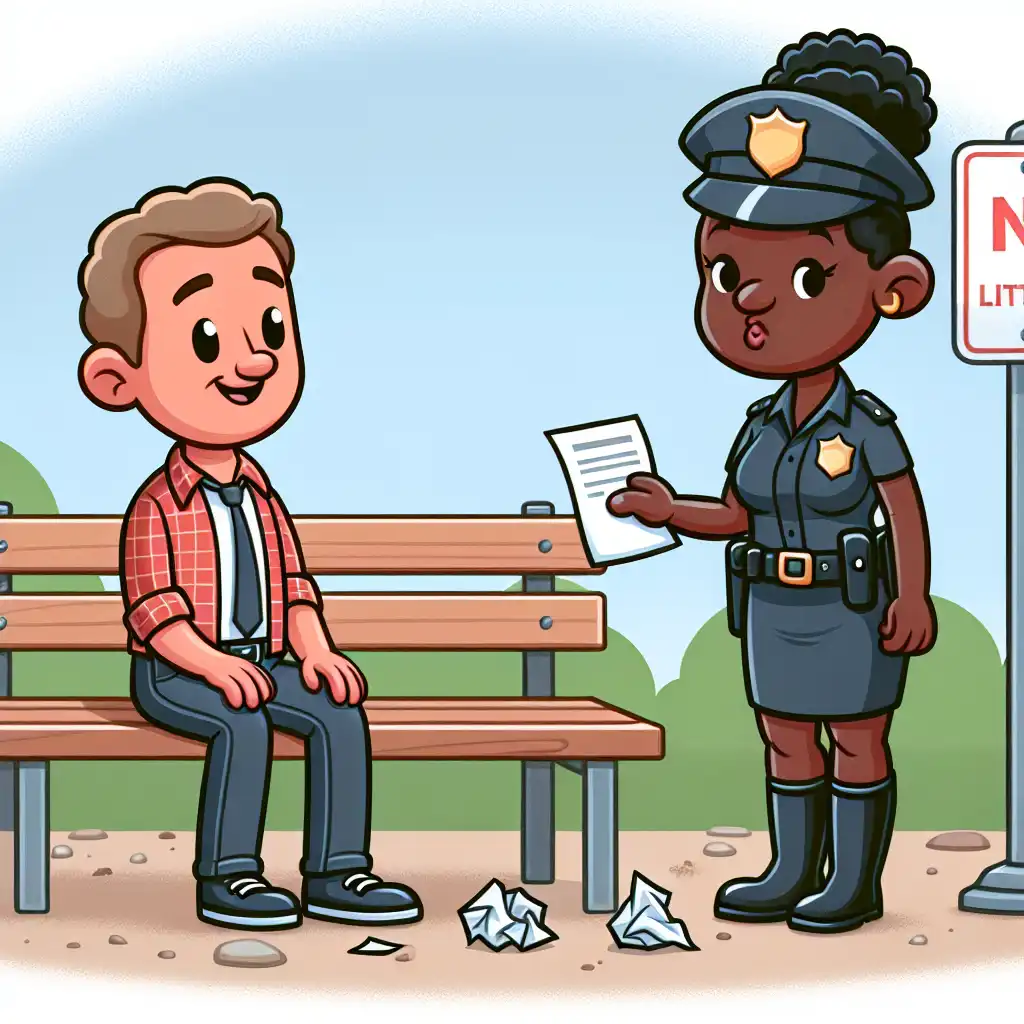
A minor wrongdoing, less serious than a felony.
He was charged with several minor misdemeanours.
misdemeanour
ˌmɪsdɪˈmiːnər
Đang tải…
ˌmɪsdɪˈmiːnər
A minor wrongdoing, less serious than a felony.
He was charged with several minor misdemeanours.

ˌmɪsdɪˈmiːnər
A type of behavior or action that is not serious, but considered wrong or against the rules.
Not doing your homework is seen as a misdemeanour in most schools.
Không tải được âm thanh. Vui lòng thử lại sau.
The word 'misdemeanour' is used to describe a minor offense or a small crime. It is typically used in the legal system, such as when someone is charged with a misdemeanor and has to go to court. Examples of misdemeanors include things like shoplifting, disorderly conduct, or driving under the influence of alcohol (depending on the severity of the offense). It's important to note that while misdemeanors are less serious than felonies, they can still have negative consequences, such as fines or even jail time.
A breach refers to a violation of an agreement or a law. For example, if you break a contract by not fulfilling your duties, that would be a breach of contract.
If someone trespasses on your property without your permission, that would be a breach of your property rights.
A breach is a general term for any violation of an agreement or law, while a misdemeanor specifically refers to minor criminal offenses.
Mở từ: Breach →Indiscretion and misdemeanor both refer to actions that are unacceptable or inappropriate, but they have different meanings and applications.
Indiscretion generally refers to a minor mistake or error in judgment. It may involve breaking a small rule, making an inappropriate remark, or acting in a way that is not entirely professional or respectful.
For example, if someone accidentally sends an email to the wrong person, or makes a rude comment at work, this could be considered an indiscretion.
An indiscretion usually refers to a minor mistake or error in judgment that does not necessarily carry legal consequences, while a misdemeanor is a more serious criminal offense that may result in legal action.
Mở từ: Indiscretion →Infraction and misdemeanour are both terms used in law to describe a type of offense or violation, but they differ in severity.
An infraction is a minor offense, often called a citation or a ticket for an action like jaywalking or speeding.
A misdemeanour is a more serious offense than an infraction but less serious than a felony. It involves breaking the law and can be punishable by fines, probation, and/or imprisonment for up to a year.
An infraction is a minor offense that results in a ticket or citation, while a misdemeanor is a more serious offense that can result in legal penalties.
Mở từ: Infraction →Misconduct refers to inappropriate behavior or actions that violate rules or expectations set by an organization or society.
It can be applied in various settings, such as in the workplace, school, or sports teams. Examples of misconduct include cheating, lying, stealing, or harassing someone.
Misconduct suggests inappropriate behavior that violates established rules or standards, while misdemeanors are legal offenses that may be punishable by imprisonment or fines.
Mở từ: Misconduct →Both misdeed and misdemeanour refer to bad or immoral behavior.
However, misdeed refers to a specific act or behavior that is wrong or illegal, while misdemeanour refers to a less serious crime or offense.
Misdeed can refer to actions like stealing, cheating, or lying, while misdemeanour typically refers to less serious crimes like traffic violations, minor drug offenses, or disorderly conduct.
Misdeed is used more broadly and can refer to any immoral or unethical act, while misdemeanour is typically used in legal contexts to describe specific types of criminal offenses.
Mở từ: Misdeed →Misdemeanour and offence are both words used to describe illegal behavior, but there is a difference between them.
A misdemeanor is typically a less serious crime, such as a traffic violation, small theft, or disorderly conduct. It is a criminal offense that is usually punishable by a fine, short-term imprisonment, or both.
An offence is a more general term that can refer to any illegal act, no matter how serious.
Misdemeanour is a specific type of offence that is less serious and usually punished with a fine or short-term imprisonment, while offence is a general term that can encompass all types of illegal behavior, ranging from minor to major.
Mở từ: Offence →A misdemeanour and a transgression are both words used to describe a type of wrongdoing, but they have different applications.
A transgression is a more general term that can describe any type of violation or breach of rules. This could include breaking social norms, going against religious teachings, or violating ethical standards.
The consequences of a transgression can vary depending on the specific situation and context.
The main difference between the two words is that misdemeanour usually refers to a specific type of legal offence, while transgression is a broader term that can encompass a variety of different types of wrongdoing.
Mở từ: Transgression →Misdemeanour refers to a minor wrongdoing or offense, usually punishable by a fine or short imprisonment. It implies a less serious breach of conduct or legal violation.
Violate refers to a more serious breach of a law, rule or regulation, where a person intentionally or unintentionally breaks the law or violates someone's rights.
Misdemeanour is a minor offense, whereas violate is a serious offense that can lead to significant legal consequences.
Mở từ: Violate →Kavita Ramdas: Radical...
Xem trên YouTube ↗Clinton's egregious act of self-indulgence was outdone by an impeachment based not on constitutionally required high crimes and misdemeanors but on a vindictive determination to bring down a president who had offended self-righteous moralists eager to put a different political agenda in place.
How does impeachment...
Xem trên YouTube ↗Common perceptions of female friendships are morning coffees discussing children, bags, periods and agreeing about the misdemeanours of men... mild, soft, nurturing relationships.
Who occupies US prisons?...
Xem trên YouTube ↗I was convicted of three misdemeanors of willful failure to file a form.
I was a rebellious student, called up in assembly almost every week for some misdemeanour, lots of time on the Headmistress's office for what must have been, in retrospect, annoying behaviour.
In fact, for all kinds of offenses - and, for no offenses - from murders to misdemeanors, men and women are put to death without judge or jury; so that, although the political excuse was no longer necessary, the wholesale murder of human beings went on just the same.
I probably have become more infamous from two misdemeanors than probably anyone I could think of.
All societies make necessary moral distinctions between high crimes and misdemeanors, mortal and lesser sins.
Police on the street need the discretion to deal quickly and easily with routine misdemeanours which need to be recorded but need not take up court time - and where there is no doubt about guilt.
If a politician takes a bribe to do what he thinks would have been best for the public anyway, he still goes to jail. If he's president, under a Constitution that refers to impeachment specifically for 'bribery,' as well other 'high crimes and misdemeanors,' he should still be removed.
There have been high crimes and misdemeanors, but they have been committed by the special prosecutor and the Congress, not the president.