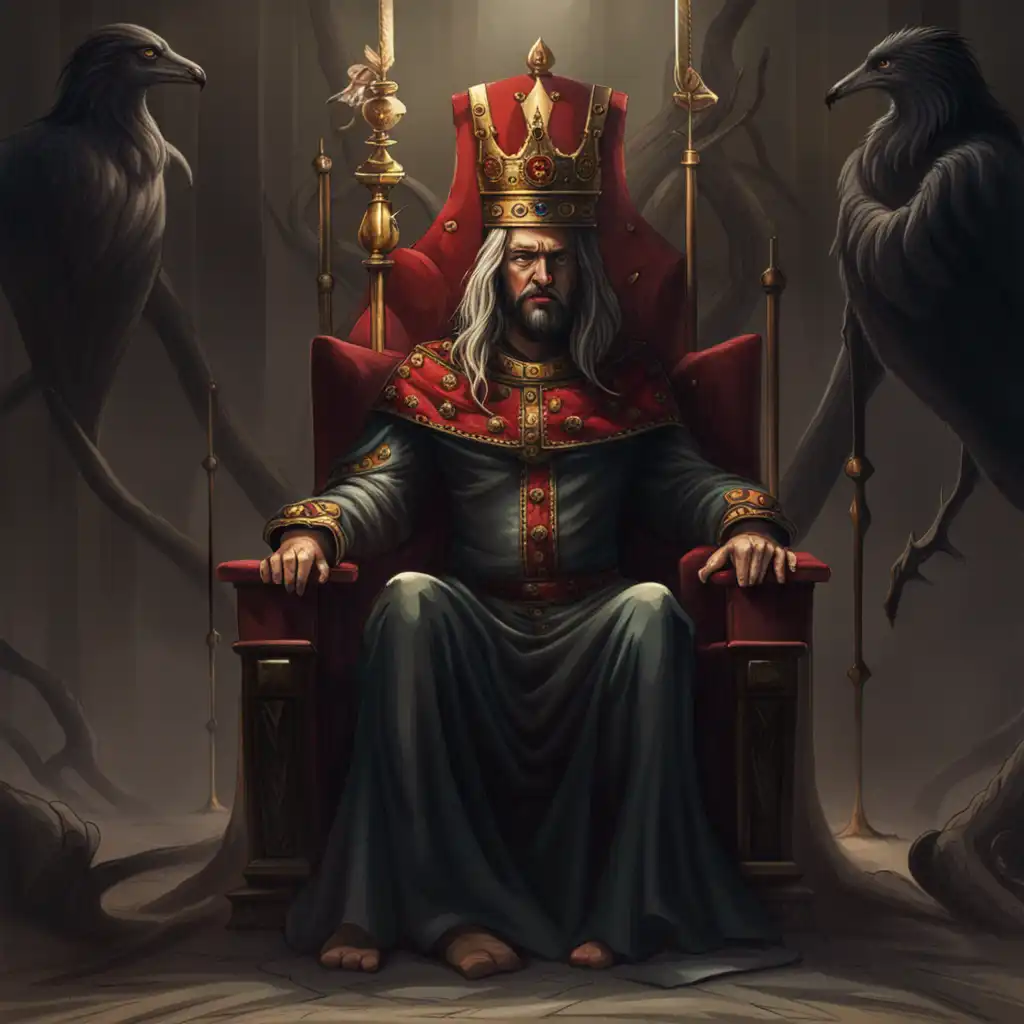
despotic
adjective despotic
dɪˈspɑːtɪk
A person having absolute and unrestricted power, often exercised brutally or unfairly.
The king ruled in a despotic manner, with no thought to the well-being of his subjects.
despotic
dɪˈspɑːtɪk
読み込み中…
dɪˈspɑːtɪk
A person having absolute and unrestricted power, often exercised brutally or unfairly.
The king ruled in a despotic manner, with no thought to the well-being of his subjects.
音声を読み込めませんでした。しばらくしてからもう一度お試しください。
The word 'despotic' means someone who has complete power and control over others and uses it in a cruel and unfair way. We often use it to describe a ruler or leader who is harsh, oppressive and abuses their power to make others suffer. For example, a king who takes away people's right to speak or express their opinions, and punishes them severely if they disobey him, is considered despotic. The word can also be used to describe a boss, teacher or parent who is too strict and treats their subordinates or children in a harsh and punishing manner. It is important to use the word 'despotic' carefully and with caution as it carries a negative connotation and could offend someone if used inappropriately.
Arbitrary means a decision or action made without any logical reason or explanation.
It describes a situation where a decision is based on personal whim or preference rather than objective facts. For example, if a teacher gives a student detention for no reason, it can be called arbitrary.
単語を開く: Arbitrary →Authoritarian refers to a person or government that has strict control and expects people to obey without question, but they may still follow some laws and have support from some people.
単語を開く: Authoritarian →Both autocratic and despotic refer to a ruling style or leadership type where one person holds absolute power and control, but they have slightly different connotations.
Autocratic usually refers to leaders who make decisions based on their own judgment and without consulting others. They may not necessarily be cruel, but their leadership style can be seen as rigid and dictatorial.
For example, a boss who only listens to their own ideas and ignores input from their employees could be described as autocratic.
Autocratic refers more to a style of leadership while despotic more specifically connotes harsh and cruel behavior.
単語を開く: Autocratic →Dictatorial also describes a ruler with complete power, but it implies that the ruler is more concerned with maintaining their authority and control than with the well-being of their people.
A dictatorial leader is often characterized by their unwillingness to listen to opposing viewpoints or to tolerate any dissent.
So, in short, despotic emphasizes cruelty and oppression, while dictatorial emphasizes an unwavering need for control.
単語を開く: Dictatorial →Despotic and domineering are both words used to describe someone who exercises control or authority over others.
Domineering refers to someone who is assertive and controlling, especially in an overbearing or intimidating way. For example, a domineering boss might micromanage their employees and never allow them to make their own decisions.
So, in short, despotic is applicable to a person who is cruel and oppressive while domineering is applicable to a person who is assertive and overbearing.
単語を開く: Domineering →Oppressive describes a situation where people are treated unfairly and subjected to harsh and cruel treatment.
Despotic relates to a ruler's abuse of power, while oppressive relates to the mistreatment of people under their rule.
単語を開く: Oppressive →Totalitarian refers to a government system that controls not only people's political lives but also their personal lives, often using a single ideology or party as its basis.
So, where despotic describes a leader who is oppressive and dictatorial, totalitarian applies to a government system that limits people's freedoms in all aspects of their lives.
A country ruled by a one-party government that controls all aspects of people's lives, including what they can read, watch, and do, would be considered totalitarian.
単語を開く: Totalitarian →Both words describe rulers who exercise power in an oppressive or cruel way. Despotic suggests a ruler who wields absolute power, while tyrannical refers to a ruler who behaves harshly and cruelly towards their subjects.
Generally speaking, despotic can apply to any type of ruler or government, while tyrannical is more specific to an individual ruler or ruling class.
単語を開く: Tyrannical →Gelada Baboon Sexual...
YouTube で見る ↗If you think of yourselves as helpless and ineffectual, it is certain that you will create a despotic government to be your master. The wise despot, therefore, maintains among his subjects a popular sense that they are helpless and ineffectual.
James Kunstler: How bad...
YouTube で見る ↗Under the all-encompassing aid system, too many places in Africa continue to flounder under inept, corrupt and despotic regimes who spend their time courting and catering to the demands of the army of aid organizations.
Deference has been codified in American life as political correctness. And political correctness functions like a despotic regime. It is an oppressiveness that spreads its edicts further and further into the crevices of everyday life.
When law becomes despotic, morals are relaxed, and vice versa.
Whether it comes from a despotic sovereign or an elected president, from a murderous general or a beloved leader, I see power as an inhuman and hateful phenomenon.
The control of information is something the elite always does, particularly in a despotic form of government. Information, knowledge, is power. If you can control information, you can control people.
The trial by jury might safely be introduced into a despotic government, if the jury were to exercise no right of judging of the law, or the justice of the law.
How can this full, perfect, just and supreme voice of the people, embodied in the Constitution, be brought to bear, habitually and steadily, in counteracting the fatal tendency of the government to the absolute and despotic control of the numerical majority?
We invaded Iraq to change a totalitarian, despotic regime, and we have been successful there.
The original settlers in Iceland were the nobles of Norway who left their native land to avoid the tyranny of Harold Fairhair, who tried to crush their power so as to make himself a despotic king in the land.