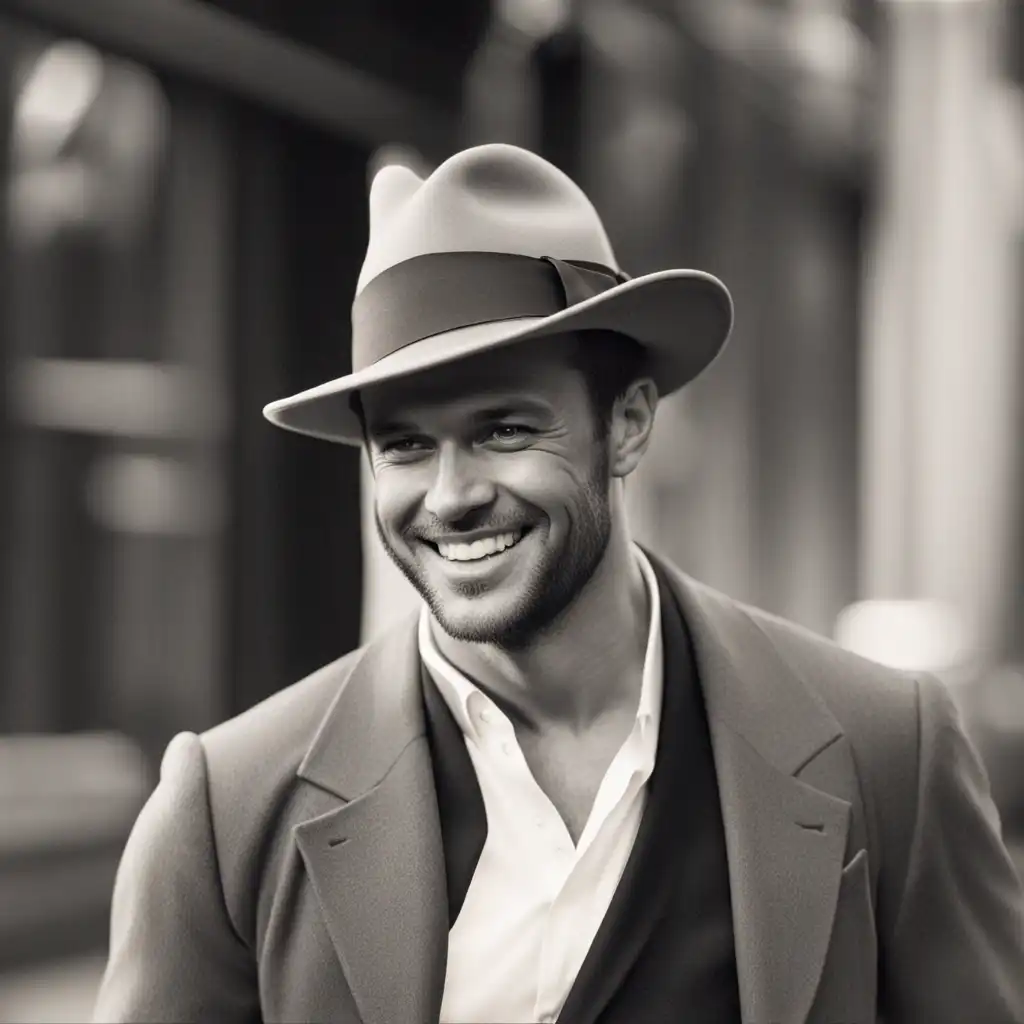
rakishly
adverb rakishly
ˈreɪkɪʃli
In a stylish and confident manner.
He wore his hat rakishly tilted to one side.
rakishly
ˈreɪkɪʃli
불러오는 중…
ˈreɪkɪʃli
In a stylish and confident manner.
He wore his hat rakishly tilted to one side.

ˈreɪkɪʃli
In a manner that shows a lack of respect for rules or standards.
He lived rakishly, without concern for societal norms.
오디오를 불러오지 못했어요. 잠시 후 다시 시도해 주세요.
'Rakishly' is a word used to describe someone who has a stylish and confident appearance, but their behavior may be seen as unconventional or daring. It's often used to describe someone who appears to be slightly rebellious or mischievous in their behavior. You could use the word 'rakishly' when talking about a person's fashion sense, their attitude or even the way they walk or move. It's a slightly formal word, so it might not be used in everyday conversation, but it's a good word to know if you want to sound more sophisticated in your writing or speaking.
Bold typically refers to someone or something that is confident, daring, and fearless.
It is often used in the context of standing out and taking risks. For example, a person might be called bold for speaking their mind, making a difficult decision, or doing something unexpected.
Bold is more focused on bravery and confidence, while rakishly is focused on style and charm. Both words can be applicable in different situations depending on the context and the tone of the conversation.
단어 열기: Bold →Carefree means being without worries and stresses, while rakishly means doing something in a stylish, cool or slightly daring way.
Carefree is applicable when someone is not bothered about anything and has a stress-free life. Rakishly is applicable when someone is doing something in a stylish, confident or cool way, such as walking with a swagger or wearing a hat tilted at an angle.
단어 열기: Carefree →Casual refers to something that is relaxed, informal, or unconcerned. For example, a casual outfit is one that is comfortable and appropriate for everyday wear.
Casual suggests a casual, laid-back vibe, while rakishly suggests a more daring, edgy vibe. Both words can describe clothes, accessories, or even people's behavior.
단어 열기: Casual →Dash refers to a sudden and energetic movement or style, often associated with bravery or confidence.
단어 열기: Dash →Jaunty means lively, cheerful and confident, often marked by a lively gait or posture.
Jaunty is more about being upbeat and positive, while rakishly suggests a more daring, non-conforming style. Both words emphasize a certain liveliness or energy, but in different ways.
단어 열기: Jaunty →Nonchalant means appearing calm and composed, often to the point of seeming unconcerned, indifferent or casual.
단어 열기: Nonchalant →Restrain means to hold back or control something or someone.
Rakishly is applicable when describing someone acting in a carefree or stylish way, while restrain describes someone or something being controlled or held back.
단어 열기: Restrain →Swagger describes someone who is confident and possibly arrogant in their demeanor. It implies a sense of bravado or cockiness.
If you see someone strutting around with their head held high and a certain aggressive air about them, you could describe their behavior as having "swagger."
단어 열기: Swagger →