loathe
verb loathe
ləʊð
To strongly dislike or hate something or someone
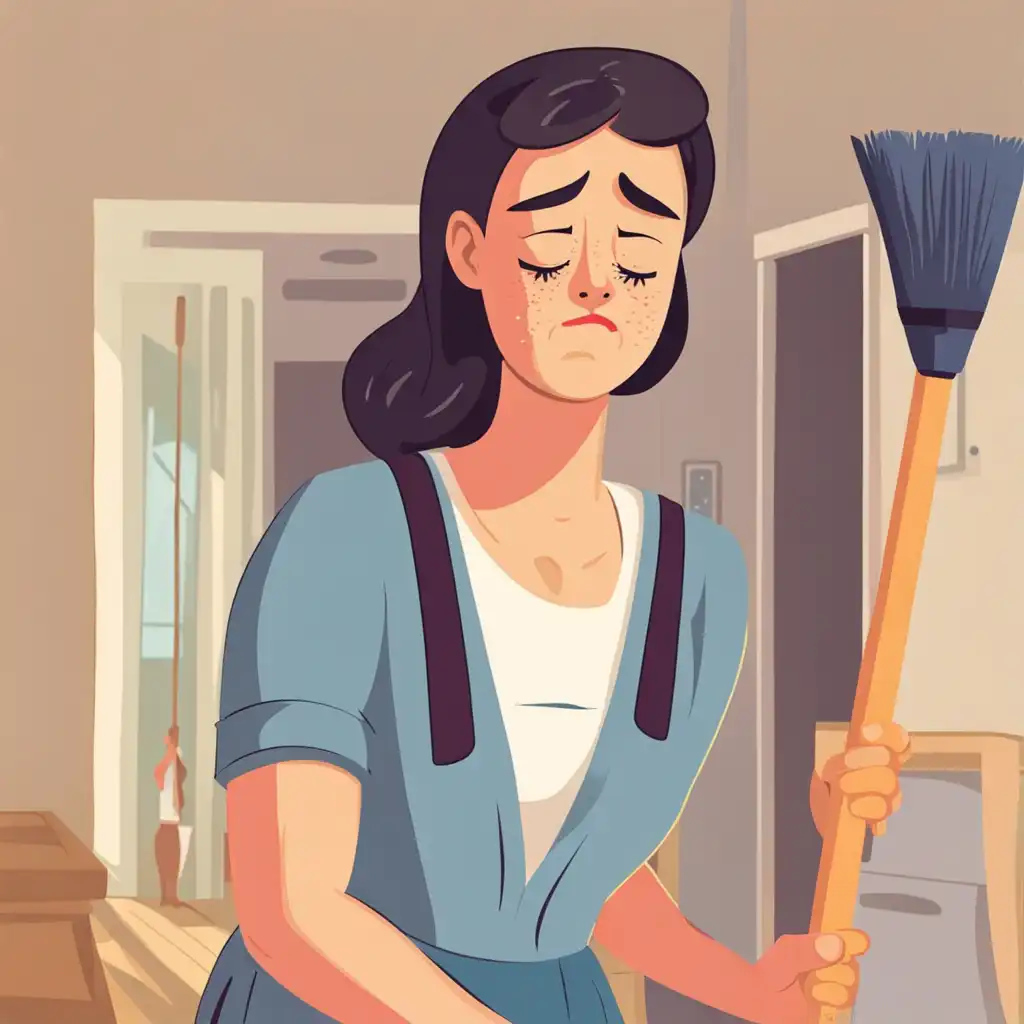
I loathe doing household chores on weekends.
loathe
ləʊð
불러오는 중…
ləʊð
To strongly dislike or hate something or someone
I loathe doing household chores on weekends.
오디오를 불러오지 못했어요. 잠시 후 다시 시도해 주세요.
The word 'loathe' means to feel intense dislike or hatred towards something or someone. It is often used when you really don't like something or someone and it makes you feel uncomfortable or upset. For example, you might say "I loathe spiders" if you really don't like them. It is a strong word, and it is important to use it only in appropriate contexts where you have a genuine feeling of dislike or hatred towards something.
Both abhor and loathe mean to hate strongly or have a strong aversion towards something.
However, abhor is usually used for something that is morally or ethically wrong, while loathe is used for something that is unpleasant or causes disgust.
For example, you might abhor animal cruelty because you believe it is morally wrong, but you might loathe the taste of brussels sprouts because you find it unpleasant.
Abhor is more commonly used for strong feelings of moral disgust, while loathe is used for strong feelings of general disgust or aversion.
단어 열기: Abhor →Animosity means a strong feeling of dislike or hatred towards someone or something.
Both words describe negative feelings towards someone or something, but animosity is generally used for a deeper and longer-lasting antagonism, while loathe describes a more intense and immediate feeling of disgust or aversion.
For example, you might feel animosity towards a classmate who constantly bullies you, but you might loathe a particular vegetable or a song that you can't stand listening to.
단어 열기: Animosity →Antipathy and loathe are both negative emotions, but they have slightly different meanings.
Antipathy means to have a strong feeling of dislike or opposition towards someone or something. It is a milder form of dislike and often stems from a lack of connection or understanding.
For example, you may have an antipathy towards a certain type of music because it doesn't appeal to your tastes.
Loathe means to have an intense and deep dislike, disgust or hatred towards someone or something. It is a stronger emotion than antipathy and often arises due to a negative experience, betrayal or a conflict of values.
Antipathy is applicable in cases of mild dislike, while loathe is applicable in cases of intense and deep-seated hatred.
단어 열기: Antipathy →Aversion means a strong dislike or distaste for something.
It can describe a feeling of avoidance or repulsion towards something or a situation. For example, if you have an aversion to spicy food, you would prefer not to eat it because you find it unpleasant.
Loathe means to hate intensely or have a strong feeling of disgust towards something or someone. It is a more extreme form of dislike than aversion.
In summary, while aversion describes a general feeling of dislike or avoidance, loathe connotes a more intense and emotional reaction of hatred.
단어 열기: Aversion →Both despise and loathe mean to strongly dislike someone or something, but loathe is usually used to indicate a more intense and visceral feeling, while despise is a bit less severe.
For example, you might say that you loathe someone who has caused you a great deal of pain, whereas you might say that you simply despise someone who has wronged you in a less significant way.
Loathe is applicable when you want to express strong hatred, while despise is used to show more moderate displeasure.
단어 열기: Despise →Both detest and loathe are strong negative emotions, but they can be used in slightly different contexts.
Detest means to strongly dislike or hate something or someone. For example, you might detest broccoli or a particular classmate who always bullies you.
Loathe means to feel intense disgust or extreme hatred towards something or someone. It implies a deeper, more visceral hatred than detest.
In summary, while both words describe negative emotions, detest is used for a general strong dislike while loathe connotes a more intense level of disgust or hatred.
단어 열기: Detest →Disdain means to have a strong feeling of dislike or disapproval towards someone or something, often accompanied by a feeling of superiority.
In simpler terms, disdain expresses a feeling of contempt or disapproval, while loathe expresses deep and intense dislike or hatred.
단어 열기: Disdain →Disgust and loathe are both negative emotions, but they have slightly different meanings. Disgust is a feeling of strong dislike or revulsion for something, usually because it is unpleasant or offensive to the senses.
For example, someone might feel disgusted by the smell of rotting food, or by the sight of something gross or dirty.
Loathe is a stronger and more intense feeling of dislike or hatred for something or someone. It implies a deep and abiding aversion or repulsion, often accompanied by a feeling of disgust or contempt.
Disgust describes a strong reaction to something that is unpleasant or off-putting, while loathe describes a deep-seated aversion or hatred for something or someone.
단어 열기: Disgust →Enmity refers to the feeling of hostility or hatred towards someone or something. It is a deep-seated feeling of animosity and is usually directed towards a person, group or object that is seen as threatening or harmful.
Both words refer to negative feelings, but enmity is a more serious and long-standing form of dislike or hate, while loathe is more focused on a specific aspect or feature of something that causes a strong negative reaction.
Enmity is applicable to situations where there is a deep rooted conflict or enmity between two parties, while loathe is more suitable for expressing a personal dislike or disgust towards something.
단어 열기: Enmity →Both words hate and loathe express strong dislike, but loathe is a more intense word. To use an analogy, if hate is the spark, loathe is the fire.
You could say you hate broccoli, but if you say you loathe it, that takes it up another level.
Hate is a more general expression of dislike, while loathe indicates a more extreme repugnance. They can both be used to express a strong negative feeling towards someone or something, but loathe is usually reserved for the most intense and extreme cases.
단어 열기: Hate →Other normal physical differences explain why some may love the dizziness associated with a loop-de-loop, while loathing the stomach-drop sensation of a steep roller coaster, or why some squeal with delight inside a haunted house,
YouTube에서 보기 ↗I hate love stories, personally. I'm not a fan of them. I absolutely loathe romantic comedies, with a passion, and I really worry when people use the word 'romantic' when they describe the film.
many people love them a few loathe them in the classic story of wind in the willows badger was portrayed as wise and kind yet among countrymen they're often blamed for all manner of destruction and disease
YouTube에서 보기 ↗Every actor has to love and loathe the character he plays.
I was beat so badly that I was hospitalized, by a homophobic passer by. The shame flooded out of my internal boxes and filled me up. I went to so many dark places in my head. I'm loathe to repeat them, but I asked myself questions like "What if everyone who's ever said anything bad about me was right?
YouTube에서 보기 ↗We pay for the navy, and we have no commerce for the navy to protect; we pay for the army, and we loathe and execrate the work upon which it has been engaged.
because I'm his wife and his film-making partner but it's just... I wanted-- It was important for me to include the next clip that we're going to show because it was just an interesting and it wasn't included originally and I it spoke to the understatement of the culture and how Jimmy was loathe to put himself in the movie.
YouTube에서 보기 ↗I hear so many writers say - and these are writers that I trust completely - 'I just started hearing a voice', or, 'The characters came to life'. I am filled with loathing for my own characters when I hear that because they do nothing of the sort. Left to their own devices, they do nothing but drink coffee and complain about their lives.
soul food I didn't like being black for most of my life I've lived at the intersection of the illusion of race and a reality of food and I'd like to tell you today how I changed my address from loathing to love and revolutionized my
YouTube에서 보기 ↗As much as I loathe this aging thing, I'm beginning to recognize that I am now a healthier person in terms of self-worth and knowing who I am and where I fit in the world. That's been a good trade-off for the wrinkles.
the coastal elites And there's a whole worldview there; it's a very coherent worldview. I sort of have more respect for him. I loathe what he stands for and I think he's wrong on the substance, but it's interesting to see someone with a set of ideas
YouTube에서 보기 ↗Do not look upon this world with fear and loathing. Bravely face whatever the gods offer.
It was very important for us to get through to the people. And through the children is usually the way to go. They are fascinated with snakes. They haven't got that steely thing that you end up either fearing or hating or despising or loathing them in some way. They are interested.
YouTube에서 보기 ↗The Q I loathe and despise, the Q every single writer I know loathes and despises, is this one: 'Where,' the reader asks, 'do you get your ideas?' It's a simple question, and my usual response is a kind of helpless, 'I don't know.
E.B. White wrote us a number of rules, which can either paralyze you and make you loathe him for the rest of time or you can ignore them which I do, or you can I don't know what you know eat a sandwich. So what I did when I was painting was I started singing, because I really adore singing,
YouTube에서 보기 ↗Warcraft' is going to be a period of my life I treasure and loathe at the same time.
but rather for asking too many questions. While he loathed formal lectures, the philosopher frequently engaged friends and strangers in lengthy conversations about morality and society.
YouTube에서 보기 ↗I've obviously used fans - I wouldn't say all my life, because we couldn't afford them when I was young, but from my 20s and onwards we've had to use fans. And I've always loathed them. Everything about them. The way you adjust them, getting them at the angle you want. Carrying them. Cleaning them. The danger of putting your finger in them.
reexamined the problem with a more elaborate contraption and found that those tiny slicks were in fact a single layer of oil molecules. Each oil molecule has one side that loves water and floats on the surface, and one side that loathes water and protrudes into the air.
YouTube에서 보기 ↗One of the things I've learned in playing a character like Becca from 'You're the Worst' is that there really is such a joy and freedom in behaving badly and in being a character that you do roll your eyes at. She's just so delicious to loathe.